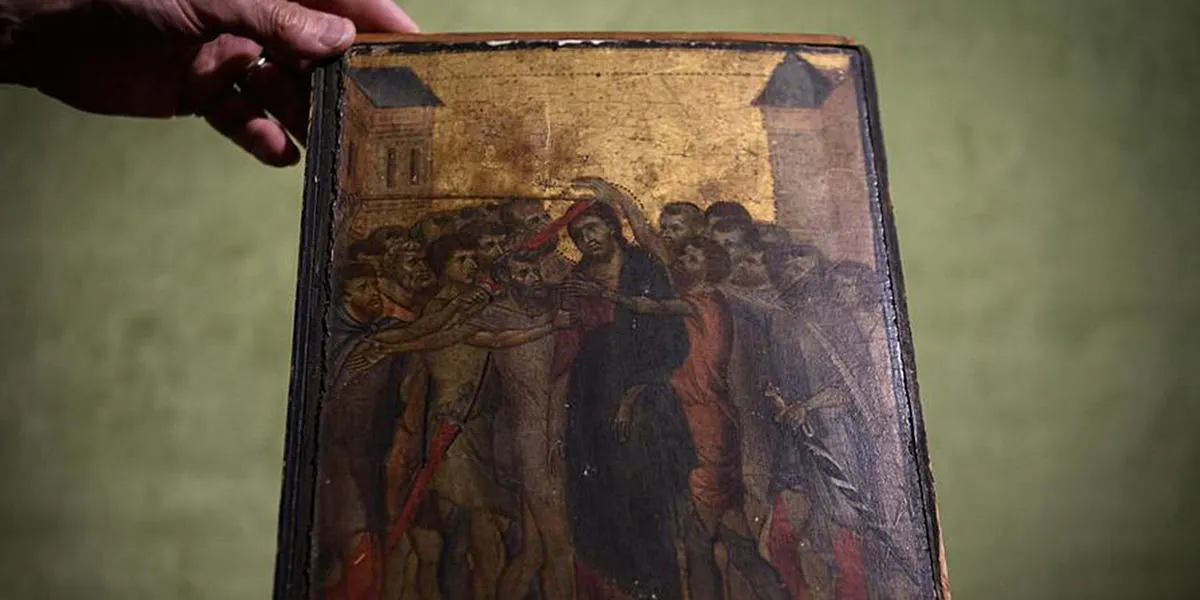
You never know what multimillion dollar masterpieces are hiding in plain sight. An elderly French woman had hung a Christian panel depicting the mocking of Christ in her kitchen believing that it was a Greek icon for years. As she was moving out, her family had a local auctioneer appraise the contents of the home outside Paris.
Philomène Wolf, an auctioneer at Actéon auction house in Compiegne, France, was first struck by the painting's golden background, which was in a remarkable state of conservation and only measured 9.8 x 7.8 inches.

"We rarely see such quality," said Wolf to Le Parisien. "I immediately thought it was a work of Italian primitivism. But I didn’t imagine it was a Cimabue.”
In a shocking discovery, the small painting turned out to be a rare work by the hand of early Renaissance master Cimabue dating to the 13th century. Cimabue was born in 1240 in Florence and was known for his religious paintings that adorned churches throughout Italy. He was mentor to Giotto, who he met when Giotto was just 10 years old, according to Giorgio Vasari, the art historian author. Giotto is credited with ushering in the shift from Byzantine-inspired figures to the lifelike characterization of the art during the Renaissance. Though Giotto fame's would eventually overshadow Cimabue, Cimabue's own interest in softer, lifelike figures influenced Giotto and the future of Renaissance art.

The provenance of the discovered Cimabue work is unknown since the family has no proof of purchase and had always considered the painting to be a simple Russian icon. Though Wolf considered its value between 300,000 to 400,000 euros, she decided to bring the work to expert Eric Turquin, who officially authenticated the painting as a Cimabue and estimated it between 4 and 6 million euros.
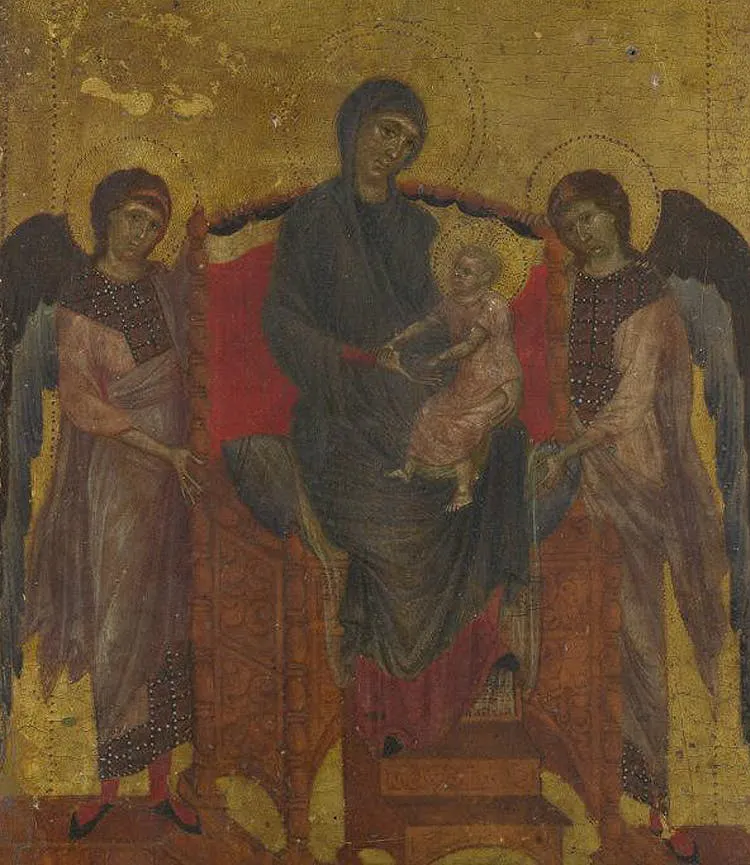
This painting with egg and gold background on poplar panel depicts the mocking of Christ and would be one part of a polyptych dating to 1280 composed of eight panels of similar size, on which appear scenes of the Passion of Christ. To this day, only two scenes of this polyptych are known: The Flagellation of Christ (Frick Collection, New York) and The Madonna and Child enthroned and surrounded by two angels (National Gallery, London).
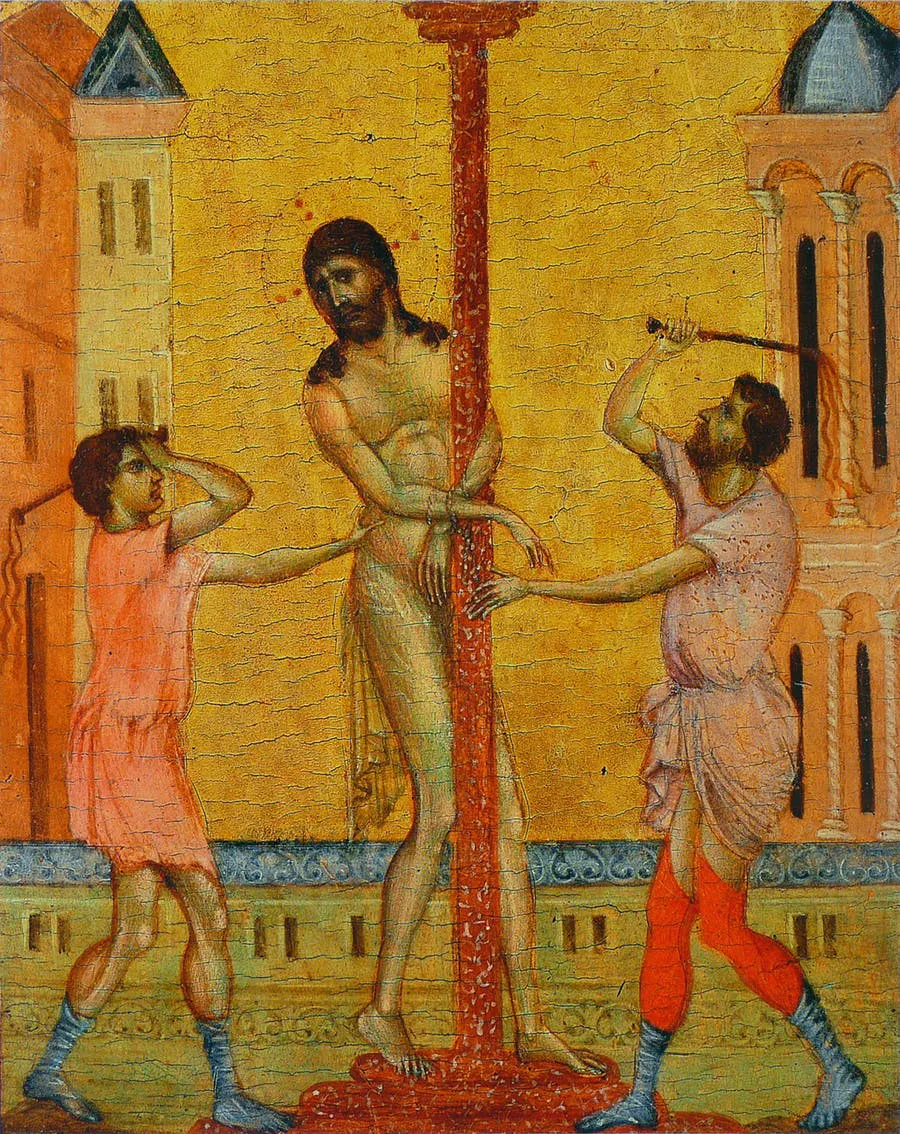
How did Turquin know it was a Cimabue? “You can follow the tunnels made by the worms,” Turquin told The Art Newspaper, adding that all three panels are from the same type of wood. “It’s the same poplar panel. We have objective proof it’s by the artist.”
In addition to these three, just nine other works by Cimabue are known - one at the Louvre and the rest in Italian churches. According to the auction house, the work will be the first Cimabue work to be auctioned when it goes up for sale on October 27.