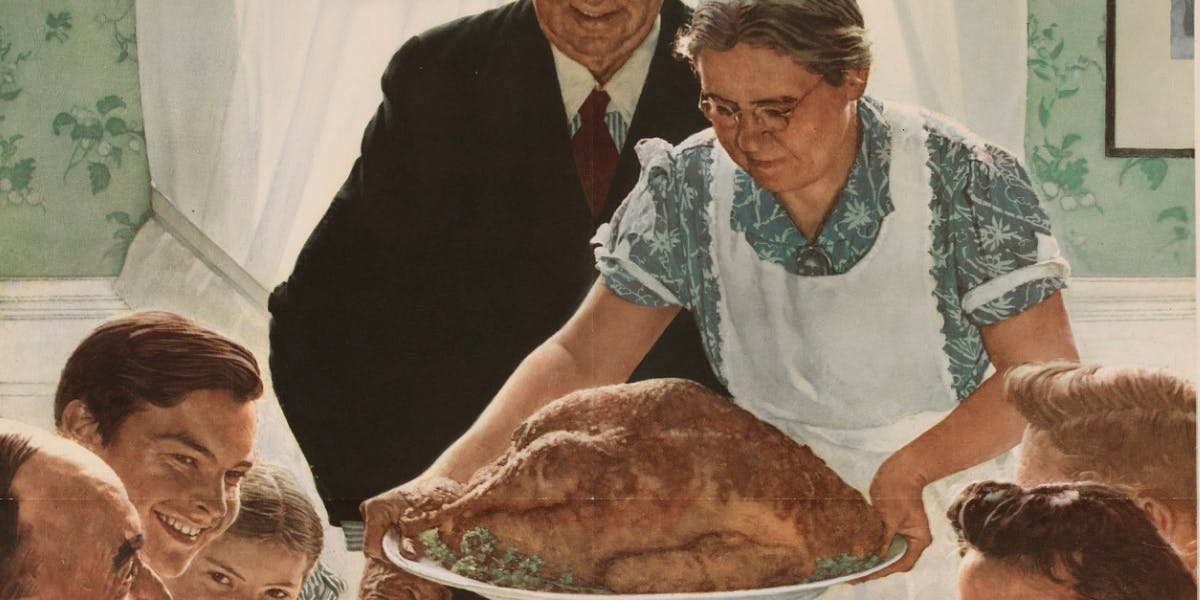
Our cook cooked it, I painted it and we ate it. That was one of the few times I've ever eaten the model.
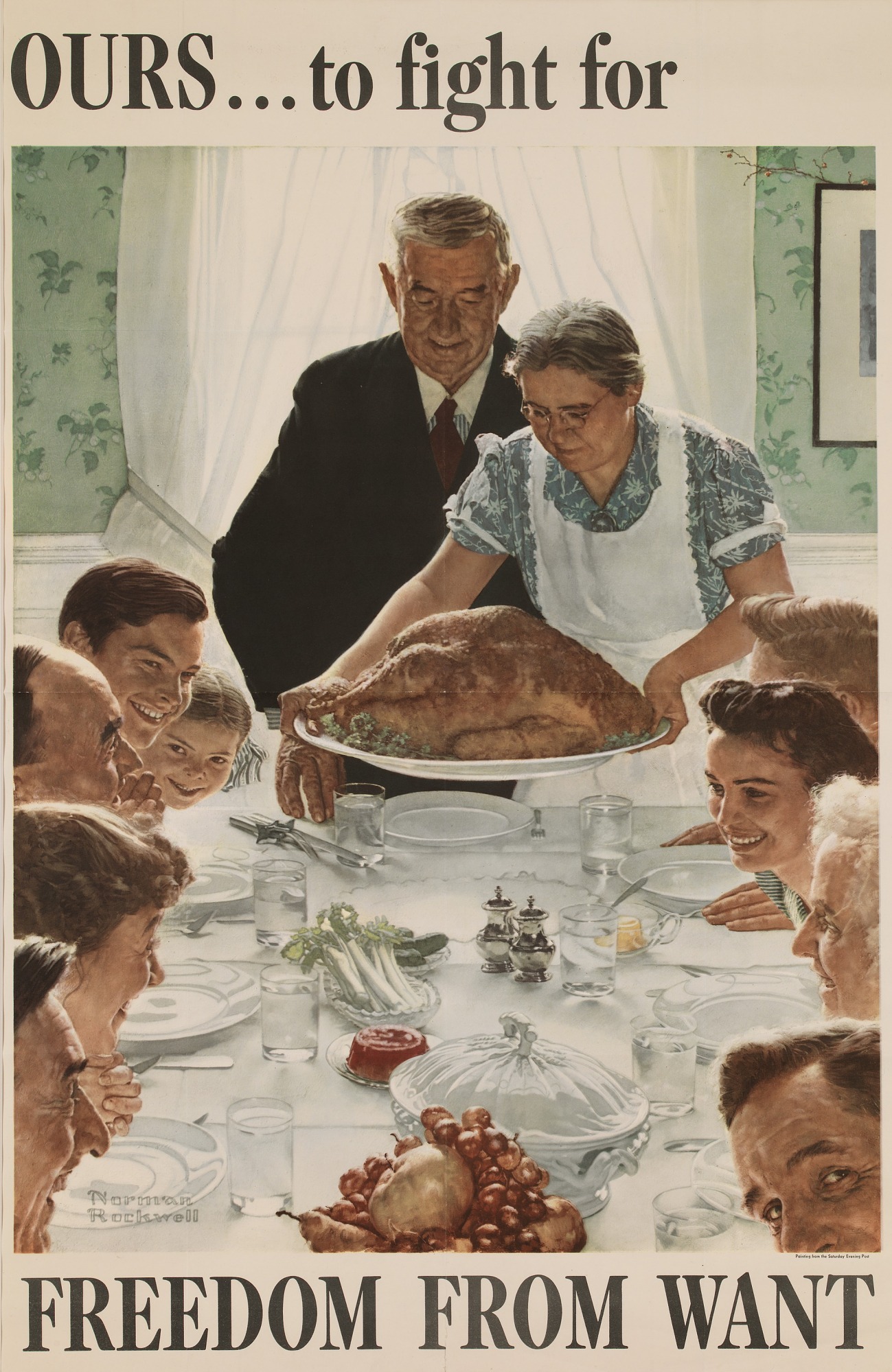
As one of the leading artists of the 20th century, Norman Rockwell (1894-1978) captured American life in his paintings and illustrations, both the nostalgic view of the American dream and the challenges of the interwar and postwar periods. One of his best known works, Freedom from Want (also known as Thanksgiving), is arguably the most iconic representation of the American holiday, so we rounded up 5 facts about its fascinating history:
1. It was inspired by a presidential address
On January 6, 1941, President Franklin D. Roosevelt gave a State of the Union address to Congress, which was referred to as the "Four Freedoms" speech. In it, he warns of the threat of war, as World War II had already begun in Europe months before, and introduces the four fundamental freedoms of humanity: freedom of speech, freedom of worship, freedom from want and freedom from fear.
Related: 6 Iconic American Paintings
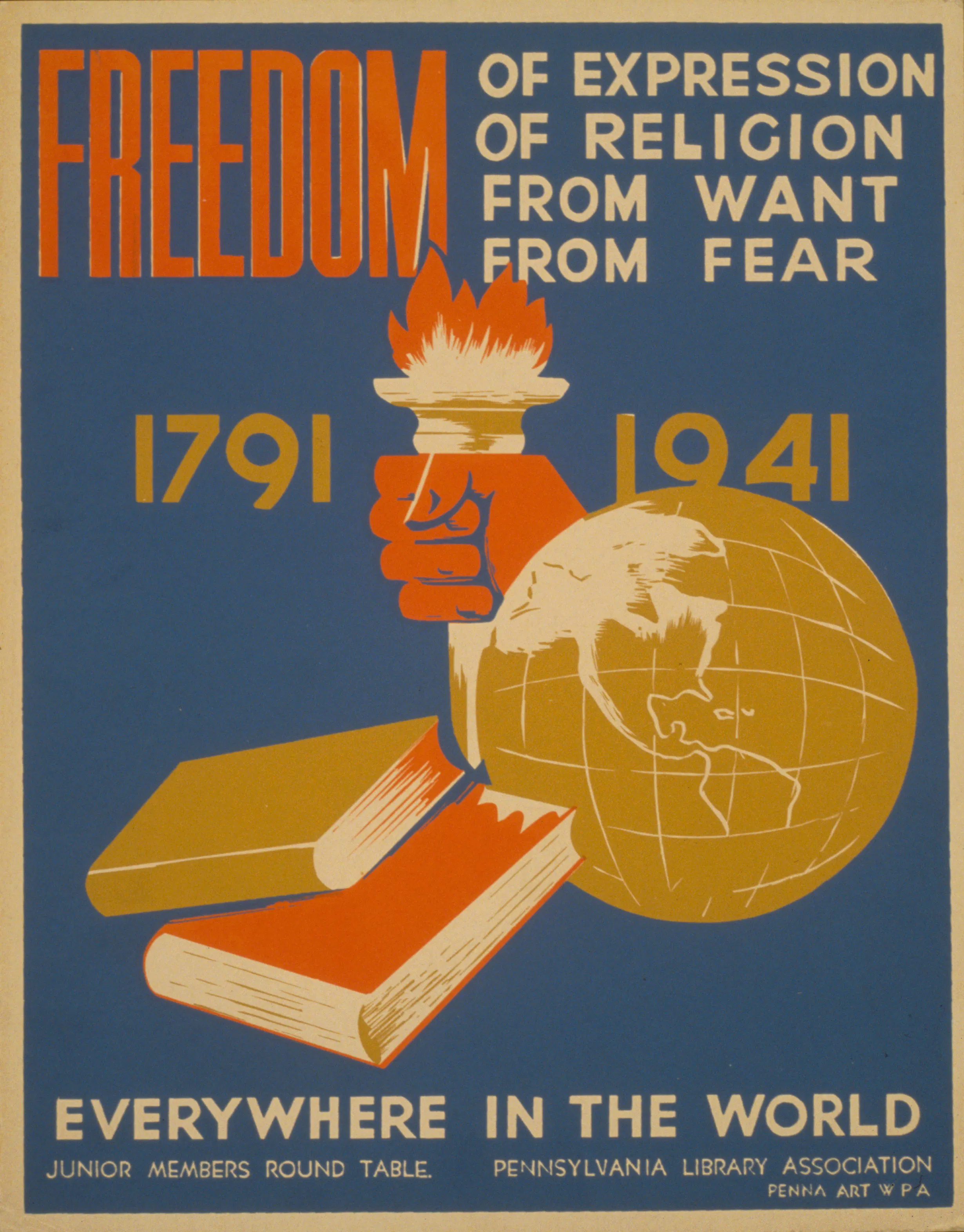
After the US entered the war following the bombing of Pearl Harbor in December 1941, these four freedoms were emphasized to restore morale during the wartime years. In June of 1942, Rockwell started sketching paintings based on each of the freedoms, encouraged by the editor of the Saturday Evening Post. Each of Rockwell's completed paintings ran next to "Four Freedom" essay features in four Saturday Evening Post newspapers in 1943.
2. His neighbors and home served as the model
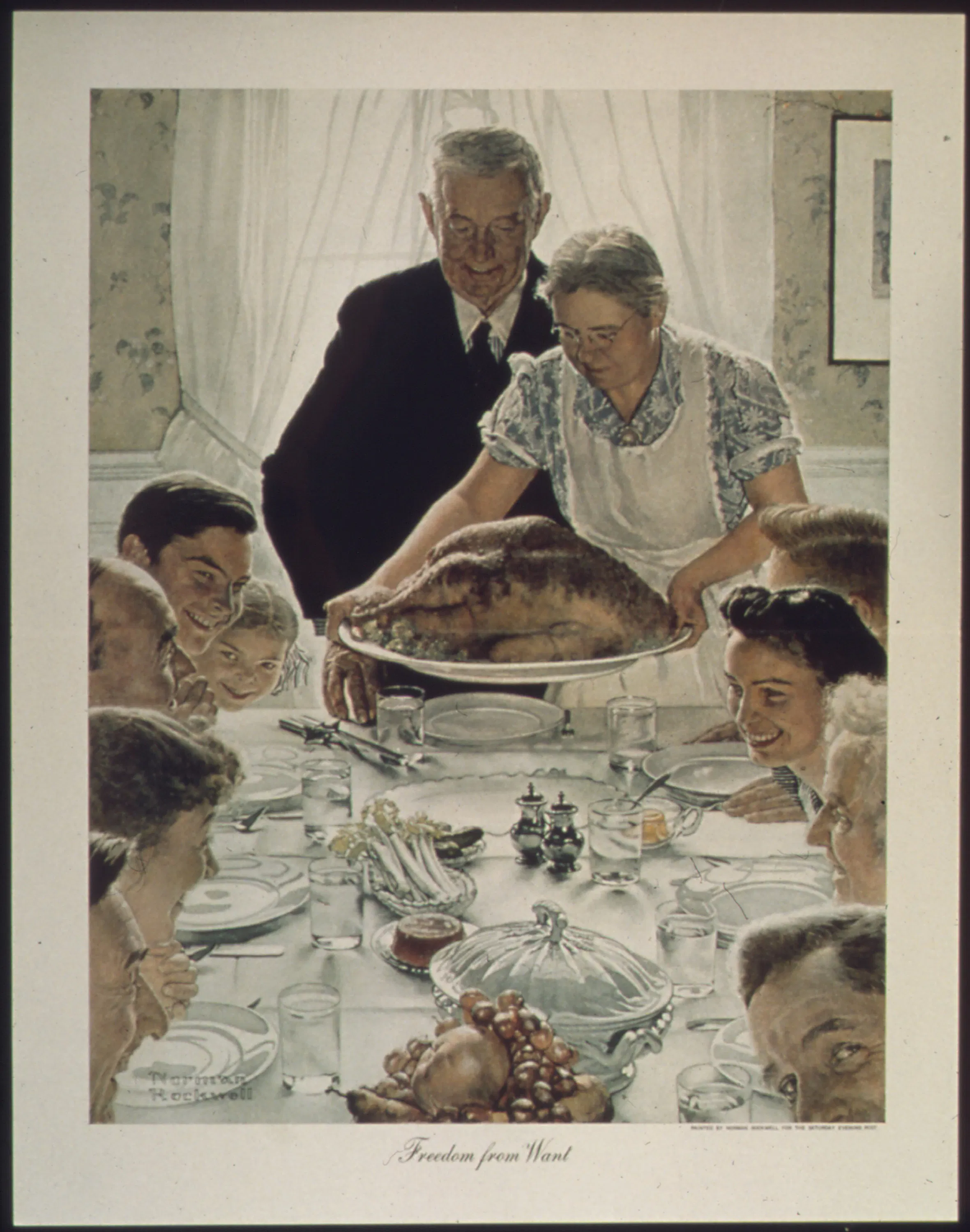
For his subjects, Rockwell chose those close to home. The setting was his living room, and the woman bringing in the turkey was based off a photograph Rockwell took of his cook in the same position on Thanksgiving 1942. His wife and mother are portrayed sitting around the table, as well as his neighbors and friends. As Rockwell later said of the turkey, "Our cook cooked it, I painted it and we ate it. That was one of the few times I've ever eaten the model."
Want more articles like this straight to your inbox? Subscribe to our free newsletter!
3. The painting was celebrated in America, but criticized in Europe
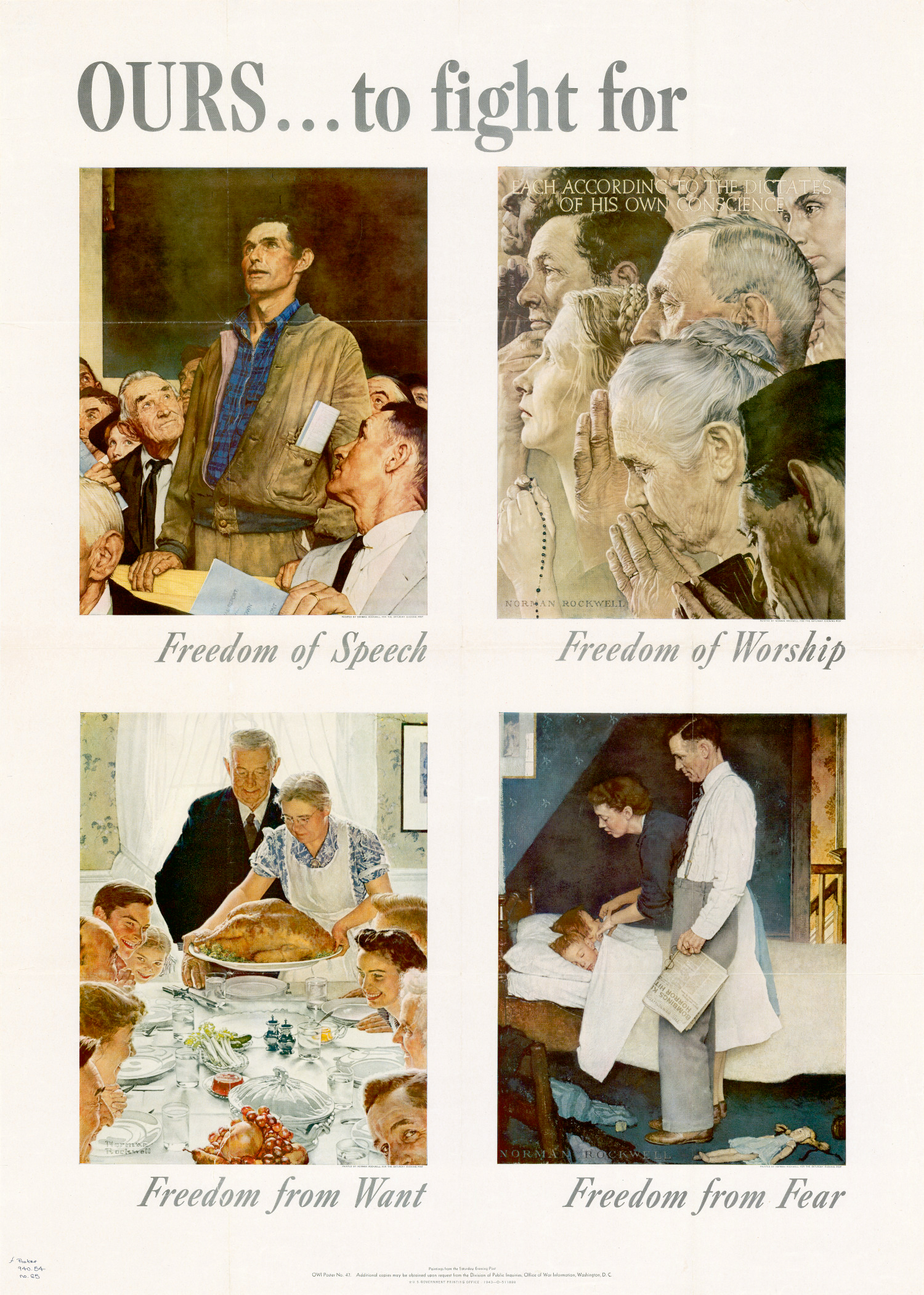
The U.S. government used Rockwell's paintings as a way to boost patriotism and encourage the purchase of war bonds, which were securities to support the war effort abroad. The government collected a sum of about $132 million. The images were so popular that by the end of the 20th century, about 25 million people had bought Four Freedom prints and posters. Although frequently distributed and exhibited throughout the country, Freedom of Want was disliked in Europe, which was being ravaged by war. Rockwell said, "The Europeans sort of resented it because it wasn't freedom from want, it was overabundance, the table was so loaded down with food."
Related: 10 Record-Breaking Artworks and Who Bought Them
4. Its composition was influenced by art history's most famous paintings
The painting was considered a success of white-on-white painting, dominated by the white of the tablecloth, table settings, curtains, and apron. The colorful faces and the detail of the meal therefore pops out more against the white table, emphasizing the conviviality and joy of their expressions and the abundance of food. The technique of white-on-white has been compared to Whistler's The White Girl (1861-62), which draws attention to the woman's face, and has also sparked comparisons to Leonardo Da Vinci's Last Supper and its later versions. Furthermore, the man and woman at the end of the table serve as a kind of foil to Grant Wood's American Gothic, another iconic American image, where their stoicism and gaunt faces are replaced in Rockwell's version by happiness and nourishment.
Related: 5 Women in White
5. The American Dream personified
Related: Grandma Moses: 5 Facts to Know
Today, all four of the Four Freedom paintings can be found at the Norman Rockwell Museum in Stockbridge, Massachusetts, to which they were given directly by Rockwell himself. Over the past century, the work has been used for many parodies throughout popular culture, from illustrations and cartoons to TV and film reenactments. Freedom From Want, especially, is part of the American art canon because of its historical significance as a patriotic representation to finance war bonds, but also as a portrayal of the American Dream. Considered Rockwell's most famous painting, it echoes his other themes of American regionalism and genre painting: struggle and success, family and food, patriotism and justice.
Happy Thanksgiving!