



NOV 7 | 5:00 PM

All auctions / Ancient Art / Ancient Gallo Roman - Celtic glass Beads Necklace - 0 mm


"Ancient Gallo-Roman-Celtic Glass Bead Necklace Culture / Period: Gallo-Roman-Celtic Date / Period: 1st–3rd century A.D. Material: Glass Dimensions: 36 cm total length; approximately 90 beads Condition: Good condition. Composed of ancient beads restrung for display and preservation. The beads exhibit attractive burial weathering, mineral deposits, iridescence, and surface patination consistent with age. No shipping outside theopean Union. Due to complex export regulations concerning cultural goods, this item cannot be shipped outside the EU. Please ensure you have a delivery address within theopean Union before placing a bid. Provenance information: Object Registration ID: 174 The current owner purchased this object from an auction house in Tilburg, the Netherlands. According to the previous owner, the object had previously been in a private collection in the Netherlands. Due to privacy regulations, the name of the previous owner could not be disclosed.No further information concerning the earlier ownership history of the object was available from the previous owner. Background Information: This necklace is composed of approximately ninety ancient glass beads originating from the Gallo-Roman-Celtic world and dating to the 1st–3rd century A.D. It represents a fine example of personal adornment from the northwestern provinces of the Roman Empire, where indigenous Celtic traditions remained vibrant while Roman craftsmanship, trade, and fashion influenced daily life. The Gallo-Roman-Celtic cultural sphere encompassed much of present-day France, Belgium, Luxembourg, and parts of the Netherlands and Germany. Following the Roman conquest of Gaul, local Celtic populations continued many long-established customs while embracing aspects of Roman material culture. Jewellery from this region frequently reflects this unique cultural synthesis, combining native decorative traditions with Roman manufacturing techniques and materials. The necklace displays a diverse assemblage of bead forms and colours, including rounded, cylindrical, barrel-shaped, disc-shaped, and elongated examples. Shades of blue, green, cream, white, grey, and amber are represented, creating a harmonious composition characteristic of jewellery from the Roman provinces. Several beads retain attractive weathering, iridescence, and mineral deposits acquired during centuries of burial, while the deep cobalt-blue beads remain particularly characteristic of Celtic and Gallo-Roman ornamentation. Glass beads were among the most popular forms of personal adornment throughout the Roman world. They were commonly worn by women and children and could be combined into unique arrangements according to local fashions and individual preferences. Necklaces such as this were worn in everyday life and on special occasions, serving not only as decorative ornaments but also as expressions of identity and social status. The production of glass was one of the most advanced industries of the Roman Empire. Large primary workshops manufactured raw glass that was distributed throughout the Empire to regional artisans. These craftsmen transformed the material into vessels, jewellery, and luxury objects that circulated through extensive commercial networks. Such objects were traded across large distances, reaching regions such as present-day Germany and the Netherlands. The necklace also illustrates the persistence of Celtic jewellery traditions under Roman rule. Colourful bead ornaments had been worn by Celtic communities for centuries before the arrival of Rome, and these traditions continued well into the Imperial period. The resulting Gallo-Roman-Celtic jewellery represents a distinctive fusion of local heritage and Roman craftsmanship, creating objects that are both culturally and historically significant. Although individual ancient beads are regularly encountered, substantial bead assemblages such as this are considerably less common. Because the original organic stringing materials rarely survive, most necklaces became dispersed over time. Assemblages preserving large numbers of ancient beads therefore provide valuable insight into the jewellery traditions, trade networks, and aesthetic preferences of the inhabitants of the Roman provinces. Dating to the 1st–3rd century A.D., this necklace provides a direct and tangible connection to the people who lived in the northwestern provinces of the Roman Empire. It stands as an attractive example of the craftsmanship, cultural exchange, and long-distance trade that characterised the Gallo-Roman-Celtic world, where personal adornment formed an important part of everyday life and social expression."
Estimate:$235.31
To the auctionView all items fromCatawikiorAncient Art
Estimate:
$235.31
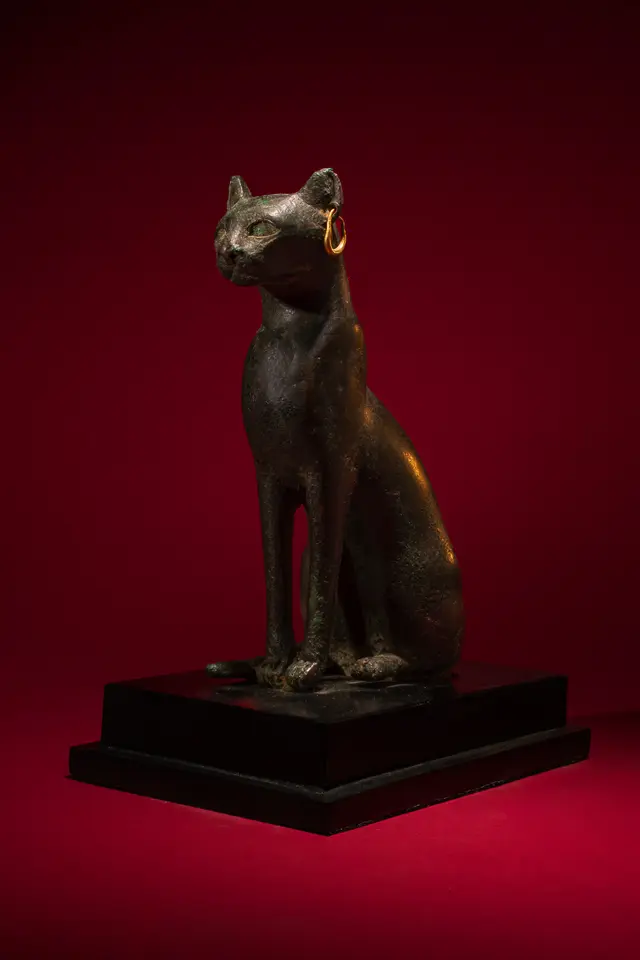
RARE EGYPTIAN BRONZE CAT STATUETTE WITH GOLD EARRINGS - LARGE SIZE
06/21/2026

$29,141.2
Est: $26,836.62
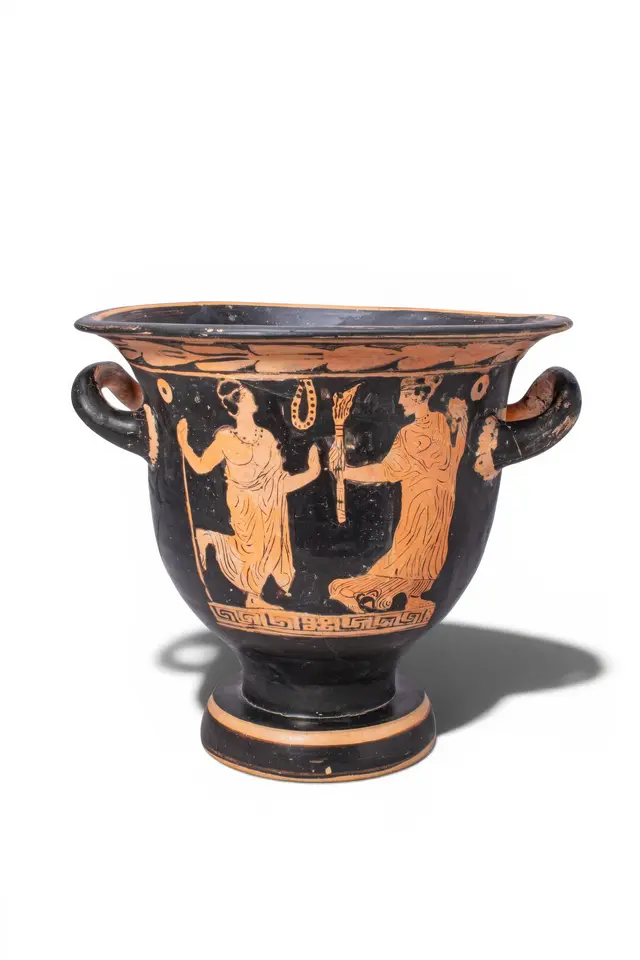
APULIAN RED-FIGURE BELL KRATER WITH KOMASTOS AND MAENAD - TL TESTED
06/21/2026
$3,443.96
Est: $2,640.96
NOV 7 | 5:00 PM


NOV 12 | 10:00 AM

NOV 8 | 1:00 PM
Bring your auction to collectors worldwide!
Get listed nowBy subscribing, you are agreeing to the privacy policy. Unsubscribe anytime.
Barnebys HQ
Brahegatan 10
BOX 5038
114 37 Stockholm
