




Bring your auction to collectors worldwide!
Get listed nowBy subscribing, you are agreeing to the privacy policy. Unsubscribe anytime.
Barnebys HQ
Brahegatan 10
BOX 5038
114 37 Stockholm
All auctions / Arts & Graphics / Wassily Kandinsky (1866-1944) - Yellow Red Blue - Bauhaus...

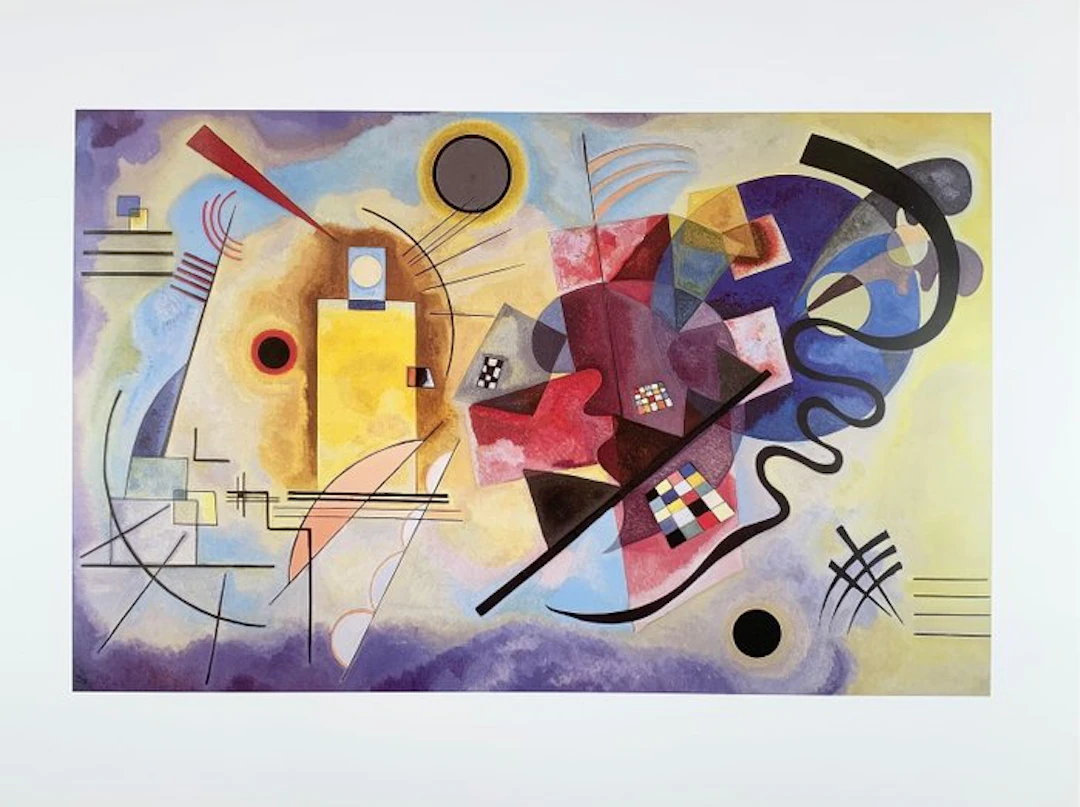
Wassily Kandinsky art print Yellow Red Blue in 80 x 60 cm format on smooth paper in perfect, mint condition. - printed and distributed by Kunstverlag circa 1990-2010 - acquired directly from Kunstverlag - since then professionally, light-protected stored in a graphics depot Artist: Wassily Kandinsky Title: Yellow Red Blue Type: Poster print Kind: high-quality art print Technique: offset printing Originality: reproduction Overall size: 60.0 x 80.0 cm Condition: very well preserved Publisher: Kunstverlag Style: Expressionism Era: Modern art Nationality: Russian art Copyright: VG Bild-Kunst, Bonn 1999, Published by UP. Universal Prints, Hamburg 1999, Printed in Germany Wassily Kandinsky: Wassily Kandinsky (1866–1944) was a Russian painter and art theorist, regarded as one of the founders of abstract art and modern expressionism. His works and theories had a lasting influence on the development of modern art. Kandinsky believed art should possess a spiritual dimension and that abstract forms and colors can express emotional and mental states. Kandinsky’s early works were heavily influenced by the Impressionists, especially Claude Monet, whose work “The Haystack” inspired him to a new perception of color and form. This encounter led to his conviction that art should go beyond mere representation of reality and address deeper emotional and spiritual levels. A central influence on Kandinsky’s path toward abstraction was Paul Cézanne, who introduced the analytical dismantling of form and color into his paintings. Cézanne’s approach of reducing nature into geometric forms paved the way for Kandinsky’s later abstract compositions. This method of reduction to basic shapes also influenced artists like Pablo Picasso and Georges Braque, who developed Cubism, a movement pursuing parallel goals such as analytical depiction and dissolution of forms. Kandinsky was an important part of the Expressionist movement and co-founded the group “Der Blaue Reiter” with Franz Marc and other artists. This group included artists such as August Macke, Gabriele Münter and Paul Klee. Especially Klee shared with Kandinsky an interest in linking music and painting, which is expressed in Klee’s poetic and often symbolic works. The artists of the Blue Rider sought an art form that emphasized inner expression and went beyond mere outward appearance. Fauvism, represented by artists like Henri Matisse and André Derain, also influenced Kandinsky, particularly through the use of strong, unmixed colors to provoke emotional reactions. The Fauves and Kandinsky shared the belief that colors can evoke strong emotional effects. In addition to these influences, Kandinsky was strongly influenced by Russian folk art and the bright colors of Orthodox icons, which is reflected in his intense color palette and his fondness for symbolic elements. His engagement with the spiritual aspects of art also led to a engagement with the writings of Helena Blavatsky and Theosophy, which is reflected in his work “Concerning the Spiritual in Art” (1911). This treatise emphasized the role of art as a means of spiritual uplift and expression of the unconscious. Kandinsky’s time at the Bauhaus, where he taught from 1922 to 1933, allowed him to further develop his theories of abstract art. Here he was in close exchange with artists like László Moholy-Nagy and Josef Albers, who also developed innovative concepts about the relationship between form, color and space. The collaboration with Paul Klee at the Bauhaus led to a fruitful exchange of ideas and techniques. In abstract art, Kandinsky shared the stage with artists like Piet Mondrian and Kazimir Malevich. While Mondrian pursued a universal order through the reduction to horizontal and vertical lines and Malevich sought a pure form of abstraction with Suprematism, Kandinsky valued the expressive power of color and form to express inner emotions. Kandinsky’s work has left a lasting mark on art history, and his theories about abstract art and the expression of the spiritual in art have influenced numerous artists and movements. His paintings are today shown in the world’s most important museums, and his writings remain a foundational contribution to art theory. Related Bauhaus artists: Paul Klee, Lyonel Feininger, Oskar Schlemmer, László Moholy-Nagy, Johannes Itten, Josef Albers, Anni Albers, Georg Muche, Marcel Breuer, Hannes Meyer, Walter Gropius, Ludwig Mies van der Rohe, Gunta Stölzl, Herbert Bayer, Marianne Brandt, Max Bill, Alfred Arndt, Carl Fieger, Wilhelm Wagenfeld, Hin Bredendieck, Werner Drewes, Xanti Schawinsky, Friedrich Kiesler, Margarete Schütte-Lihotzky, Peter Keler, Franz Ehrlich, Heinrich Neuy, Andreas Feininger, Ella Bergmann-Michel, Ludwig Hilberseimer Shipping information: We roll prints onto sturdy chipboard cores, wrap them with corrugated cardboard and ship them in particularly sturdy boxes. The shipment includes a tracking number for parcel tracking. About us: We have been in the art trade for over 20 years and have extensive experience in the professional handling and shipping of artworks. - No shipping to Canary Islands, Taiwan -
Estimate:$168.89
To the auctionView all items fromCatawikiorArts & Graphics
Estimate:
$168.89
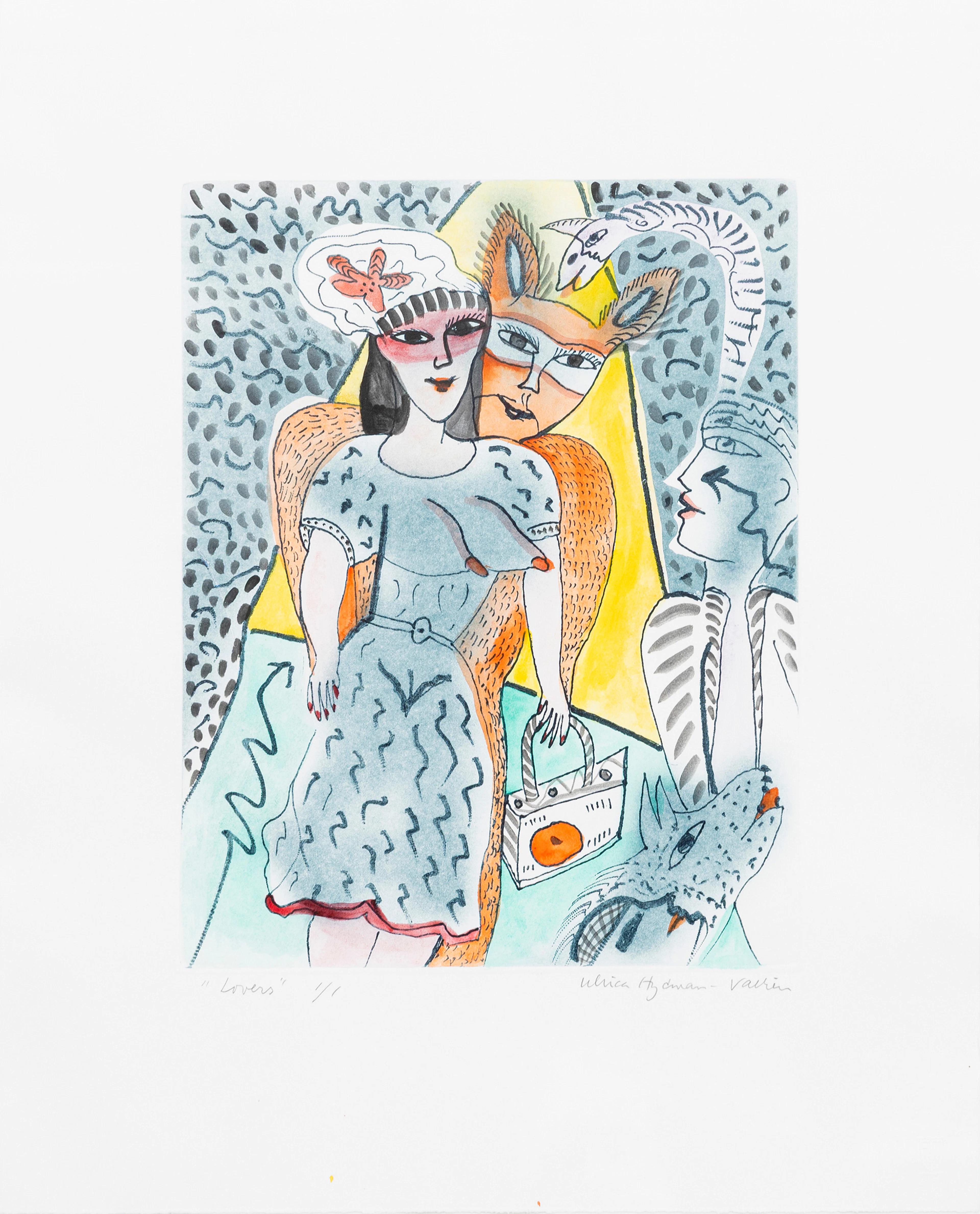
ULRICA HYDMAN-VALLIEN. "Lovers", handkolorerad etsning, signerad och
10/03/2026
$159.45
Est: $199.2
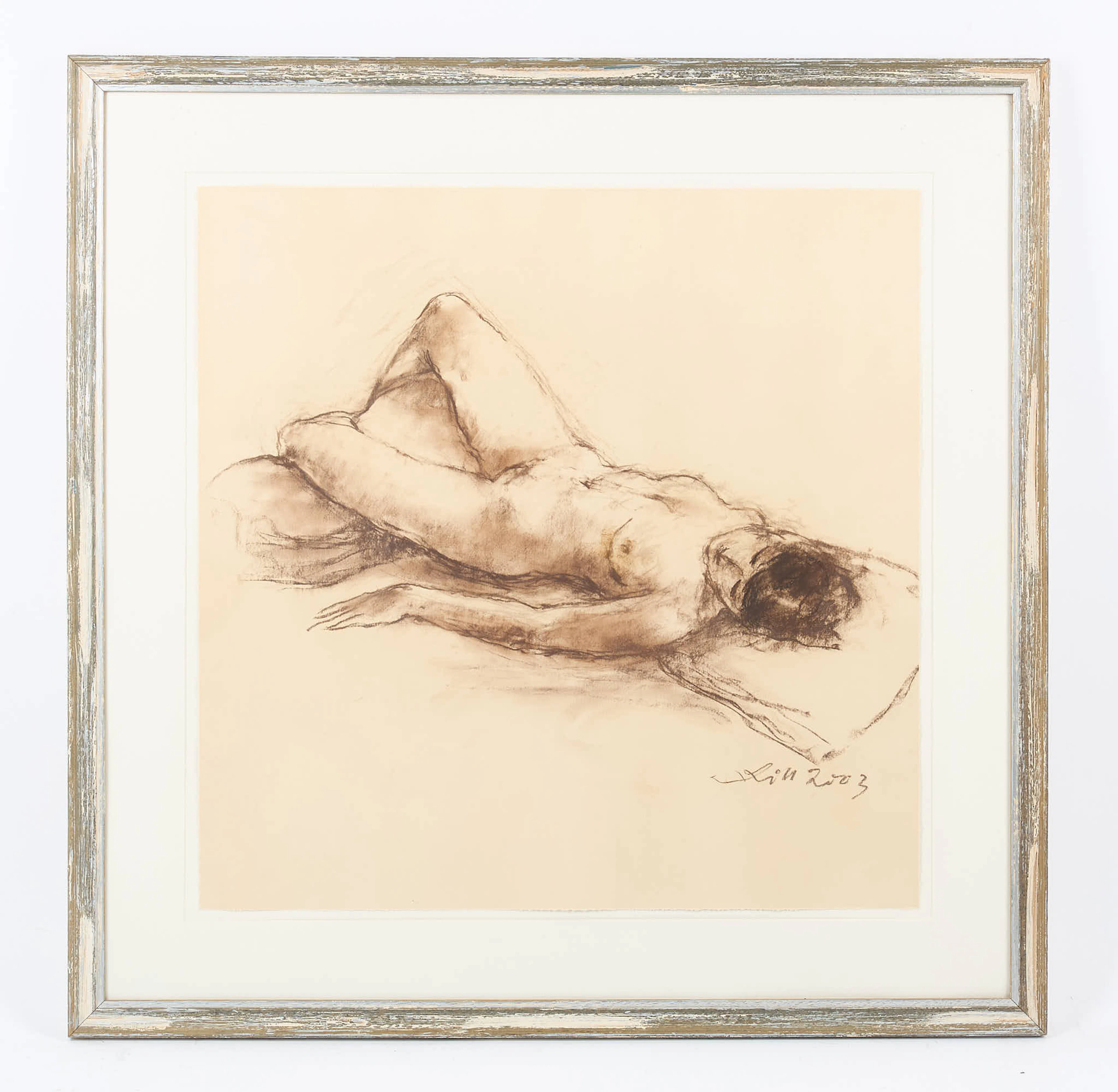
ADO LILL (1932-2018). Makaava malli, signerad samt daterad 2003, kolteckning.
10/03/2026
$281.13
Est: $394.07
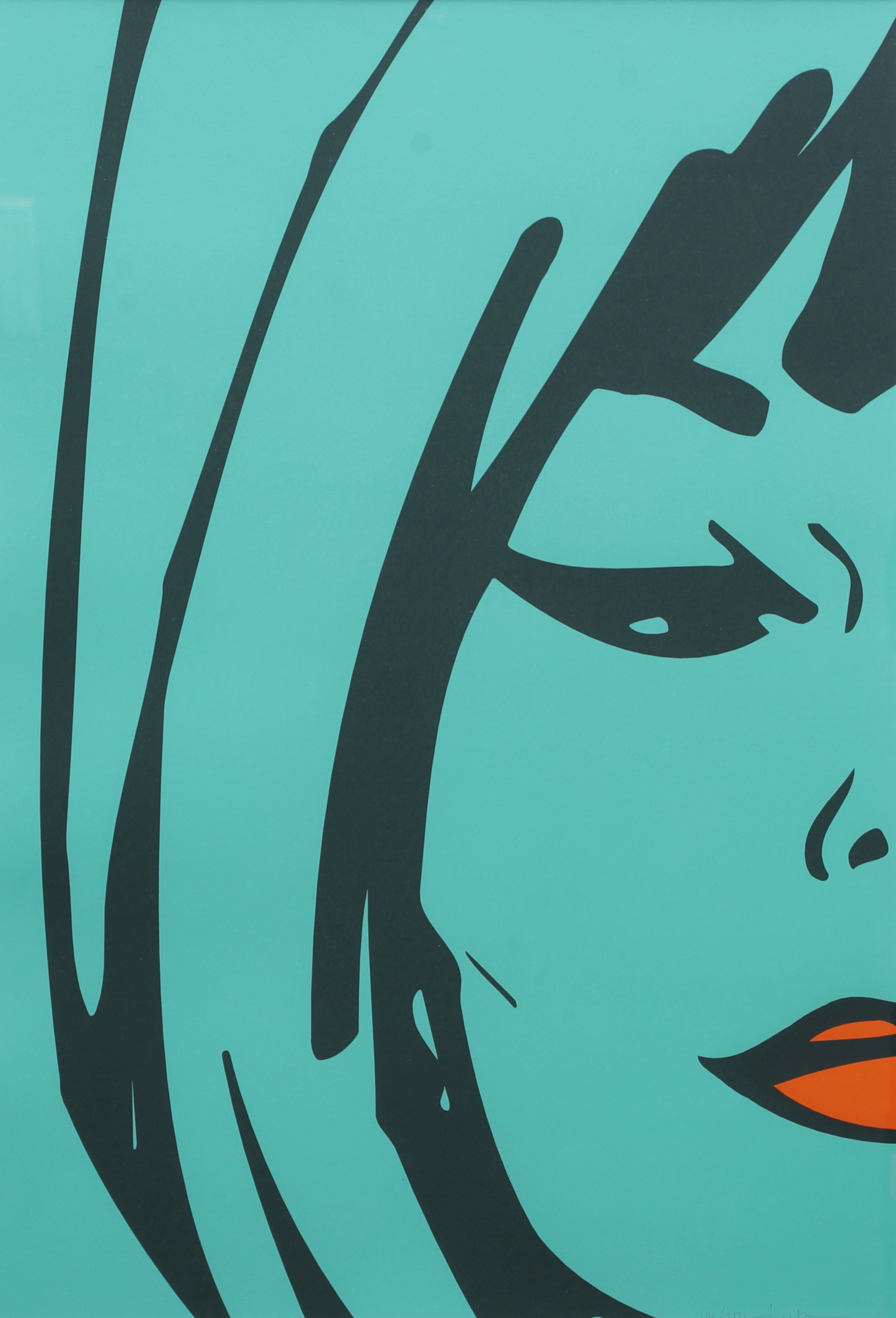
JOHNNY ACOSTA. "Angie". Färglitografi, signerad och numrerad 114/250.
10/03/2026
$34.88
Est: $50.34


Bring your auction to collectors worldwide!
Get listed now