
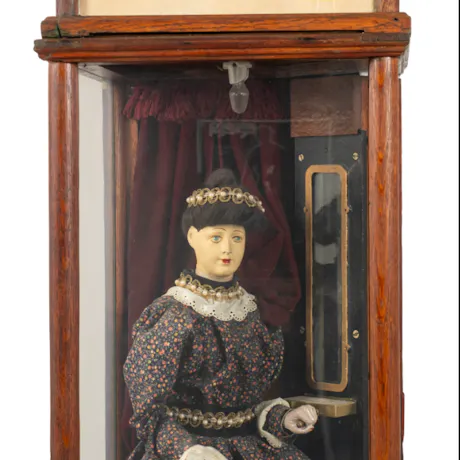

OCT 17 | 10:00 PM

All auctions / Arts & Graphics / Vincenzo Irolli (1860 – 1949) - Il venditore di pesci

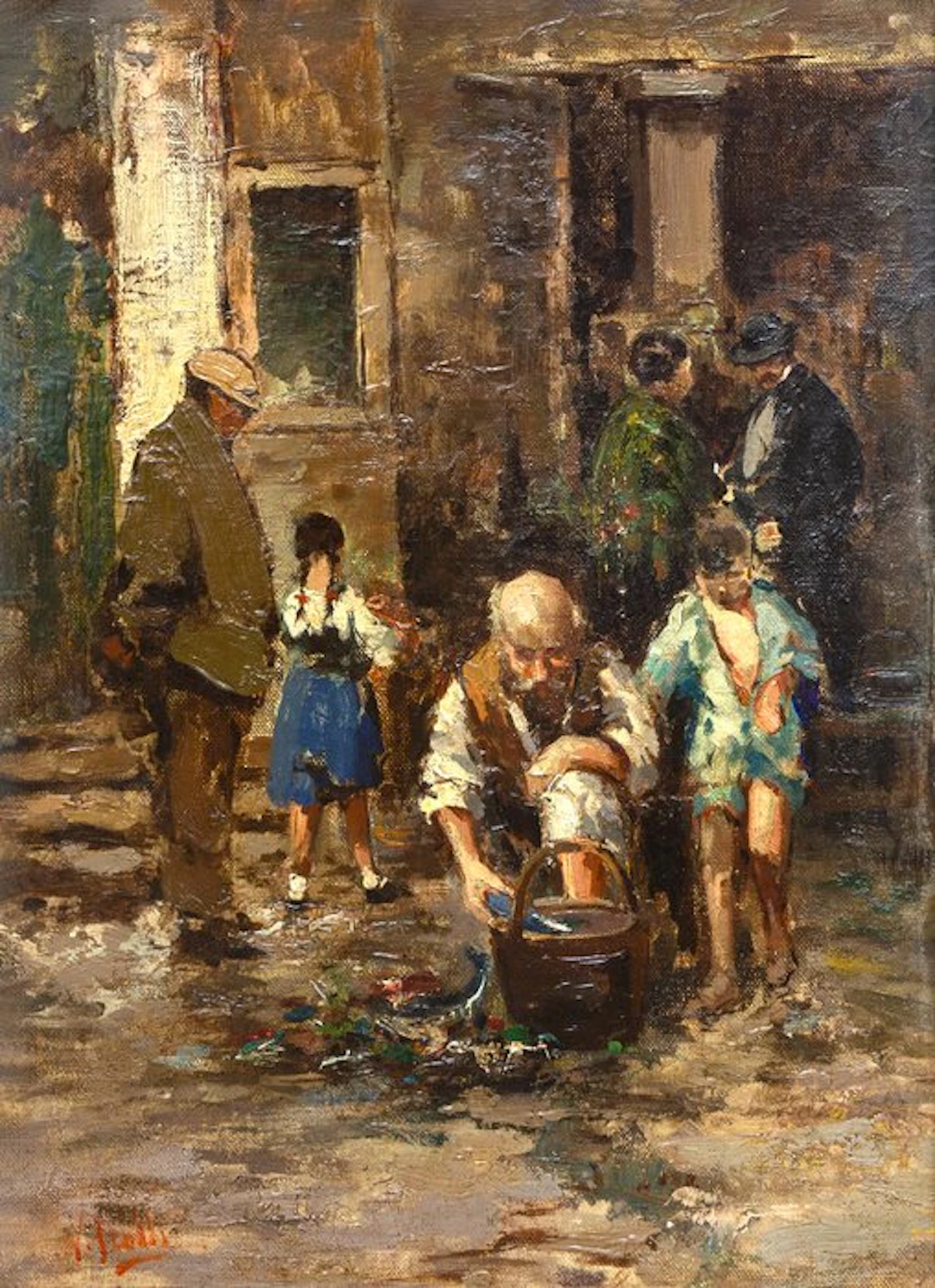
VINCENZO IROLLI (Napoli, 1860 – 1949) The Fish Seller Oil on canvas applied to cardboard, cm. 39.6 x 29.2 Signed ‘V. IROLLI’ at lower left Frame size cm. 51.5 x 41.5 x 6 approx. NOTE: Catalog publication of the Intermidiart collection works. Signed work. Guarantee Certificate and Legitimate Provenance. Work with gilded and elaborately worked frame (faults): The painting, coming from the antique market, is a refined oil on canvas on cardboard by the well-known artist active between the late 19th and early 20th century, Vincenzo Irolli (Naples, 1860 – 1949). The examined work represents a perfect example of Irolli’s mature production. The small dimensions, typical of easel or studio paintings, do not diminish the monumentality and expressive impact of the figures. The autograph signature in red is fully consistent with the artist’s graphological characteristics, making the painting an undoubted object of interest for collectors of late 19th- and early 20th-century Italian painting. The painting offers an intimate and pulsating glimpse of Neapolitan popular daily life, a cornerstone of Vincenzo Irolli’s poetics. The scene is outdoors, presumably in a narrow street or a small neighborhood square adjacent to an old building. In the center of the composition, in the foreground, stands the figure of an elderly street vendor caught in a moment of industrious intimate work: he is crouched on the ground, with his gaze focused on his basket (o’ panaro), intent on arranging or showing the day’s catch. On his right stands a boy in a light shirt and short trousers, a proud and typical figure of the Neapolitan “scugnizzi” of the period. On the left, an old man in profile with a hat and dark jacket observes the scene up close, while a little farther back a girl with her back turned, wearing a typical blue dress and her hair braided, acts as a visual bridge toward the background. Further away, almost blending into the shadows of the backdrop architecture, other market goers can be discerned, including a woman with a green shawl and a man with a top hat or bowler, testifying to the social heterogeneity of the context. The work excels in the extraordinary chromatic layering. Irolli does not draw form so much as he molds it through a dense, rough, impasto-rich brushstroke. Light penetrates from above, cutting through the scene and producing sudden flashes: on the children’s clothing, on the silvery reflections of the fish on the ground, and on the vendor’s face. The chromatic palette, dominated by warm earth tones and masonry grays, is animated by sudden glints of blue, emerald green, and touches of red, orchestrated with that luminous mastery that made the artist famous internationally. Vincenzo Irolli was born in Naples in 1860. Trained at the Naples Academy of Fine Arts under masters such as Gioacchino Toma and Federico Maldarelli, he soon detached from academic rigidity to embrace painting strongly influenced by the verismo of Antonio Mancini, Francesco Paolo Michetti, and the great tradition of the Neapolitan Seicento. His official debut took place in 1879 at the Promotrice in Naples, where he immediately enjoyed public and critical success. Throughout his long career he regularly participated in the most important national and international art exhibitions: he exhibited regularly at the Venice Biennale (from 1907 to 1930), at the Paris Salon (where he received great acclaim and a bronze medal in 1904), in London, Munich, Berlin, and Buenos Aires. Irolli became one of the leading and most beloved exponents of Neapolitan Impressionism. Although much of the Italian postwar criticism sometimes labeled him as a “easy” painter due to his immense commercial success and his popular subjects, international criticism has long consecrated him as an absolute virtuoso of color and light. He died in Naples in 1949, leaving a body of works today housed in some of the world’s most prestigious museums (including the National Gallery of Modern Art in Rome, the Capodimonte Museum in Naples, and the Petit Palais in Paris). The work is presented in good overall conservation condition. The original canvas is perfectly adherent to the rigid cardboard support, with no deformations or detachments. The pictorial film is solid, stable, and preserves the vibrant textural quality of the brushstrokes, with no color losses or cracking. The surface is protected by a clear varnish and the signature in the lower left remains intact. The work is mounted in a gilded and elaborately worked frame (size cm. 51.5 x 41.5 x 6 approx., with faults). “The frame shown in the photos above was added to the artwork by the seller or by a third party. The frame is provided at no additional cost so that it is ready for display as soon as it arrives. The frame is included as a courtesy and is not considered an integral part of the artwork. Therefore, any potential damage to the frame that does not affect the artwork itself will not be accepted as valid grounds for opening a claim or requesting order cancellation.” PROVENANCE: Private collection, Sicilian PUBLICATION: - I Miti e il Territorio nella Sicilia dalle mille culture. INEDITA QUADRERIA general catalog of the paintings of the collection from the cycle “I Miti e il territorio,” 2026 (Pdf). In case of sale outside Italian territory, the buyer must wait for the processing times of the export procedures.
Estimate:$3,473.37
To the auctionView all items fromCatawikiorArts & Graphics
Estimate:
$3,473.37
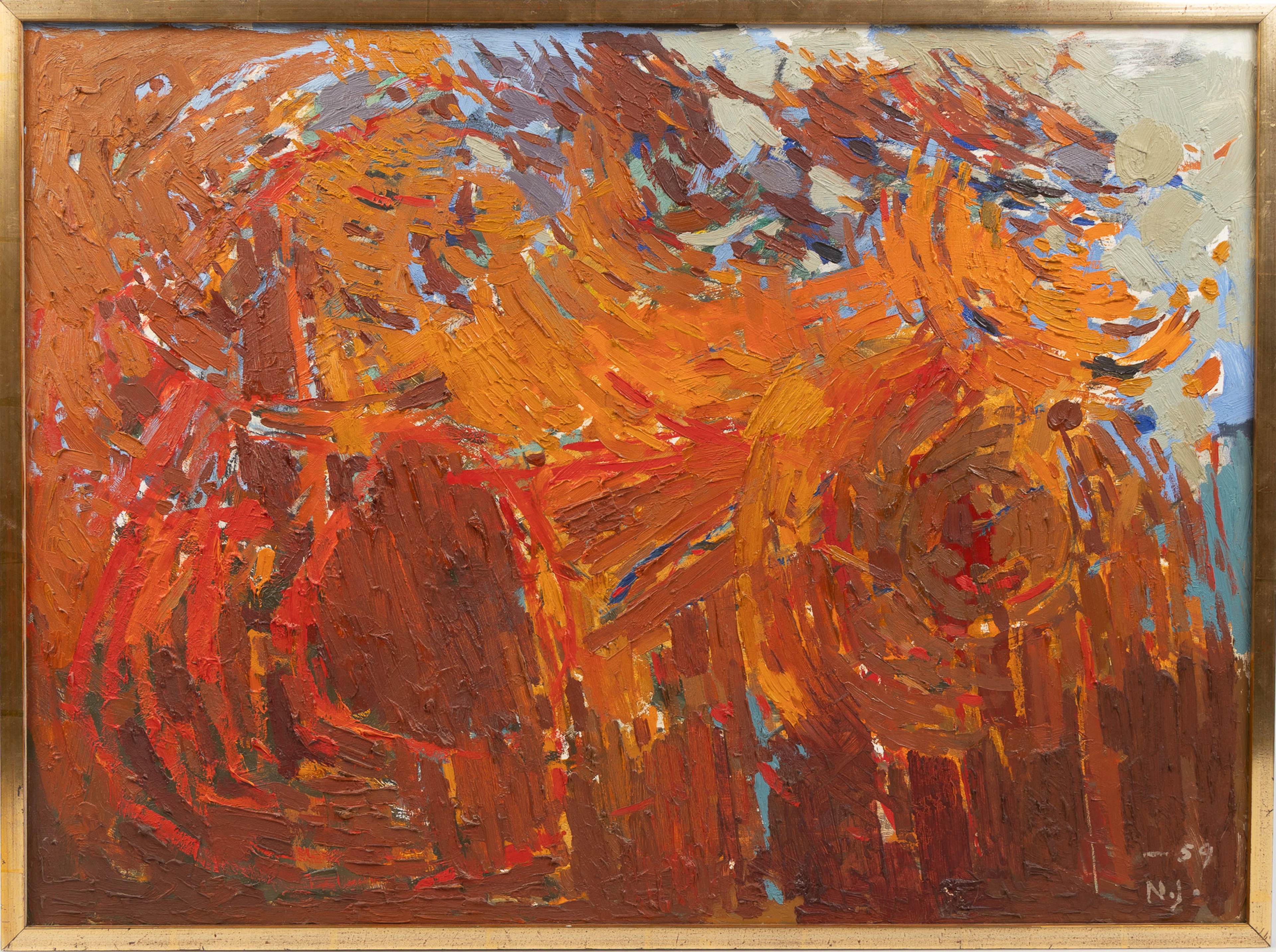
ILS JOHANSSON. "Höstvirvlar", olja på pannå.
10/08/2026
$100
Est: $200.02
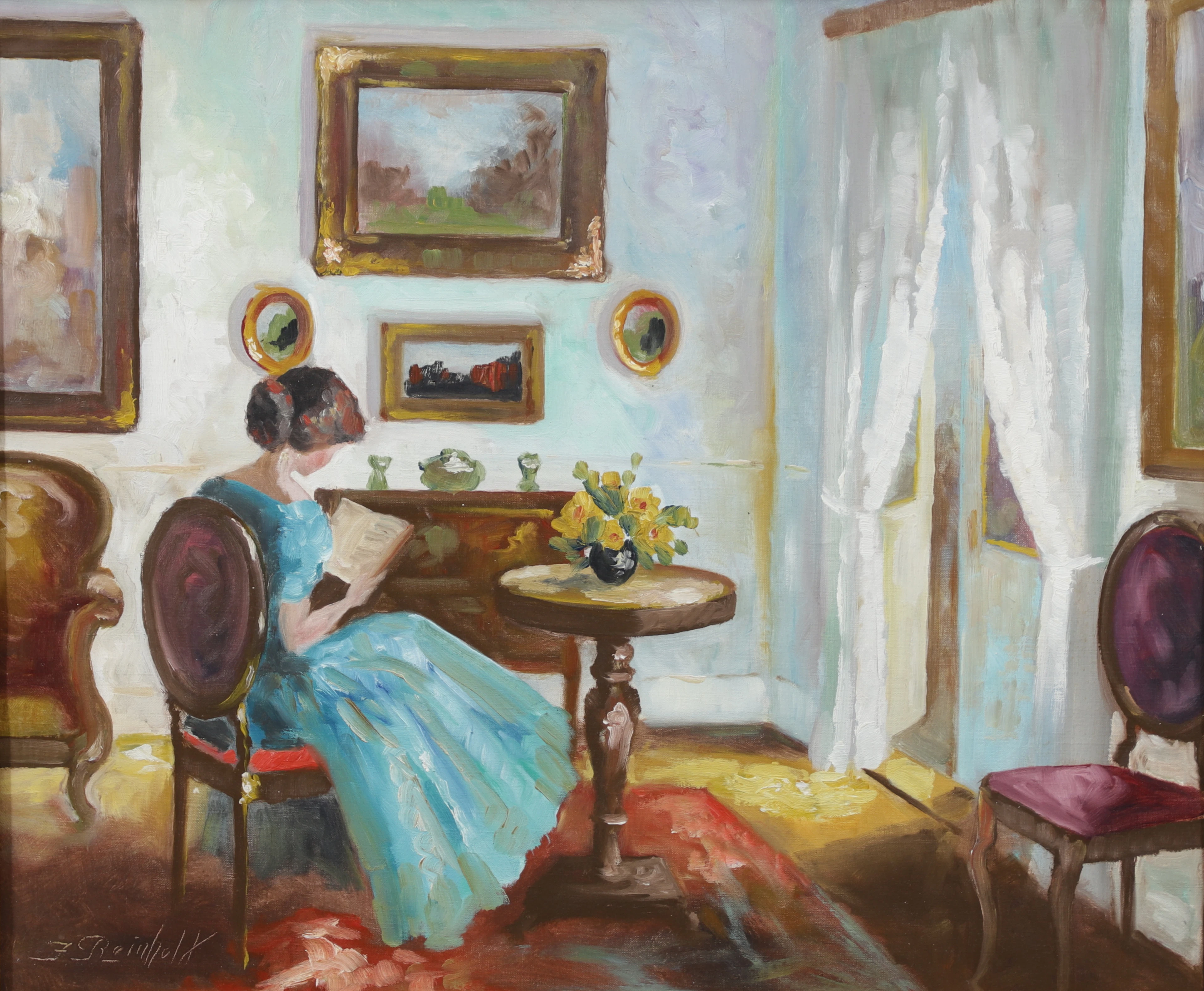
OIDENTIFIERAD KONSTNÄR. Interiör mad kvinna, olja på duk, signerad Reinholt.
10/08/2026
$40
Est: $50
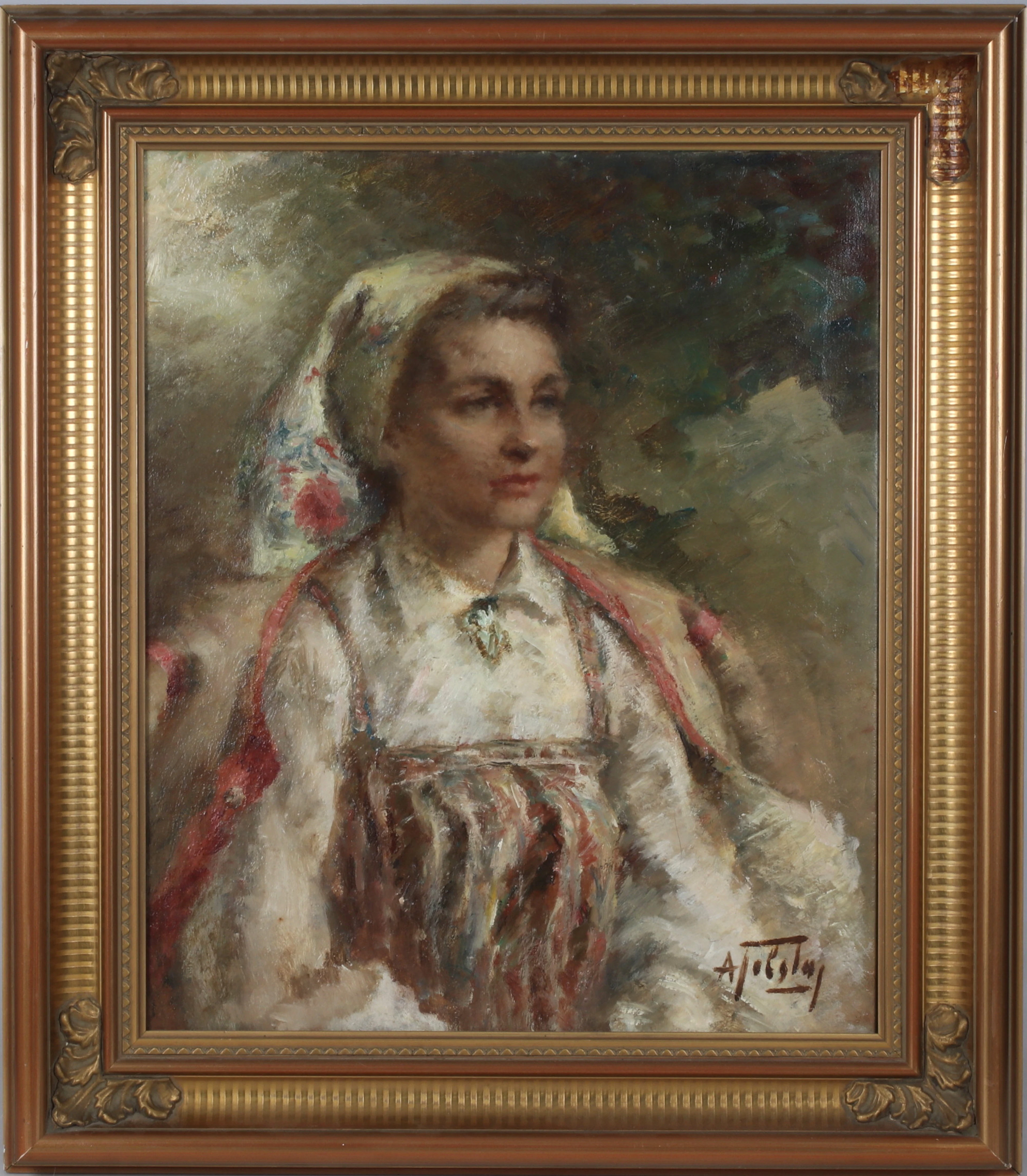
ALEXANDER TOLSTOY. Porträtt, olja på duk, signerad.
10/08/2026
$100
Est: $199.2
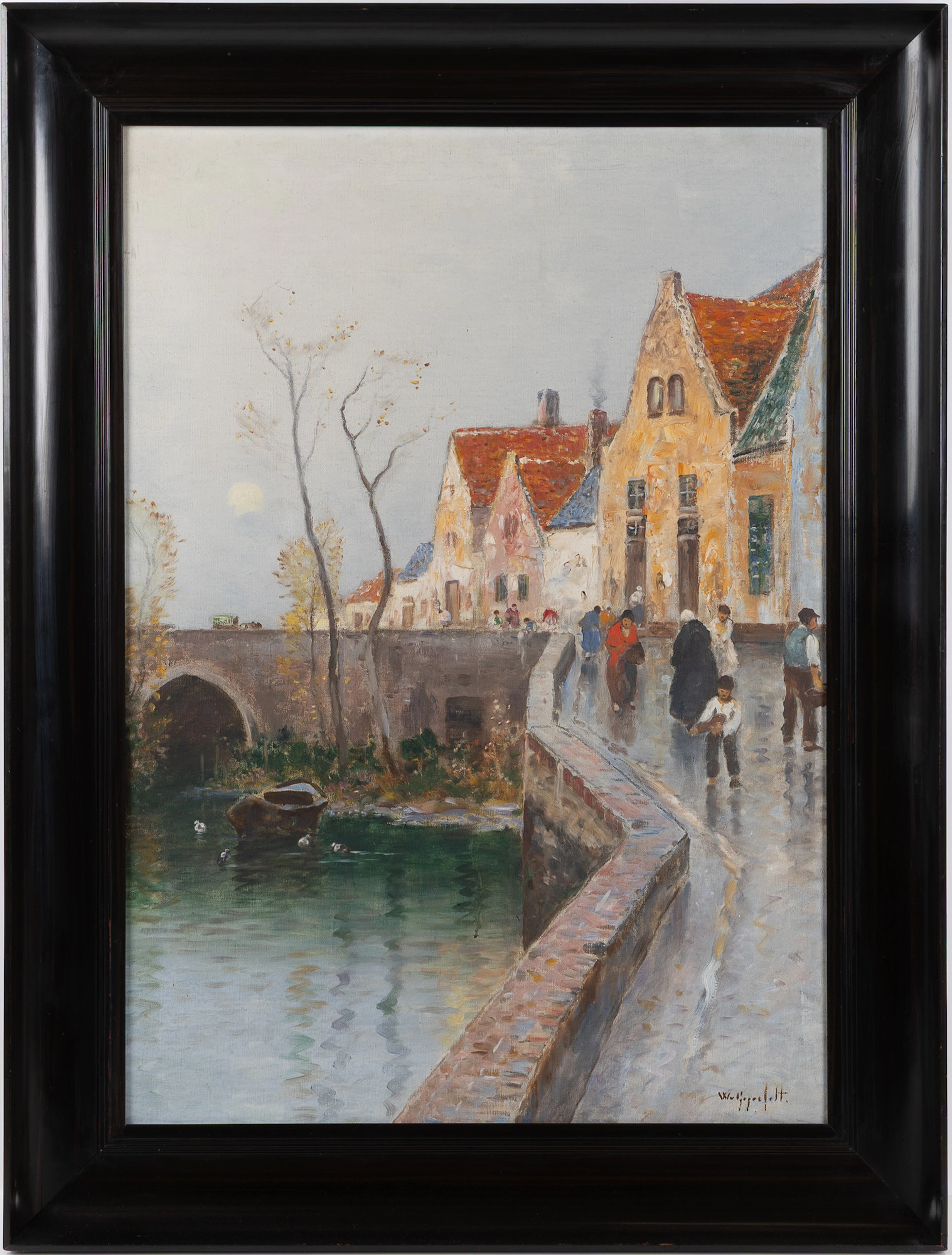
WILHELM VON GEGERFELT. Stadsmotiv med kanal, olja på duk.
10/08/2026
$190.01
Est: $800.09
OCT 17 | 10:00 PM


Bring your auction to collectors worldwide!
Get listed nowBy subscribing, you are agreeing to the privacy policy. Unsubscribe anytime.
Barnebys HQ
Brahegatan 10
BOX 5038
114 37 Stockholm
