


OCT 17 | 10:00 PM

All auctions / Carpets, Rugs & Textile / Tovaglia Rettangolare x 12 Ricamo a mano punto raso e...

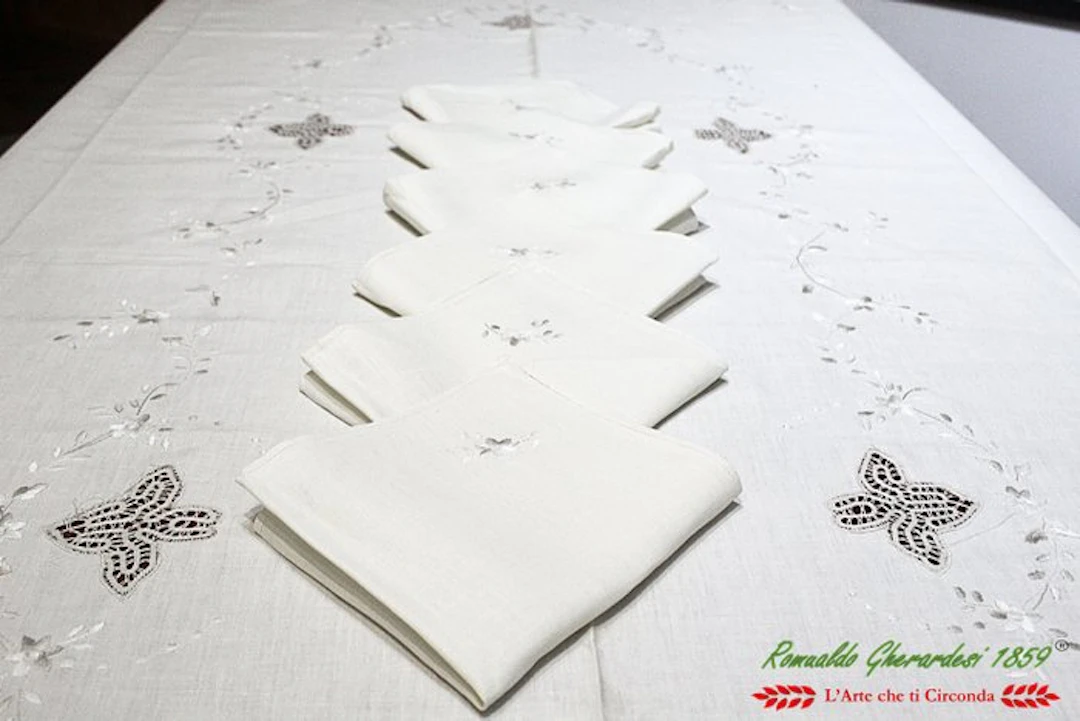
1960 Rectangular Lace Tablecloth with Embroidery Antique Point de Venise weaving 100% linen Exrafine with floral embroidery This wonderful tablecloth has been created in an exceptional way with multiple embroidery techniques and has never been used to preserve it in every way. Description: The tablecloth is accompanied by a luncheon set, also these with embroidery. The measurements of the tablecloth are Length 170 x Width 270 with 12 napkins 40 x 40 the tablecloth may show signs of small natural yellowing Product deliveries are entrusted only to Top couriers such as UPS, DHL and BRT, with guaranteed and insured delivery. The price lists are publicly online Antique work is a technique of counted-thread embroidery to be performed on fabric with a visible and regular weave. The weaving is regular when the warp and weft have the same density, i.e. in 1 cm2 of fabric there are the same number of threads, both horizontally and vertically. A 10x10 linen counts ten threads per cm² (very wide weave), a 22x22 linen (dense weave) contains twenty-two threads per cm2. For the realization of the antique stitch technique it is advisable to choose a warp that can range from 11x11 to 15x15 threads, or use bobbin lace, but also hemp or jute, of course the choice depends on the artistic effect one wants to obtain. The decoration in antique stitch, very linear and sober, is based on alternating blanks (like bobbin threads or ajourés) and solids in the form of geometric real-stitch drawings, sometimes a little rigid but always very graceful and elegant, to which raised stitches are added such as the steam stitch or the sea urchin stitch, and finishing stitches such as the grass stitch, frame, cord and others. Consequently, many stitches are used, each with a particular function (fill, transparency, relief, definition of shapes). Linen is the oldest and most fascinating of textile fibers, it was widely cultivated by Egyptians, Babylonians, Phoenicians and other peoples of the Middle East. The production, transformation and uses of linen are widely documented in tombs, pyramids, and on other monuments among the Egyptians; pure white linen was a symbol of divine purity. Even today the cultivation, harvest and processing techniques are continually evolving, making linen a modern and unique fabric. Linen is grown both for seed production (to obtain a very valuable fiber) that is soft, flexible and strong. As a natural fiber, linen has non-allergenic characteristics and promotes the well-being of the body. Given its softness, immediate absorption and evaporation of liquids, and faster elimination of heat and moisture, The History of Burano Lace Martina Vidal Venezia has its main headquarters in Burano, the island known worldwide for the extraordinary artisanal production of Venetian lace. The Burano lacemaking spread in the Republic of Venice in the 1500s. A strong push for its spread was given by the Dogaressa Morosina Morosini, who, having fallen in love with the art of Venetian needle lace, eventually set up a workshop at the end of the 14th century, in which 130 lacemakers were employed, and whose production served partly to increase the dogaressa’s personal dowry and partly to be sent as gifts on special occasions to the most prestigious courts of Europe. As the years passed, Venetian laces became increasingly sought after across Europe. It is said that on the day of his coronation as King of France, Louis XIV wore an original and precious lace collar that stood out on his cloak, crafted by skilful lacemakers from the island of Burano in two years of patient work. In the 17th century, the century par excellence of lace found in men's, women's, children's, and ecclesiastical attire, Venice specialized in the creation of unique and elegant needle-made items, without giving up bobbin work. The Venetian art of lace was much appreciated in France, so that under Catherine de Medici and Minister Colbert, some lacemakers from Burano moved to the royal manufactories of Remis where they worked the “Punto in aria” (a point typical of Burano lace) under the direction of Sister Marie Colbert, granddaughter of the minister. In 1665 the “Punto in aria” became “Point de France,” thus starting strong competition with Burano lace. Nevertheless, the French point never managed to equal the Venetian one. In 1797, with the end of the Venetian Republic, the production of lace also ended and it became an exclusively family activity. The winter of 1872 was very cold and represented, for Burano’s economy based entirely on fishing, a real tragedy. It was then that, thanks to the involvement of Countess Andriana Marcello and the honorable Paolo Fambri, the art of needle lace was reborn with the main purpose of alleviating, in some way, the dire economic conditions of the Burano population. The memory of Burano lace’s golden period was kept by an elderly eighty-year-old lady, Vincenza Memo — nicknamed Cencia Scarpariola — and it was she who revealed its secrets to a primary school teacher, Anna Bellorio d’Este, who in turn taught them to her daughters and to other girls. The “Punto in Aria” and the “Punto rosa” returned to prominence, and a school was established, so that needle lace became the island of Burano’s main resource. Thanks to the constant interest of Countess Andriana Marcello, many noblewomen of the era — including the Princess of Saxony-Weimar, the Duchess of Hamilton, Countess Bismarck, Princess Metternich, the Queen of the Netherlands and Queen Margherita — entrusted important commissions to the school: in 1875 there were more than one hundred lacemakers. The school’s production continued to grow until 1915, the date when the First World War began. During World War II and the following years the school underwent periods of prosperity and others less so, until in 1970 it was definitively closed. BURANO LACE TODAY The ladies who today know the art of needle lace are very few and mostly work in their own homes. At Atelier Martina Vidal you can admire how these expert lacemakers are still able to create lace using the same techniques their ancestors used in the 1600s. The laces produced make our collection unique, consisting of tablecloths, covers, doilies, collars, sheets, handkerchiefs, fans, bridal veils. These same products in the past served to adorn Europe’s most important homes and to embellish ladies and gentlemen in their important moments. NOTE** Objects auctioned on Catawiki are subject to binding conditions for every bid. If a buyer does not pay within three days of the auction ending (or immediately via 'Buy It Now'), Catawiki may take action on their account. Specifically, it may suspend the ability to bid and purchase until the due payments are settled. In addition, non-payment may result in the cancellation of the sale; in some cases, the buyer may still have to pay the Buyers Protection fee. Account suspension occurs. Please note that if a buyer wins multiple lots, they will be required to pay the shipping for each lot separately to ensure the integrity of the material sent.
Estimate:$168.06
To the auctionView all items fromCatawikiorCarpets, Rugs & Textile
Estimate:
$168.06
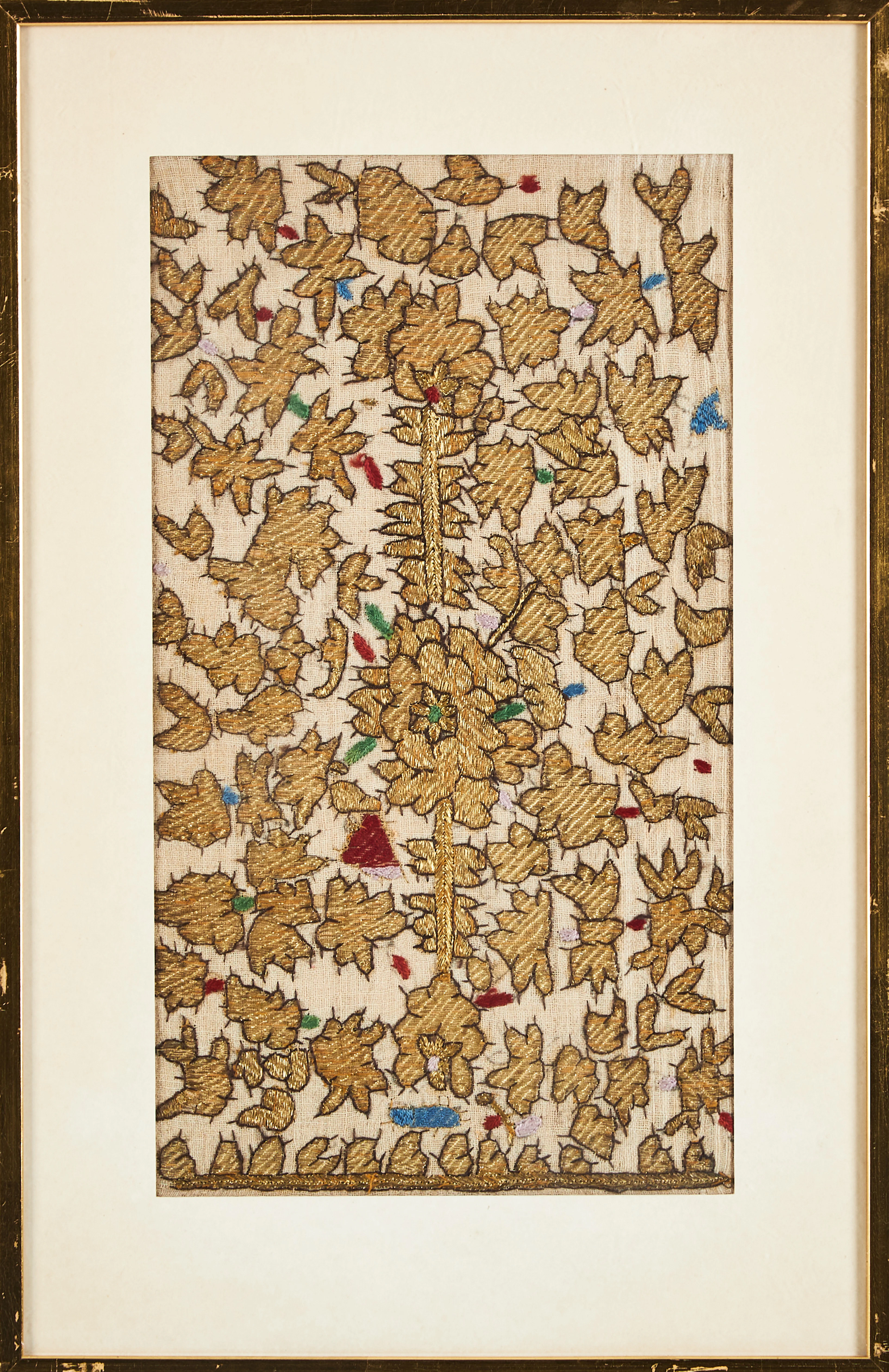
HANDDUK, yaglik, Osmanska riket, 1800-tal, broderi i silkestråd och
10/09/2026
$85
Est: $100.29
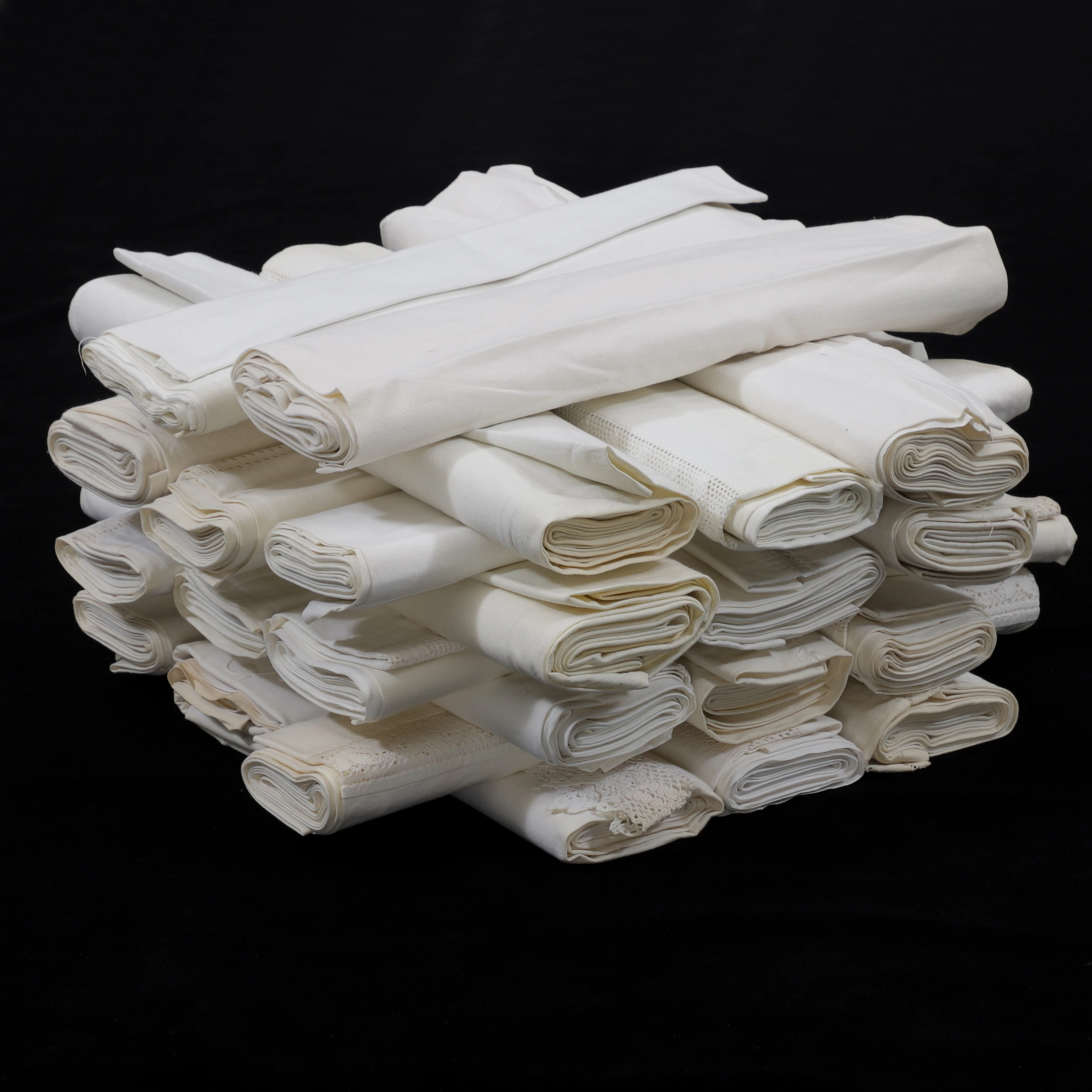
LAKAN med spets och broderier, 23 st, linne mm.
10/09/2026
$85.1
Est: $60.17
OCT 17 | 10:00 PM


Bring your auction to collectors worldwide!
Get listed nowBy subscribing, you are agreeing to the privacy policy. Unsubscribe anytime.
Barnebys HQ
Brahegatan 10
BOX 5038
114 37 Stockholm
