


Bring your auction to collectors worldwide!
Get listed nowBy subscribing, you are agreeing to the privacy policy. Unsubscribe anytime.
Barnebys HQ
Brahegatan 10
BOX 5038
114 37 Stockholm
All auctions / Glass / Roman Judaea Miniature Mold-Blown Glass Unguentarium, Figural Form

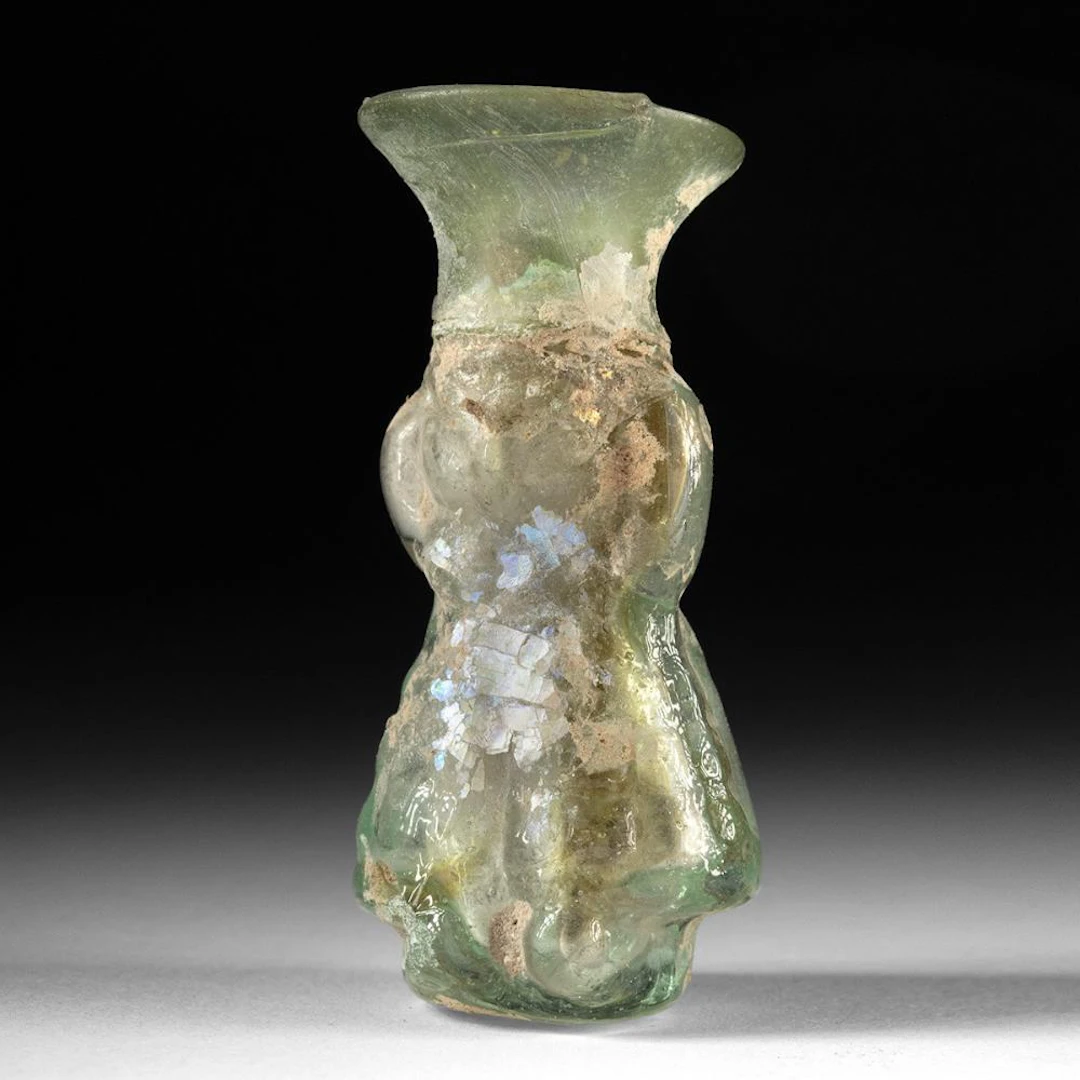
Roman, Imperial period, Eastern Mediterranean, Judea. A miniature mold-blown flask of pale green glass, its body pinched into a stacked, lobed silhouette that reads, at a glance, as an abstracted female figure: flaring rim as headdress, tapering neck, a swelling shoulder, and a skirted, scalloped lower body set on a small splayed foot. The metal retains milky iridescence and pockets of earthen encrustation from long burial, with faint mold seams and the slight asymmetry of hand finishing still legible. Vessels of this scale served as unguentaria, holding perfumed oils, resins, or cosmetics dispensed drop by drop, and they accompanied the dead as often as they furnished the living. The deliberately figural mold, rather than the usual plain or ribbed tube, is unusual and suggests a workshop indulging a taste for novelty shapes. Glassblowing was invented in the Syro-Palestinian corridor during the mid 1st century BCE, and by the reign of Augustus the technique had made glass a common commodity across the empire. Mold-blowing followed quickly: a gather of molten metal inflated inside a carved two- or multi-part mold, which allowed workshops to reproduce decorated or sculptural forms at speed. Judaean and Sidonian ateliers led the trade, and their small perfume containers traveled with the oils they held. Figural and fancy-shaped molds, heads, dates, grape clusters, shells, are the collectible end of that industry, prized then as now for the wit of the shape rather than the volume of the contents. Item # 205114
Estimate:$200
To the auctionView all items fromArtemis Fine ArtsorGlass
Estimate:
$200


Bring your auction to collectors worldwide!
Get listed now
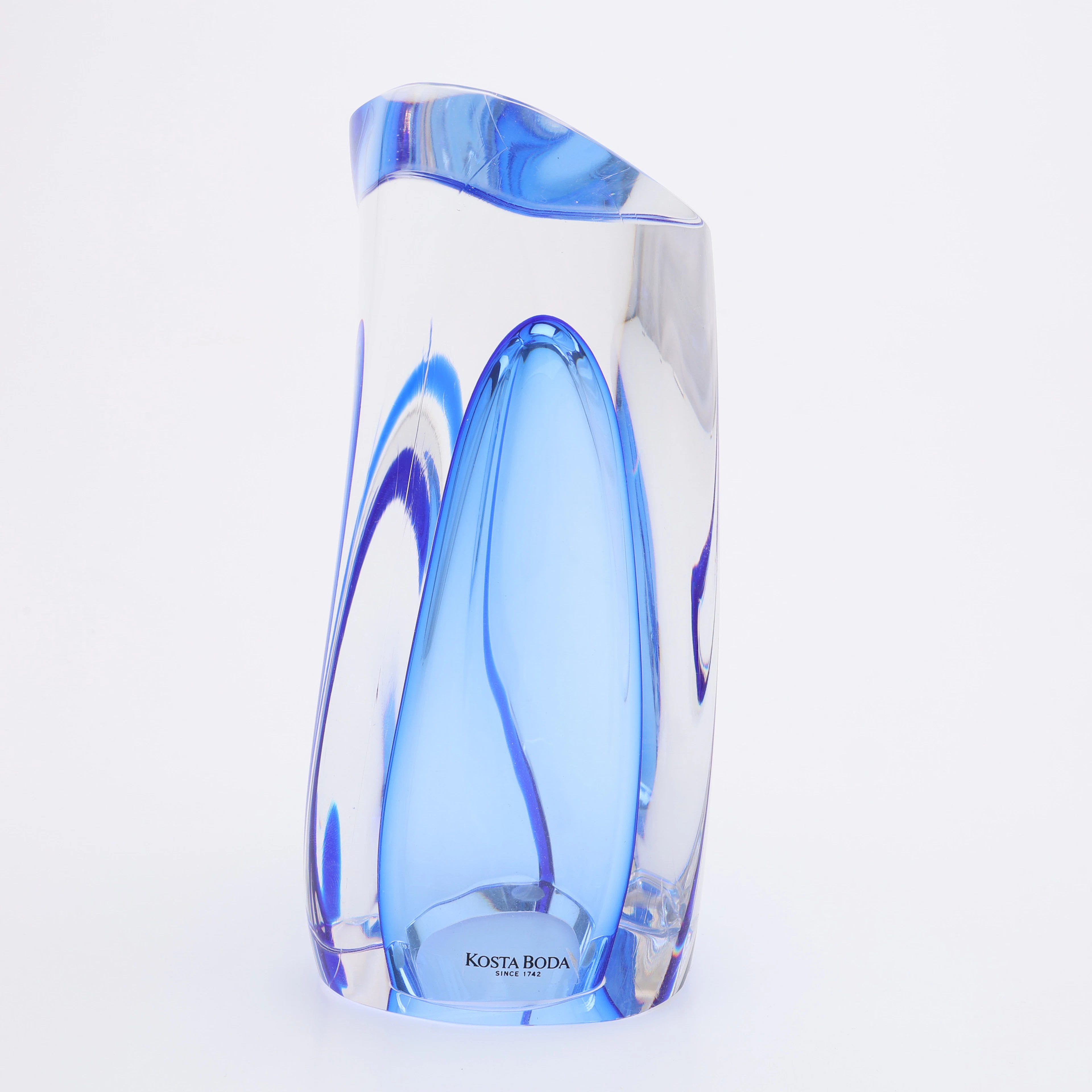
GÖRAN WÄRFF. GLASSKULPTUR, KOSTA BODA, SIGNERAD.
09/29/2026
$139.47
Est: $100.39