

OCT 8 | 3:00 PM

Bring your auction to collectors worldwide!
Get listed nowBy subscribing, you are agreeing to the privacy policy. Unsubscribe anytime.
Barnebys HQ
Brahegatan 10
BOX 5038
114 37 Stockholm
All auctions / Ancient Art / Roman Bronze ring with an incised geometric pattern - 22 mm (No reserve price)

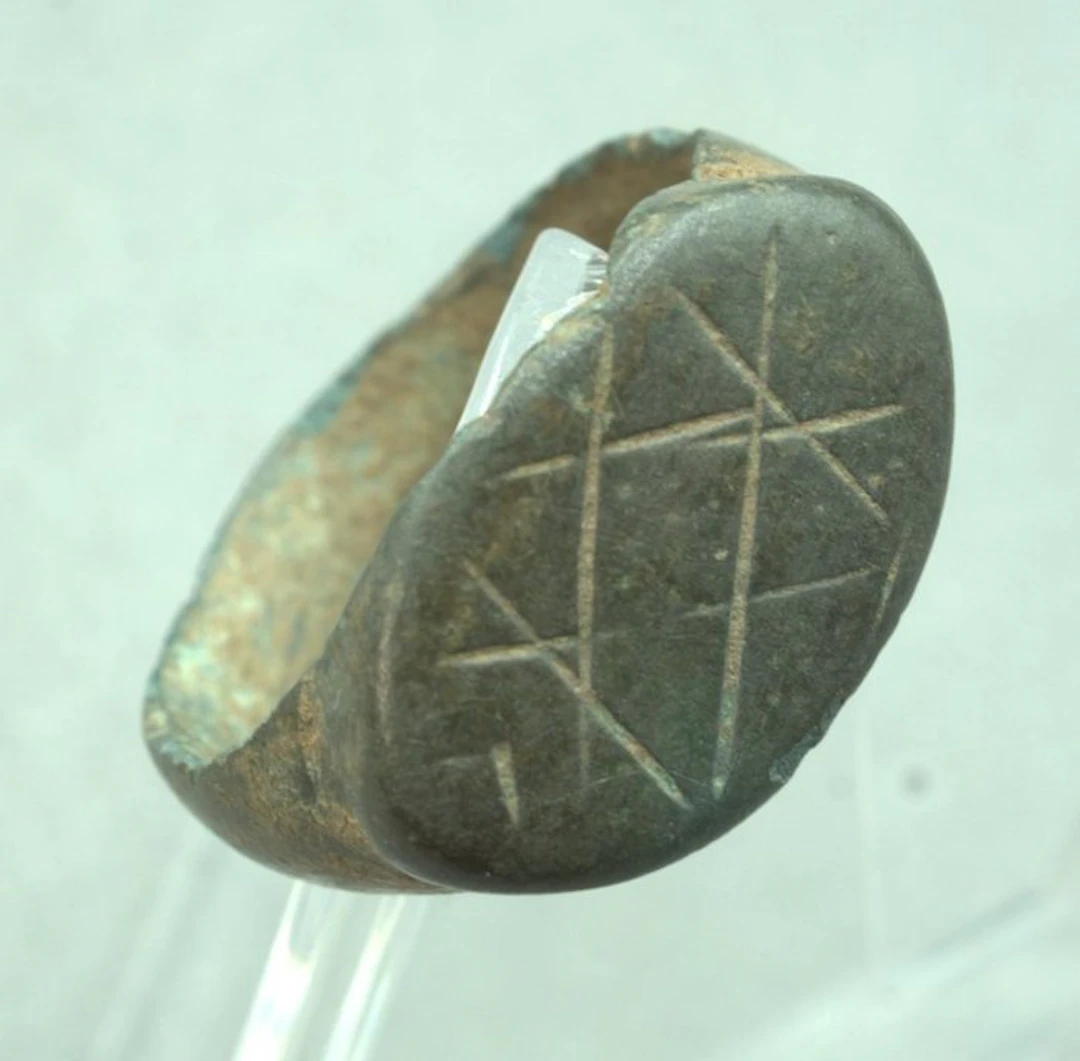
Roman Bronze Ring with Incised Geometric Star Pattern Culture / Period: Roman Date / Period: Roman Imperial Period, circa 2nd–4th century A.D. Material: Bronze Dimensions: Not provided Condition: Good condition, with age-related surface wear and patination. The incised decoration remains clearly visible. No shipping outside the European Union. Due to complex export regulations concerning cultural goods, this item cannot be shipped outside the EU. Please ensure you have a delivery address within the European Union before placing a bid. Provenance information: Object Registration ID: 1013 The current owner (S.N.J. S.) purchased the ring with an incised geometric star pattern from B.N. in Schiedam, the Netherlands. The previous owner, B.N. from Schiedam, stated that the object had been in his collection, but the date of acquisition was not provided. According to the previous owner, the object had previously formed part of a private collection in the Netherlands; the date of this earlier ownership is unknown. No further information concerning the earlier ownership history of the object was available from the previous owner. Background Information: Finger rings were widely worn throughout the Roman world by men and women and could serve as jewellery, personal identifiers and, when provided with an appropriate engraved bezel, as seals. Bronze examples belonged to the broad spectrum of personal ornaments encountered in everyday Roman life and were considerably more accessible than rings manufactured from gold or silver. This example has a substantial hoop expanding into a broad oval bezel decorated with a series of deliberately incised intersecting lines. Together these create an abstract geometric composition with several star-like forms. Geometric and linear ornament formed part of the extensive decorative vocabulary of Roman small metalwork. Without an archaeological context or an identifiable inscription, the precise meaning of the pattern cannot be established, and it is preferable to regard it as geometric decoration rather than assign it a specific symbolic or magical interpretation. Rings of this general character were produced by metalworkers using established casting and finishing techniques. After casting the basic bronze form, the surface could be shaped and polished before linear ornament was cut into the bezel with a pointed tool. The clearly engraved design therefore represents an intentional decorative stage in the manufacture of the object rather than an accidental surface feature. During the Roman Imperial period, personal ornaments circulated widely throughout the provinces alongside people, goods and artistic fashions. Bronze rings are consequently encountered across large parts of the former Roman world, from the Mediterranean regions to the north-western provinces. Their variation in form and decoration reflects both widespread Roman traditions and local workshop practices. As a personal object intended to be worn directly on the body, the ring provides a particularly immediate connection with Roman daily life. Its surviving hoop, broad bezel and hand-incised geometric decoration preserve evidence of both ancient craftsmanship and individual adornment, forming a tangible link to the people who lived within the Roman world.
Estimate:$236.29
To the auctionView all items fromCatawikiorAncient Art
Estimate:
$236.29
OCT 8 | 3:00 PM

OCT 17 | 10:00 PM

Bring your auction to collectors worldwide!
Get listed now$309.43
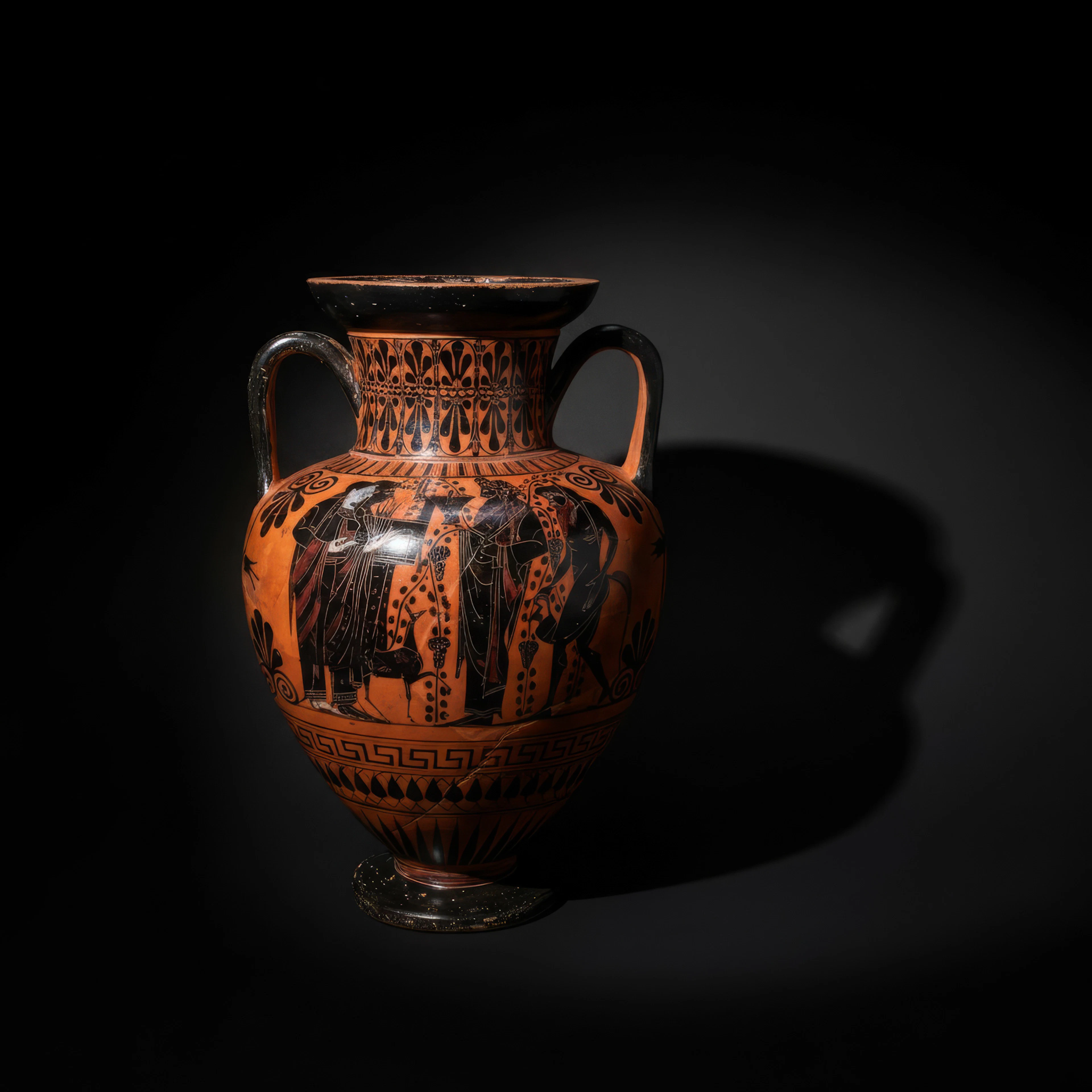
RARE ATTIC BLACK-FIGURE NECK AMPHORA ATTRIBUTED TO THE LYSIPPIDES
06/21/2026

$52,984
Est: $18,530.47
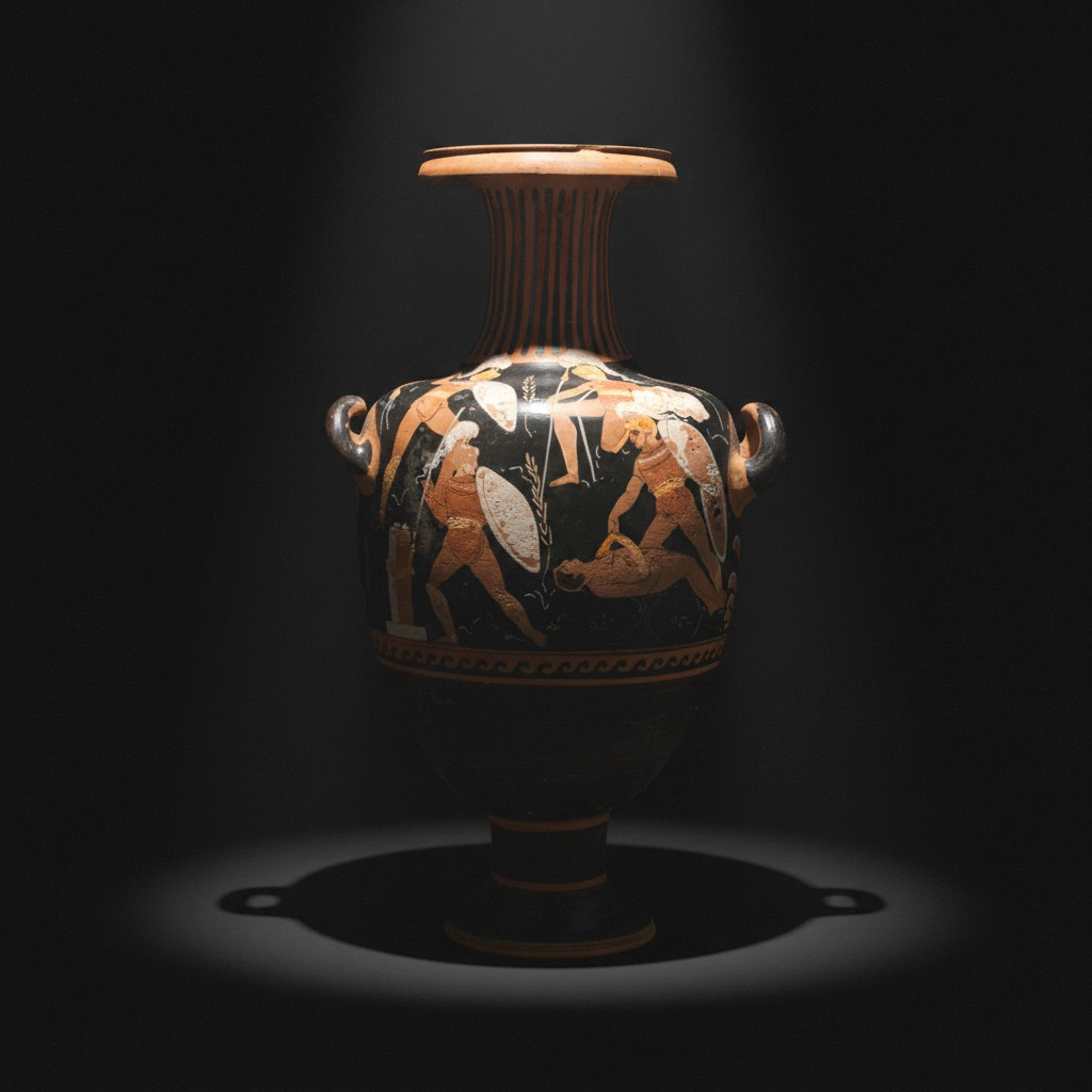
TL TESTED - LARGE GREEK APULIAN RED-FIGURE HYDRIA WITH HOPLITES COMBAT SCENE
06/21/2026
$11,921.4
Est: $7,941.63

OCT 8 | 3:00 PM