




NOV 8 | 1:00 PM

All auctions / Books, Maps & Manuscripts / Raffaele Bendandi [Pseudoscienza - Terremoti] - Un...

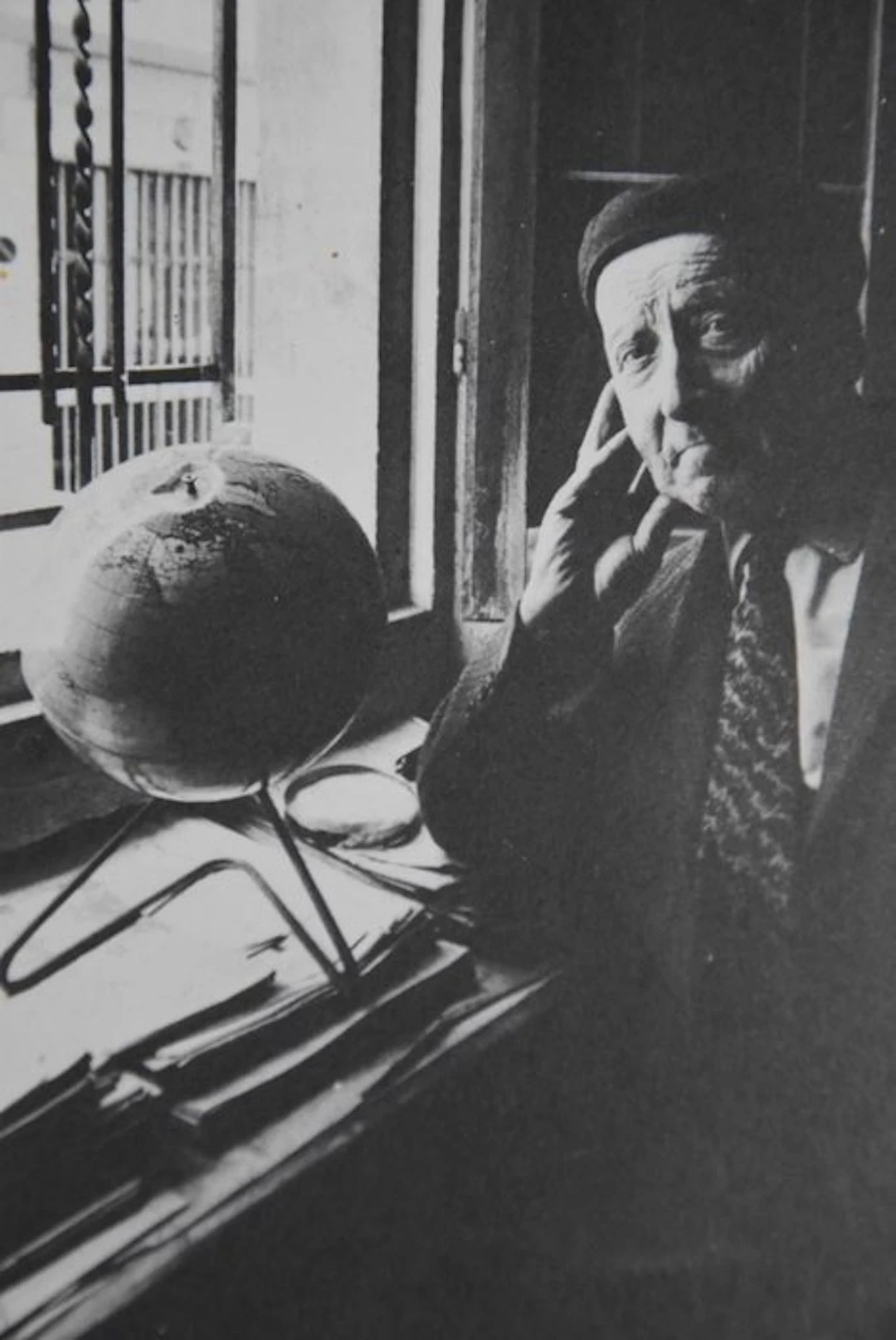
Collection dedicated to the famous self-taught Ferrara-born pseudoscientist Raffaele Bendandi: - Raffaele Bendandi, A Fundamental Principle of the Universe. Volume One (the only one published). The Sun – Its activity – Genesis – On the undecennial cycle. With 80 figures and plates outside the text. Faenza, Bendandi Observatory, 1931. 25 x 18 cm, softcover, numbered pages 322. In excellent condition still with publisher’s wrapper. A copy embellished with an autograph dedication by the author on the first page dated Faenza May 31, 1933. A very rare volume printed at the author's expense and never appeared on the antiquarian market. In this work Bendandi presents his theories. The attraction of planetary masses with the lifting of semi-liquid masses inside the Earth would trigger earthquakes, especially when the Sun and the planets are in particular conjunctions, hence the possibility of predicting telluric phenomena. - Autograph pencil letter: “La Loggia Prov. di Torino dec. 26, 1911. Dear Ragazzini: Since a period of frequent earthquakes is approaching, especially in our Romagna, I beg you to note all tremors and signals in these days or year. Please note on a small sheet of paper all earthquake news you may have, and give it to my parents who will send it to me. Please grant me this favor and I will be grateful and I will send you a few postcards here from Turin where I am, and when I come on leave I will bring a keepsake of the city. If you want to do this, you can send me a small newspaper notice and mine will put it in the first letter they send me. The period approaching is very grave for earthquakes, especially between January 2–3 and also on January 12 and 13, so please let me know if the two signals occurred. I am deeply grateful, Bendandi Raffaele.” The paper measures 18 x 11 cm, with fold marks and minor marginal wear. - Sky and Earth. Bi-monthly bulletin of cosmic forecasts published by the Bendandi Observatory in Faenza. Nine consecutive issues from the first issue of 1950 to No. 4 of 1951. Probably all that was published – there are no bibliographical records for this very rare magazine. - Extract from the inventory of the collection donated by the seismologist Raffaele Bendandi to the Municipality of Faenza. Faenza, 1982. 48 pages. - Tiziano Cantaluppi, The Earthquake Can Be Predicted. Bendandi’s Theories. Rome, Atanor, 1982. Raffaele Bendandi (Faenza, October 17, 1893 – Faenza, November 3, 1979) was a self-taught scholar who devoted himself to the study of astronomical, geophysical and seismic phenomena, carrying out observations and research independently, independently creating his own measuring instruments. He founded and directed the Faenza Geophysical Observatory, conducting intense research and outreach. For eight years he was a national member of the Italian Seismological Society. He developed his own theory, lacking any objective corroboration, on the nature of earthquakes and their supposed causes[1]. His studies and his alleged forecasts are regarded by the scientific community as lacking theoretical basis and empirical validity. A verifiable scientific exposition of his theory has never been published. Raffaele Bendandi published his forecasts mainly in Italian and foreign newspapers including Il progresso italo-americano (with exclusive rights in the twenties) and The Globe (in the sixties). He had contact with Il Piccolo, Il Resto del Carlino and La Nazione. More than twenty foreign newspapers published his forecasts, including: The Hamilton Spectator, Daily News (New York), Los Angeles, La Prensa (Argentina), Le Matin (France), The New York Sun (newspaper), Chicago Tribune and others.[2] His popularity grew and persisted internationally[3], such that, many years later, Charles Francis Richter (co-author, with Professor Beno Gutenberg, of the Richter scale) dedicated him a page, albeit critical, in his fundamental Elementary Seismology of 1957. The life Raffaele Bendandi as a youth. He was born in Faenza, in the district traditionally called Filanda Vecchia, to a humble family that could not afford to continue higher studies. After elementary school, at 11 he worked as an apprentice in the clockmaker Ferdinando Frontali’s workshop. At the end of 1905 he joined Ebanisteria Faentina, at Case Chiarine, honing his craft as a wood carver.[4] After attending the Scuola di Disegno Sarti, he began to create toys for the FAG company of Faenza.[5] He also crafted inlays and wooden Madonnas for several churches in Emilia-Romagna, leaving marks especially in some works carried out in the cathedral of Lugo[6][7]; for many other works no record remains, while according to some sources some examples are still preserved in the same city.[8][9] At age 14 he enrolled in the Municipal School Tommaso Minardi of Industrial Design and Plastics for Artisans of Faenza. After three years, having passed the exams regularly, he obtained the license on August 1, 1910. He was already passionate about astronomy and geophysics, to the point of building a telescope himself. Subsequently, according to an order form (no. 1230) dated May 5, 1939, he sold to G. B. Paravia & C. four complete microsismographs, intended for overseas shipment.[10] Order form Paravia for 4 microsismographs made by Raffaele Bendandi Following the Messina earthquake of December 28, 1908 magnitude 7.1 he became an amateur in the study of earthquakes. During the Great War, he served as an observer and mechanic in a hydroplane squadron at Porto Corsini. After the conflict, from early 1919 he worked in the facilities of the Caproni Aeronautical Works near the Taliedo airfield (Milan), testing in the military specialized department where wings were built.[12] On March 30, 1920 he was named a national member of the Italian Seismological Society[1] when he received the corresponding membership diploma. On January 13, 1928 he submitted his resignation. He formulated a personal theory, inspired by walks along the shoreline while on guard duty in the military service. His method for forecasting earthquakes, never formally presented and thus never recognized by the scientific community, was based on the hypothesis that, in addition to the Moon and the Sun, responsible for solid earth tides, other celestial bodies contributed to stirring the movements of the Earth’s crust. The latter, Bendandi claimed, would deform and pulsate with times and rhythms dependent on the most attractive planets of the solar system, with an intensity represented by numerical values inspired by the model of Luigi Chionio[13][14]. The Vallecchi publisher of Florence in 1922 offered him 2 million lire (in purchasing power terms, equivalent in 2026 to about 60–120 thousand euros) to obtain the rights to publish a treatise, which Bendandi refused: he did not deem such theories yet sufficiently confirmed by experimentation.[15] On December 20, 1923 at the notary Domenico Savini of Faenza[16] he deposited a forecast: on January 2, 1924 there would be an earthquake in the Aegean Sea; although this forecast proved incorrect, Corriere della Sera gave him the front page, calling him The Man Who Foresees Earthquakes, contributing to his international notoriety. Raffaele Bendandi: one of the working papers on the migration of the geographic pole Through his hypothesis he attempted to explain the supposed catastrophe that would have caused the disappearance of the continent of Atlantis, present in a Platonic myth. He believed planetary gravitational forces, added together, would cause a shift of the geographic pole, with a consequent displacement of the equatorial bulge and flooding of some regions of the globe. In 1931 Bendandi entrusted two packets to the Pontifical Academy of Sciences and the Academy of the New Lyncei, which he claimed contained the exposition of the method he had discovered to interpret the Solar undecennial cycle and to predict earthquakes. In the same year he published a first book titled A Fundamental Principle of the Universe, in which he described his theses on the genesis of the Sun’s undecennial cycle. In the second volume, completed in 1933 and published posthumously under the title Stars. Suns of the infinite, he dealt with the study of variable stars. Raffaele Bendandi The mechanism of the undecennial cycle (from the volume A Fundamental Principle of the Universe) During the fascist period, he was first named Cavaliere dell’Ordine della Corona d’Italia by Mussolini in 1927[1]; subsequently he was warned not to publish further forecasts of earthquakes in Italy. In reality he continued to do so, but for abroad.[2] In 1928 Bendandi postulated the existence of four other planets besides Neptune[1], based on his studies of seismic activity, which he named Rex, Dux, Roma, and Italia according to the conventions of the period. No objective proof of the actual existence of such hypothetical planets was ever provided. Interrogated after the Vajont disaster of 1963, Bendandi claimed that the seismographs at his observatory and Swiss ones had recorded a real seismic event, ruling out that it was merely a landslide. The traces indicated waves coming from depth, a sign that the quake had anticipated the surface landslide.[17] Representation of the gravitational perturbations of the trans-Neptunian planet named I on Neptune Based on his theory, Bendandi claimed to have predicted the Friuli earthquake of 1976. To clarify officially the validity of his research, the University of Urbino “Carlo Bo” sent him a letter requesting the complete documentation of his studies and theories.[18] Raffaele Bendandi was found dead on November 3, 1979 in his Faenza home-observatory. The theory on the nature of earthquakes For much of the 20th century, scientific communication often occurred through preliminary notes, exploratory articles and progressive debates, before reaching organic theoretical frameworks.[19] Bendandi never gave a unified form to his theory of earthquakes, as he did for the stars in the two volumes of A Fundamental Principle of the Universe. Among his notes, however, there is an index[20] and a bibliography[21] that testify to the intention to publish a work devoted to the topic. Raffaele Bendandi. Study of the perturbing forces acting on the Earth From the outset he decided not to publicize the core of his theoretical model, which he claimed was based on a mathematical formula already present in the scientific literature.[22][23][24] Nevertheless, other fundamental elements of the theory can be reconstructed through communication and examination of his statements, the so-called geograms of the forces, his formulated forecasts and the related confirmations (mostly referring to forecasts for geographically too broad areas or proven unfounded; only in one case, characterized by high space-time definition, with contemporary journalistic documentation[25] and two attestations from institutional[26] and scientifically cultural[27] authoritative sources of the area affected by the shocks, did a forecast sufficiently circumscribed come true; in the remaining cases where confirmation was deemed positive, these concerned forecasts for extremely broad areas, such as the entire Italian territory). overall, Bendandi’s theory, though it changed and simplified over the years, always retained a predominant lunar orientation. Fundamental principles According to Bendandi “of the thirteen movements to which the Earth is subjected”: - Daily rotation of our globe around its axis in 23 hours 56 minutes - Annual revolution around the Sun in 365 days and a quarter - Precession of the equinoxes in the period of 25765 years - Variable obliquity of the ecliptic from 21.58 to 24.36 degrees - Secular variation of the eccentricity of the Earth’s orbit - Movement of the line of apsides in the period of 21,000 years - Nutation produced by the Moon in the period of 18 years - Monthly shift of the Earth around the center of gravity of the Earth–Moon pair - Perturbations resulting from the constantly changing motions of the different planets in our solar system - Shift of the solar system’s center of gravity about which the Earth describes its orbit annually - General transition of the entire solar system toward the constellations of Hercules and Lyra. - Oscillation of the Earth’s pole with a period of 14 months: a movement that makes all terrestrial latitudes vary. - Periodic deformation of the Earth or the tide of the solid crust with diurnal and semi-diurnal periods, produced by the attractive actions of the planets.[28][29] “at least ten, it is universally admitted, are produced by the changing and numerous external attractions; there is no reason to exclude a priori that seismic manifestations could not fall into this category of cosmical phenomena dependent on the same cause”.[30] Bendandi denies the local character of the earthquake, arguing that to consider it as local would be as absurd as denying that tides and a falling object are governed by the universal law of gravitation.[31] With Communication Three[32], drafted around 1940, he sets out his six-point theory of earthquakes: - All seismic movements - wherever they occur on the globe - have a common origin - The decisive cause of these telluric perturbations lies solely in a disturbance of the Earth’s equilibrium produced by the variable attractions of the different planetary masses that make up the solar system - The perturbative action of the various members of our system cannot be separated from that of our satellite, which, now adding and now subtracting, determines the absolute instant of the seismic phenomenon - Every orogenic movement of the Earth’s crust, every underground displacement, every collapse or fracture, every slipping or sliding of layers, as well as all other supposed causes invoked to explain these phenomena, are nothing but the immediate consequence of a deformation of the great planetary body produced by external perturbative forces - All earthquakes, like volcanic eruptions – especially explosive ones –, although irregular, are nevertheless phenomena governed by exact and precise laws, which fall within… the complex problem of perturbations, well known to astronomers for the innumerable difficulties it presents - This periodic deformation (earth tide) of the globe, accomplished under planetary attraction, also gives rise to all those inexplicable irregularities that the Earth’s rotation around its axis reveals and which have long led scientists to conjecture, placed in an absolute impossibility to explain them. Raffaele Bendandi. Migration of shocks from June 1913 to January 1915 (Avezzano) Historical-scientific context Bendandi’s theory emerges on the track of authoritative, but also unverified, preliminary scientific studies. The lunar component finds inspiration in earlier lunisolar hypotheses developed in academic and scientific research, in the statistical studies of Pure and Applied Mathematics Professor Alexis Perrey, one of the pioneers of seismic cataloguing and among the founders of seismology, and in lunisolar hypotheses formulated but not fully developed by Giulio Grablovitz, among the most authoritative seismologists between the 19th and 20th centuries; two authors both cited by Giovanni Battista Alfano in Sismologia moderna of 1910, together with Alessandro Serpieri and the only mentioned Rudolf Falb, whom Bendandi appears to follow as a hobbyist of astronomy, self-publisher, forecaster of earthquakes, extreme weather events and grisou explosions.[33] Raffaele Bendandi. Shocks recorded in Central Italy and Southern Italy For the planetary component one must consider that from the mid-1700s to the end of the 1800s, the study of gravitational perturbations among the planets of the solar system constituted the main topic of celestial mechanics and was the subject of study and application by the most eminent mathematical astronomers.[34] After Neptune’s discovery in 1846, astronomers began to hypothesize the existence of another planet (or more) even farther away. Neptune itself had been discovered because it “disturbed” Uranus’s orbit. However, once Neptune’s orbit was calculated, astronomers noted that Neptune also seemed to suffer small perturbations not explainable, suggesting the existence of a planet X or trans-Neptunian planet that would influence its trajectory. At the beginning of the 20th century, the American astronomer Percival Lowell devoted much of his life and resources to searching for this celestial body. It is in this context that in 1895 the publisher Ulrico Hoepli published the 1834 work “Gravitation. Elementary Explanation of the Main Perturbations in the Solar System” by the royal astronomer George Biddell Airy. The perturbation theory was developed by Newton from a geometric point of view, but Airy manages to treat the subject without introducing any algebraic symbol, surprising himself with the ability to give a general explanation for almost all inequalities, recognized as sensitive in theoretical astronomy works.[35] Bendandi could approach one of the most complex and difficult chapters of celestial mechanics thanks to a text with simple but rigorous exposition, like other Hoepli texts present in his library.[36] Bendandi also took into account non-academic studies, such as the planetary hypotheses of the artillery captain Julien Delauney[37][38] which is nonetheless cited by Fernand de Montessus de Ballore[39] who suggested that Delauney had predicted in 1879 the beginning, by the mid-1883, a period of great seismic perturbations, coinciding with events such as the Casamicciola earthquake of 1883 Mw 5.8 on July 28 (2,313 victims) and the Krakatoa eruption of 1883 (26,000 deaths) of May 20, whose atmospheric wave reverberations were felt worldwide.[40] Bendandi began developing his studies having lived through an extraordinary sequence of destructive earthquakes between 1905 and 1920 which, after 1915, affected annually mainly the Northern Apennines, Emilia-Romagna and Tuscany, his homeland and border regions.[41] To understand Bendandi’s rise to public attention, one must also consider one of the “horrible years” of the early 20th century: 1906. It was a year marked by an extraordinary concentration of devastating natural disasters, from the eruption of Vesuvius (216 deaths and about 35,000 refugees) to the great earthquakes of magnitude 8.3 that struck the modern cities of San Francisco (about 3,000 deaths) and Valparaíso (3,882 deaths), events that had a profound impact on international public opinion. Solar activity and earthquakes Regarding the possible relation between solar activity and the onset of earthquakes, Bendandi spoke on several occasions in explicit terms, excluding the existence of a direct causal link between the two phenomena. Interviewed in 1953[42] by Professor Nevio Matteini, historian, journalist and teacher of History and Philosophy at the Liceo Scientifico Alessandro Serpieri in Rimini, he stated: "As for predictions of meteorological, electromagnetic, and physiopathological shocks of man, the field of inquiry is always that of celestial mechanics; only, while for earthquakes I base myself on geocentric elements, here I use heliocentric elements". When answering a letter from a reader of Epoca, sent by Enzo Biagi, to whom Bendandi received a letter asking, “what exactly is meant by ‘cosmic crisis’?”, Bendandi did not list earthquakes among his effects.[43] In a typed manuscript dated 1960 kept at the Faenza house-museum, on the link between terrestrial ailments and solar activity, it reads “But what is contrary to the truth is to assert that earthquakes are produced by the Sun and by its activity” and “The Sun’s action in the mechanism of earthquakes is therefore only indirect or secondary.”[44] After the Friuli earthquake of 1976, in Ravenna and throughout Romagna the rumor quickly spread that Bendandi would have predicted an earthquake or even a devastating tsunami between late May and early June. The news caused strong alarm, with numerous calls to newsrooms, to Bendandi himself and to the Municipality of Faenza, even from other Italian cities. Asked for clarifications, Bendandi categorically denied any forecast of earthquakes or tsunamis. He explained that the misunderstanding would have arisen from a prior interview in which he spoke about the resumption of solar activity and its possible repercussions on Earth: “It is clear that I meant for living beings, for machines; not that solar activity would cause earthquakes. That would be absurd”[45] However, for example, on December 1, 1961 Bendandi signed the article The Sun Regulates Telluric Crises in Il Globo. The title, presumably attributed to the newspaper’s direction, is in evident contrast with the content of the text. While the statement suggests a direct and decisive relationship between solar activity and seismic crises, in the article the author maintains a much more cautious tone, limiting himself to careful statements such as “the Sun must not be considered completely external” and “its action is not altogether negligible.” Overall, in the 1960s, Bendandi’s position appears ambivalent. On the one hand, he describes the causes of earthquakes as attributable to the most attractive celestial bodies, on the other hand, in some writings, especially in the early 1960s, he attributes a regulatory function to the Sun in crises, calling them telluric, which gives rise to confusion: today the epithet telluric is commonly considered synonymous with seismic. However, Bendandi used it more broadly, often substituting terrestrial. In any case in his observations the “telluric effects” resulting from solar crises were limited to intense atmospheric phenomena, negative health effects (particularly in people with cardiovascular diseases), magnetic disturbances (believed to cause airline anomalies) and an increase in crime.[42] Development and production of scientific instruments Raffaele Bendandi, parallel to his geodynamic research, dedicated himself to the design and construction of scientific instruments for detecting physical and geophysical phenomena. Interest in these instruments is documented by contacts with civil and military bodies. In a letter of October 16, 1937, the Higher Directorate of the Technical Service of Arms and Ammunition communicated the intention to send two technical officers to the observatory to examine a device for seismic detection of enemy artillery, built by Bendandi in collaboration with Monsignor Mariani, and to arrange possible practical tests at a military range. Raffaele Bendandi. Postal correspondence on a device for seismic detection of enemy artillery Further evidence of Bendandi’s instrumental activity is found in a letter of April 16, 1962 from Filotecnica Salmoiraghi S.p.A. of Milan, in which the company requested information and a quotation regarding a device he developed for recording vibrations suffered by buildings following the passage of heavy vehicles, designated as a “trepidometer.” Raffaele Bendandi. Request for a price quote for a device to detect the road passage of heavy vehicles Bendandi’s commitment to building large instruments is also attested by the press of the time: La Stampa of August 24, 1939 reported that he had gone to Turin to ship to the United States a device weighing about 30 quintals.[46] The letterheads of the Geodynamic Observatory, used for official correspondence, list the instruments he could make: azimutographs, gravimeters, inclinographs, magnetographs, accelerometers, magnetic telescopes, microsismographs, orthosismographs, didactic geophysics and astronomy instruments, complete supplies for geodynamic observatories. Legacy and influences Only years later, thanks largely to the association “La Bendandiana,” of which Dr. Paola Lagorio is president, was the abundant material left by Bendandi organized. Searching among his papers and publications, 103 “predictions” have been collected, 61 of which concern Italy; the latest publications date to 1977. In early 2011 a false online rumor circulated, denied by the Bendandiana association itself, that Bendandi had predicted a disastrous earthquake for the city of Rome on May 11, 2011, an event that did not occur.[47] His “seismological” theory, from a geological and geophysical point of view, has no objective corroboration or foundation, and stands in clear contradiction with scientific knowledge in seismology. A systematic approach to studying Bendandi’s methodology was applied in 2012 by Paola Pescerelli Lagorio and Adriano Ballabene through dedicated software[48]. The principles of his forecasting method were expounded[49][50] during the European Geosciences Union General Assembly 2015 (EGU), in Vienna on April 15, 2015. On February 28, 2023, the Raffaele Bendandi House-Museum was included among the “Homes and Studies of illustrious people of Emilia-Romagna”[51]. The Bendandi House Museum The Bendandi House Museum and Faenza City Geophysical Observatory regularly hosts conferences, meetings and seminars dedicated to Geophysics, Seismology and Scientific Outreach, with the aim of promoting scientific knowledge among the public. Over the years the institution has organized numerous events with the participation of scholars and nationally prominent bodies, including: - March 27, 2013. Can earthquakes be predicted? From new scientific instruments to recent proposed laws. An excursion on the state of knowledge, a talk given by Giuliano Panza, Professor of Seismology and lecturer of Geophysics at the University of Trieste, organized by the La Bendandiana Association. - between April 12 and May 25, 2014. The Hidden Universe. From the first steps on the Moon to space in 6D, an exhibition produced in collaboration with the Italian Space Agency (ASI) and the Malmerendi Natural Sciences Museum. - February 25 to March 13, 2017. Earthquakes: past, present, future... safer. An exhibition entirely dedicated to earthquakes, seismic risk and prevention. Organized with the collaboration of INGV and other major research institutions. Through these initiatives, the Bendandi House Museum plays an active role in spreading scientific culture and in promoting research in Earth Sciences and Space Sciences. The Bendandi House is part of the National Association of Houses of Memory, which brings together house-museums dedicated to important figures in culture, art, science and history, with the aim of promoting their life, works and ties to the territory. The Bendandi House is the reference site for coordinating Emilia-Romagna, led by president Paola Pescerelli Lagorio. In Emilia-Romagna the Association includes 19 Houses of Memory, namely: Pellegrino Artusi, Francesco Baracca, Raffaele Bendandi, Giuseppe Bertozzi, Giosuè Carducci, Secondo Casadei, Giuseppe Dozza, Enzo Ferrari, Luigi Fioravanti, Tonino Guerra, Giovanni Liverani, Carlo Matteoli, Giorgio Morandi, Luigi Moretti, Giovanni Pascoli, Luciano Pavarotti, Aurelio Saffi, Mario Savini, Giuseppe Turci, Don Giovanni Verità, Giuseppe Verdi (Busseto and Sant’Agata). The Association “La Bendandiana” The Bendandiana Association was founded in 1983 to preserve Bendandi’s work, promote scientific research, organize educational activities and disseminate scientific culture. The body organizes exhibitions, conferences, guided tours and publications, in collaboration with schools and museums. The house-museum is today a center of study, dissemination and memory of Faenza’s scientific tradition. The association aims to promote the house-museum as a scientific museum, the importance of its archive and library, to keep Bendandi’s legacy alive, and to highlight his autodidactic commitment. The Scientific Council The Observatory’s Scientific Council is made up of university professors, principal researchers and Research Directors from the following bodies: National Research Council (CNR), National Institute of Astrophysics (INAF), National Institute for Nuclear Physics (INFN), National Institute of Geophysics and Volcanology (INGV), European Organization for Nuclear Research (CERN), Vesuvian Observatory (OV).[52] The Seismological Observatory The Seismological Observatory houses five unique seismographs, largely built by Raffaele Bendandi in the 1920s–30s, fundamental to the development of applied geophysics and to the scientific recognition obtained by the scholar. There are instruments capable of recording earthquakes nearby and far away, with precise recording systems on smoked drums and electronic devices to determine the exact timing of events. The observatory also preserves important scientific and historical instruments, including meteorological devices and a vertically reconstructed seismograph by Dr. Tiziano Cantalupi (former director of the Observatory), capable of distinguishing seismic waves with great precision. Overall, it represents a scientific and cultural heritage of great value. The library and archive The library contains over 1,700 titles among specialist books, monographs, articles and publications related to geophysics, astronomy and seismology, in addition to bulletins, newspaper collections and archival materials. The Stellarium In 1986 Father Giovanni Lambertini created an original underground planetarium with simple, recovered materials. The space reproduces the starry sky with fluorescent effects and displays instruments, documents and objects related to Bendandi. It is an educational and evocative environment, designed to stimulate scientific curiosity.
Estimate:$784.16
To the auctionView all items fromCatawikiorBooks, Maps & Manuscripts
Estimate:
$784.16
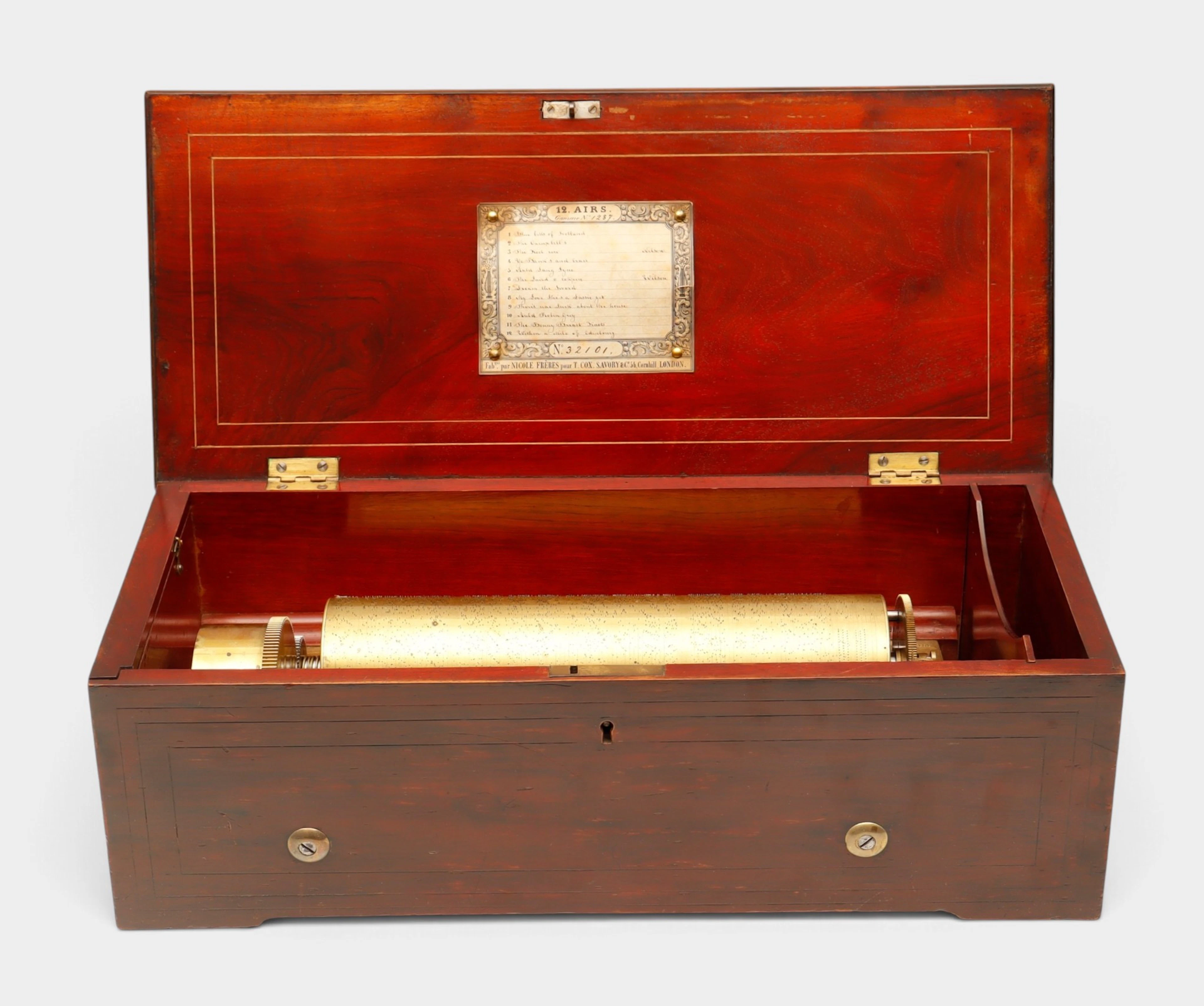
Caja de música suiza de doce canciones de Nicole Frères, hacia 1848-1852.
10/22/2026
$1,512.31
Est: $1,460.33
Guerra de la Independencia, Cataluña, 1808-1809.
10/22/2026
$145.63
Est: $157.63
NOV 8 | 1:00 PM


OCT 31 | 4:00 PM


OCT 27 | 4:00 PM
Bring your auction to collectors worldwide!
Get listed nowBy subscribing, you are agreeing to the privacy policy. Unsubscribe anytime.
Barnebys HQ
Brahegatan 10
BOX 5038
114 37 Stockholm
