OCT 8 | 3:00 PM

Bring your auction to collectors worldwide!
Get listed nowBy subscribing, you are agreeing to the privacy policy. Unsubscribe anytime.
Barnebys HQ
Brahegatan 10
BOX 5038
114 37 Stockholm
All auctions / Arts & Graphics / Paul Klee - Motiv aus Hammamet, 1914 - Artprint - 73 x 60 cm

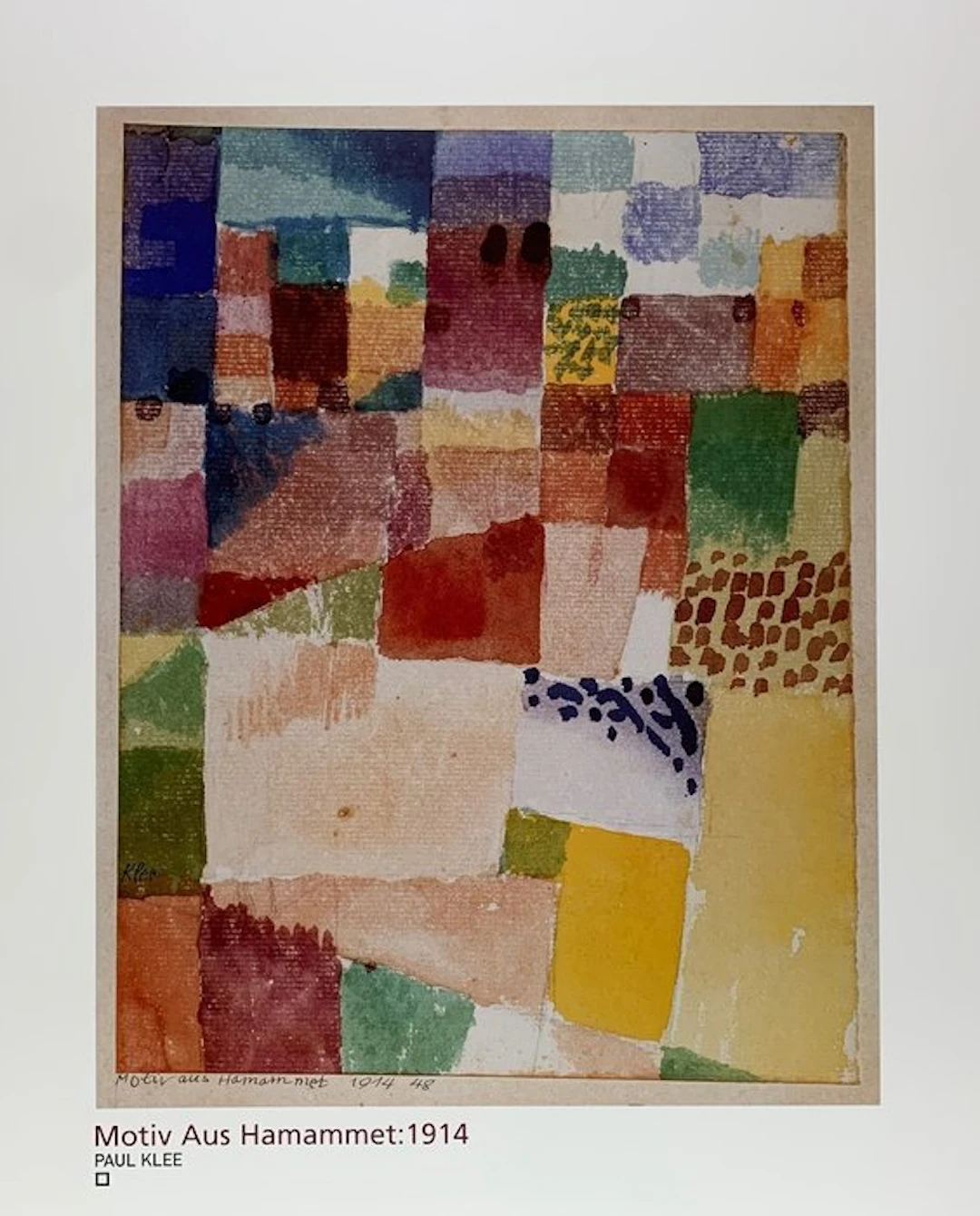
Beautiful, expressive art print by Paul Klee in the format 73 x 60 cm with the title Motiv aus Hammamet, 1914. The work is a high-quality offset print on sturdy paper and in very good condition. - printed and published by Kunstverlag circa 1990-2000 - obtained directly from Kunstverlag - since then professionally stored in a light-protected graphic archive Artist: Paul Klee Title: Motiv aus Hammamet, 1914 Medium: Art print Technique: Offset print Originality: Reproduction Sheet size: 73 x 60 cm Condition: New Origin: Kunstverlag Era: Classical Modernism Nationality: German Art Paul Klee: Paul Klee, born December 18, 1879 in Münchenbuchsee, Switzerland, and died June 29, 1940 in Muralto, Switzerland, is among the most important artists of the modern era. Known for his diverse styles and techniques, Klee profoundly influenced 20th-century art. His works, often inspired by music, poetry, and childlike imagination, blend abstract forms with figurative elements to create a unique visual language that influenced many artists after him. Klee’s artistic training began at the Academy of Fine Arts in Munich, where he studied under, among others, Franz von Stuck. In his early years, Klee was strongly influenced by Symbolism and the graphic arts of Jugendstil (Art Nouveau). Artists like Gustav Klimt and Aubrey Beardsley, whose decorative and linear elements echo in Klee’s works, shaped his development. The line work and ornamentation in Klee’s early pieces strongly resemble Klimt’s and Beardsley’s styles. A decisive turning point in Klee’s career was his encounter with the avant-garde movement Der Blaue Reiter in Munich, which he joined in 1911. Under the influence of artists such as Wassily Kandinsky and Franz Marc, who advocated a new spiritual art, Klee increasingly turned to abstraction. Kandinsky’s ideas on color symbolism and abstract composition, as well as Marc’s animal depictions with vibrant color palettes and symbolic meaning, had a profound impact on Klee’s work. Another major influence on Klee’s art was the Cubist movement, led by Pablo Picasso and Georges Braque. Cubism, which broke objects into geometric shapes, inspired Klee to explore complex spatial structures in his works. Klee’s ability to integrate different artistic currents is evident in his fondness for playing with perspective and form. Fernand Léger and Juan Gris, other significant Cubists, also contributed to the development of Klee’s abstract visual language. Klee’s trip to Tunisia in 1914 marked another important moment in his artistic development. The intense colors and clear light of North Africa inspired Klee to create a series of watercolors and paintings that rank among the highlights of his oeuvre. These works, often referred to as the Tunisia Watercolors, display vibrant coloration and a clarity that profoundly influenced his later work. This color explosion recalls the works of Henri Matisse, whose bright colors and expressive forms radiate similar vitality. During his time at the Bauhaus in Weimar and Dessau from 1921 to 1931, where he taught, Klee developed his theories of color and form further. At the Bauhaus he worked alongside artists such as László Moholy-Nagy and Lyonel Feininger, whose experimental approaches and interdisciplinary methods enriched his own. Moholy-Nagy’s experiments with light and photography and Feininger’s cubist cityscapes demonstrated similar aims of a new, modern artistic language. Other Bauhaus artists like Josef Albers, Anni Albers, and Johannes Itten influenced and were influenced by Klee’s work. Klee’s impact on color theory and composition techniques is clearly visible in their works. Josef Albers’ “Homage to the Square” series shows a systematic exploration of color interaction attributable to Klee’s Bauhaus teaching. The Surrealists, including artists like Joan Miró and Max Ernst, were also inspired by Klee’s fantastic and dreamlike images. Miró’s biomorphic forms and Ernst’s experimental techniques demonstrate how strongly Klee’s works influenced the Surrealist movement. Both artists shared with Klee an interest in exploring the unconscious and chance. Salvador Dalí and René Magritte, further prominent Surrealists, exhibited similar approaches to exploring the dream world and the subconscious in their works. Abstract Expressionists, particularly artists like Jackson Pollock and Mark Rothko, drew inspiration from Klee’s work as well. Pollock’s Action Paintings and Rothko’s color-field compositions reflect Klee’s intuitive approach to art and his ability to evoke deep emotional resonance. Pollock’s dynamic lines and Rothko’s meditative color fields stand in artistic dialogue with Klee’s abstract and often spiritual compositions. Willem de Kooning and Barnett Newman, two other key figures of Abstract Expressionism, also showed the influence of Klee’s work in their art. In contemporary art, artists like Gerhard Richter and Sigmar Polke have continued Klee’s experimental spirit. Richter’s versatility and exploration of different styles and techniques mirror Klee’s own artistic journey. Polke’s playful and often ironic works show a similar freedom and willingness to experiment. Other contemporary artists such as Anselm Kiefer and Georg Baselitz have incorporated Klee’s influence into their complex, often monumental works. Klee’s influence extends to sculpture and installation as well. Artists like Alexander Calder and Jean Tinguely, who created kinetic sculptures, were inspired by Klee’s playful and often humorous handling of form and movement. Calder’s mobiles and Tinguely’s mechanical installations echo Klee’s idea of a dynamic, ever-changing artwork. Louise Bourgeois and Richard Serra, known for their emotional depth and structural complexity, also bear traces of Klee’s influence. In the realm of abstract art, artists like Bridget Riley and Ellsworth Kelly further developed Klee’s principles of color and form. Riley’s Op Art paintings create visual illusions, and Kelly’s clear geometric color planes show how Klee’s theories of perception and abstraction live on in modern art. Agnes Martin and Frank Stella, whose works are often seen as meditative and structural explorations, also reflect the principles Klee pursued in his art. Even in digital art, Klee’s influence is evident. Artists like Casey Reas and Joshua Davis use algorithms and programming to create generative artworks that recall Klee’s experimental and systematic approach to art. These contemporary artists continue his legacy by leveraging new technologies and media to bring his ideas into the present. Paul Klee remains a central figure in art history, with influence spanning numerous movements and generations of artists. His ongoing search for new means of expression and his ability to merge different styles and techniques make him an inexhaustible source of inspiration for artists worldwide. From the Expressionists to the Surrealists and on to contemporary icons of the art world, Klee has repeatedly redefined the boundaries of possibility and remains a living heritage in 21st-century art. Shipping information: We roll prints onto rigid fiberboard tubes, wrap them with corrugated cardboard, and ship them in especially sturdy boxes. Shipping includes a tracking number for shipment monitoring. About us: We have been active in the art trade for over 20 years and have extensive experience in the professional handling and shipping of artworks. - No shipping to the Canary Islands, Taiwan -
Estimate:$168.89
To the auctionView all items fromCatawikiorArts & Graphics
Estimate:
$168.89
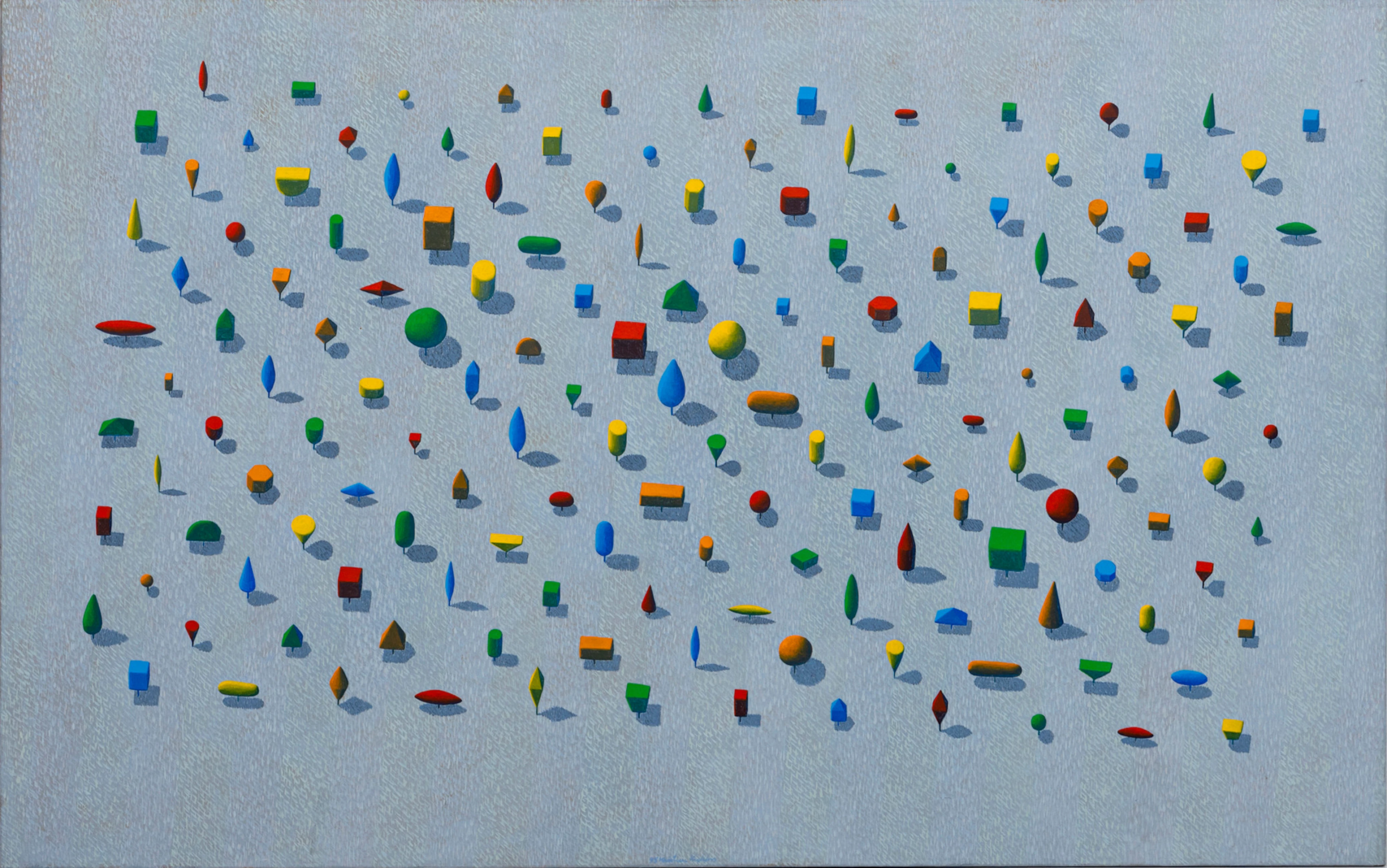
KRISTIAN KROKFORS. Geometrisk komposition, olja på duk, signerad, daterad 95.
10/05/2026
$620.01
Est: $398.64
OCT 8 | 3:00 PM


OCT 8 | 3:00 PM

Bring your auction to collectors worldwide!
Get listed now
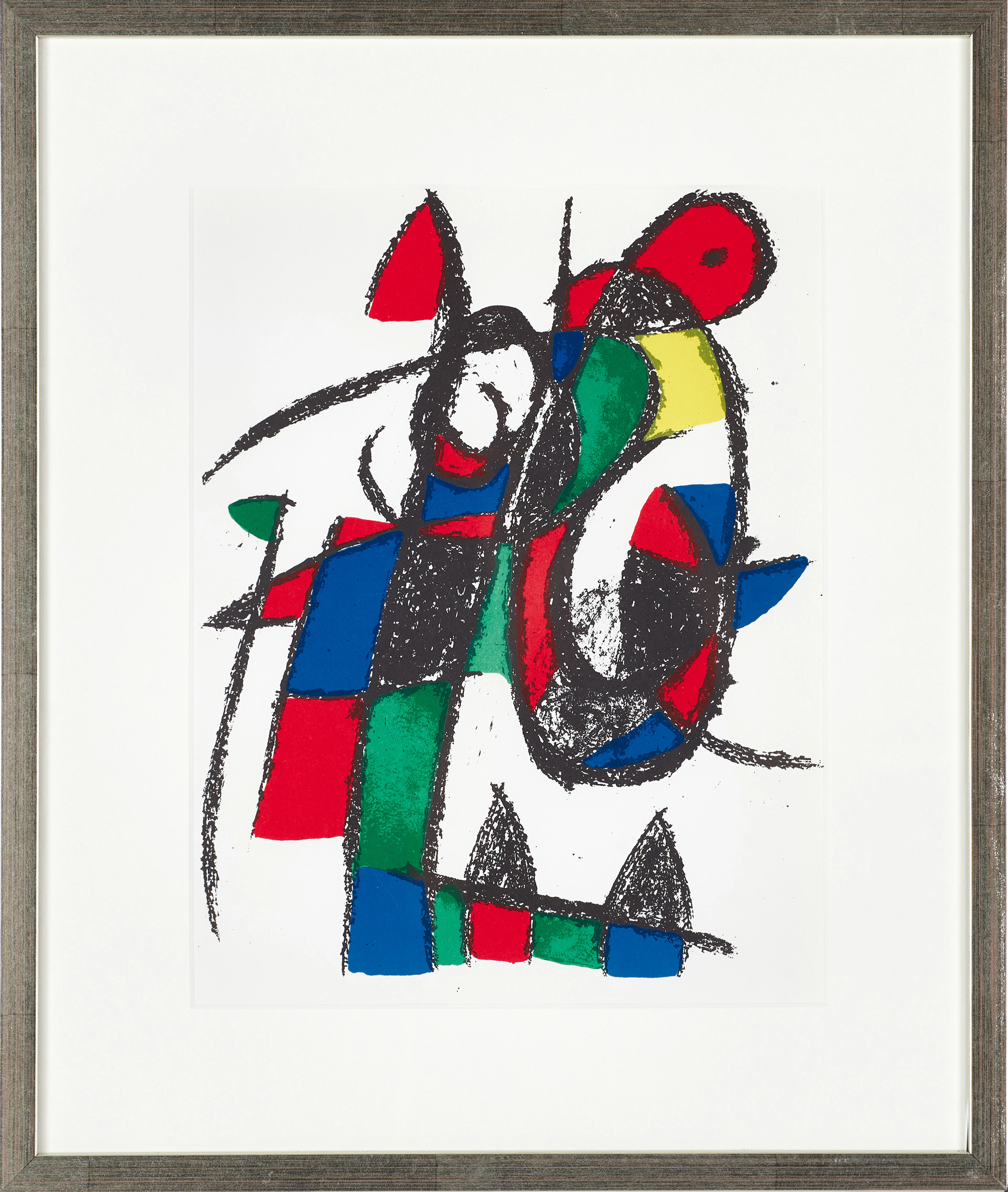
JOAN MIRÓ (Spanien, 1893-1983), Komposition, färglitografi, 1975, Mourlot 1038.
10/05/2026
$192
Est: $149.49