



All auctions / Arts & Graphics / Pablo Picasso (1881-1973) - Dove of Peace - Friedenstaube

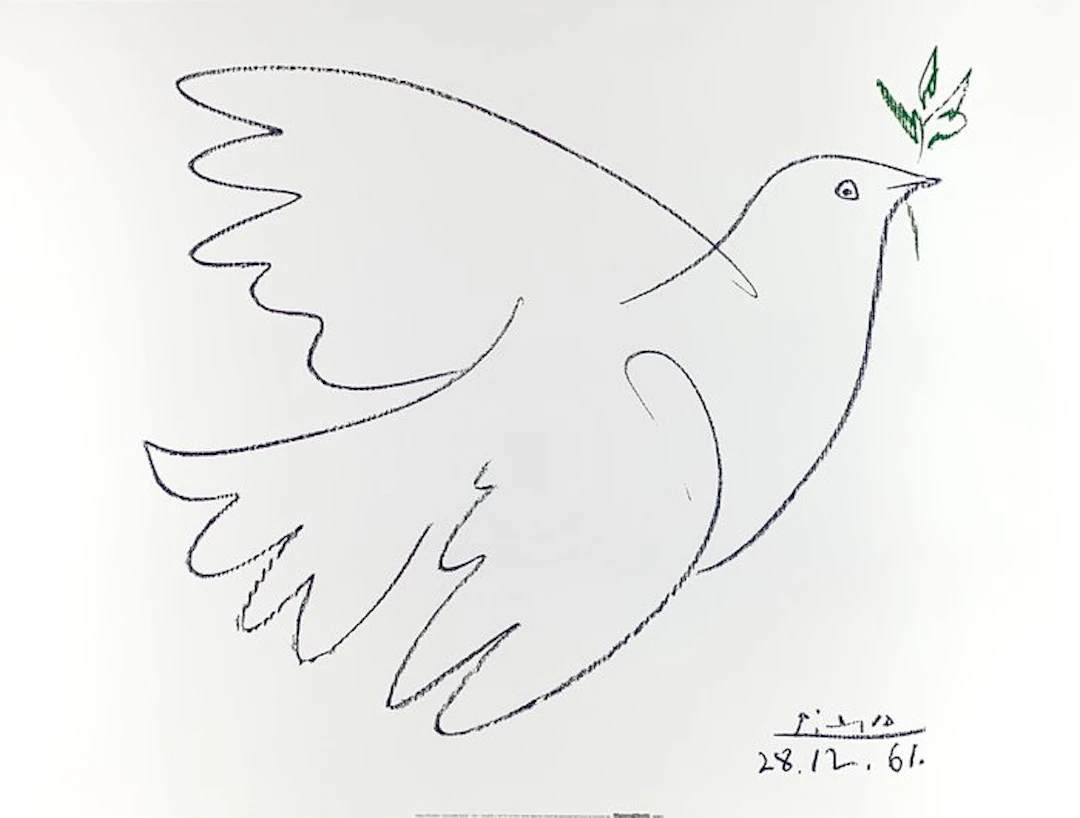
- Iconic art print by Pablo Picasso in 60 x 80 cm format with the title Colombe Bleue. The work is a high-quality offset print on good paper and in very good condition. - printed and published circa 1990-2010 - sheet originates directly from the art publisher - Artist: Pablo Picasso - Title: Colombe Bleue - Type: Poster art print - Technique: Offset printing - Originality: Reproduction - Sheet dimensions: 60 x 80 cm - Condition: New, perfectly preserved - Origin: Art publisher - Era: Classical Modernism - Nationality: Spanish Art Pablo Picasso: Pablo Picasso, born October 25, 1881 in Málaga, Spain, and died April 8, 1973 in Mougins, France, was one of the most influential artists of the 20th century. As a co-founder of Cubism and creator of numerous revolutionary works, Picasso profoundly shaped modern art. His versatility and innovative power extended across painting, sculpture, printmaking, ceramics, and stage design. Picasso began his artistic training in La Coruña and Barcelona before moving to Madrid and later Paris. In Paris, the then center of the art world, he came into contact with works by Paul Cézanne, Henri de Toulouse-Lautrec, and the Impressionists, whose influences are visible in his early works. Céanne’s structural approach and the experimental color of the Impressionists had a deep influence on Picasso’s development. Cézanne’s work “Mont Sainte-Victoire” and Toulouse-Lautrec’s works such as “At the Moulin Rouge” influenced Picasso’s early artistic vision. A significant turning point in Picasso’s career was his Blue Period (1901–1904), characterized by melancholic themes and blue tones. These works, such as “The Old Guitarist” (1903), reflect emotional depth and expressive power also found in the works of Vincent van Gogh and Edvard Munch. Van Gogh’s “Starry Night” and Munch’s “The Scream” show a similar intense emotional resonance. The Blue Period marked Picasso’s deep engagement with human existence and its suffering, similar to the existential themes in the works of Käthe Kollwitz. The decisive break with traditional representation came with the development of Cubism, which Picasso, together with Georges Braque, began around 1907. A key work of this period is “Les Demoiselles d’Avignon” (1907), which deconstructs the human figure into angular, geometric forms and paved the way for the Cubist movement. Cubism influenced many artists, including Fernand Léger and Juan Gris, who became important representatives of this movement. Léger’s “The City” and Gris’ “Portrait of Pablo Picasso” are iconic Cubist works. Picasso’s and Braque’s works during this period also influenced artists like Robert Delaunay and Francis Picabia, who incorporated Cubism into their own, often colorful and dynamic styles. In the 1920s, Picasso began to take an interest in Surrealism and created works inspired by dreams and the subconscious. This phase shows the influence of artists like Joan Miró and Salvador Dalí, whose surrealist depictions of the unconscious and dream world have parallels with Picasso’s works. Miró’s “Harlequin’s Carnival” and Dalí’s “The Persistence of Memory” are iconic Surrealist works that explore similar themes and techniques. The works of Max Ernst and René Magritte, who emphasize the surreal and dreamlike, also show a kinship with Picasso’s surrealist experiments. Picasso’s monumental work “Guernica” (1937) is a powerful political statement against war and destruction. The painting, which depicts the bombing of the town of Guernica during the Spanish Civil War, combines Cubist and Surrealist elements into a stark indictment of violence and oppression. This work stands in line with the politically engaged works of artists like Diego Rivera and José Clemente Orozco, whose murals also convey strong social and political messages. Rivera’s “Man at the Crossroads” and Orozco’s “Prometheus” are examples of using art as a means of social and political commentary. Guernica also influenced artists like Francis Bacon, whose dark and distorted figures convey a similar intensity and emotion. Throughout his career, Picasso repeatedly returned to traditional subjects such as portraits and still lifes, which he reinterpreted in innovative ways. His portraits of Dora Maar and Marie-Thérèse Walter show deep psychological complexity and emotional intensity, reminiscent of the works by Egon Schiele and Gustav Klimt. Schiele’s “Self-Portrait” and Klimt’s “Portrait of Adele Bloch-Bauer I” offer insights into similar psychological and emotional depths. The use of color and form in these portraits shows parallels with the expressive and symbolic portrayals of Frida Kahlo, whose self-portraits also delve deeply into her personal and emotional world. In the later years of his life, Picasso continued to experiment with different styles and techniques. His works from the 1950s and 1960s, such as the series “Maler und Modell” and the “Las Meninas” variations, show a continual search for new forms of expression and a dialogue with art history. These works engage in a dialogue with classical masters like Diego Velázquez and Rembrandt, whose works Picasso interpreted and expanded in unique ways. Velázquez’s “Las Meninas” and Rembrandt’s “The Night Watch” are iconic works that inspired Picasso’s later pieces. The interpretation of classical themes is also reflected in the works of David Hockney and Anselm Kiefer, who integrate historical and artistic references into their contemporary works. Picasso’s influence spans many generations of artists and movements. Artists like David Hockney and Jasper Johns have incorporated elements of Picasso’s stylistic diversity and inventiveness into their own works. Hockney’s colorful and experimental landscapes and Johns’ iconic depictions of the American flag and numbers illustrate the breadth of Picasso’s influence. Modern artists such as Jeff Koons and Damien Hirst, known for their provocative and iconic works, also draw on Picasso’s groundbreaking approaches. Koons’ “Balloon Dog” and Hirst’s “The Physical Impossibility of Death in the Mind of Someone Living” reflect the ongoing engagement with materiality and concept that Picasso anticipated in his numerous artistic phases. In summary, Pablo Picasso remains a central figure in art history, whose influence extends across many movements and generations of artists. His ability to fuse different styles and techniques and continually explore new paths of artistic expression makes him an inexhaustible source of inspiration for artists worldwide. From the Impressionists to the Cubists and on to the Surrealists and contemporary icons of the art world, Picasso repeatedly redefined the boundaries of possibility and remains a living legacy in 21st-century art. Shipping information: We roll prints onto rigid cardboard tubes, wrap them with corrugated cardboard, and ship them in specially designed, very sturdy boxes. Shipping is tracked with a tracking number for parcel tracking. About us: We have been active in the art trade for over 20 years and have extensive experience in the professional handling and shipping of artworks. - No shipping Canary Islands, Taiwan -
Estimate:$168.55
To the auctionView all items fromCatawikiorArts & Graphics
Estimate:
$168.55
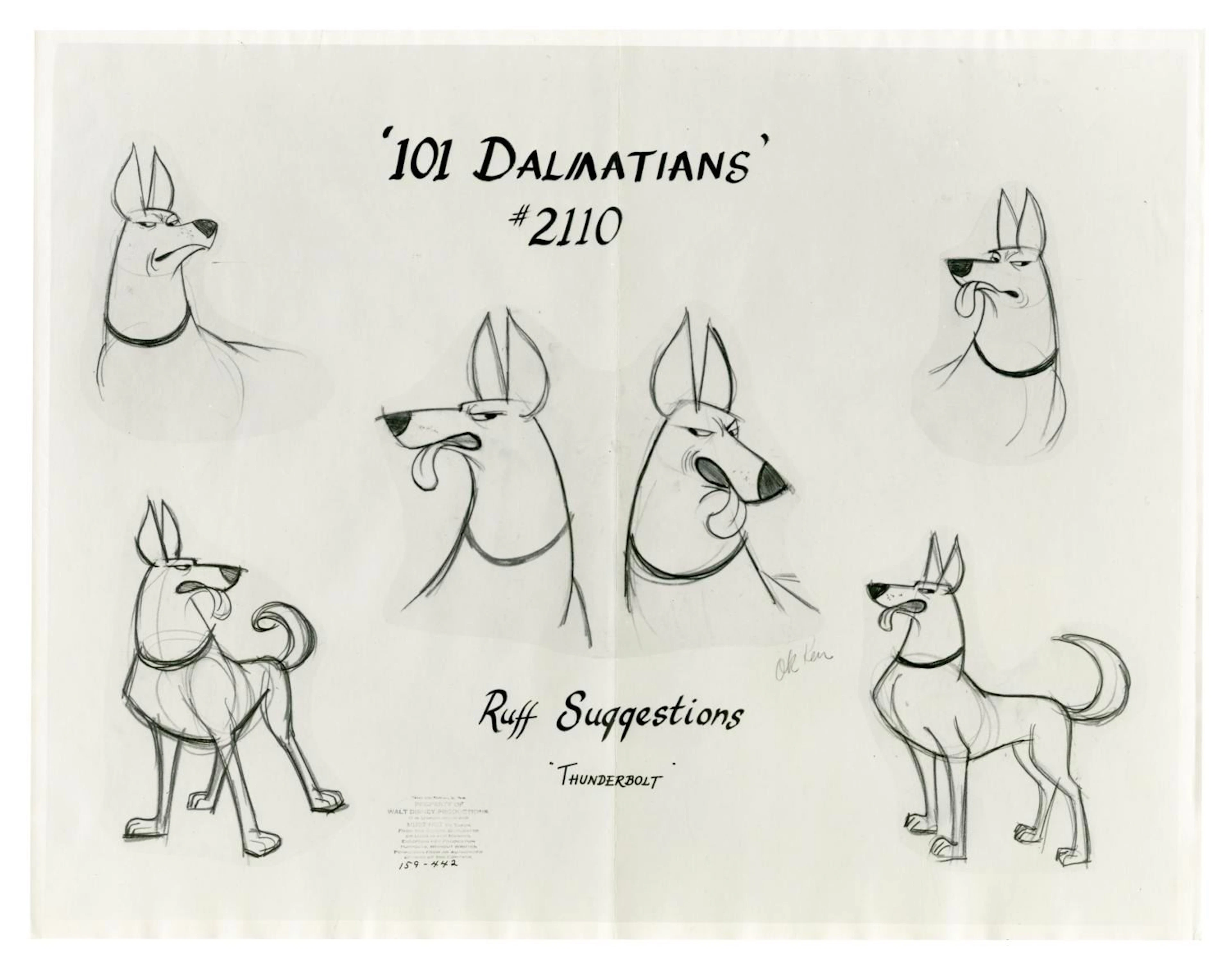
A "One Hundred and One Dalmatians" Thunderbolt Model Sheet.
10/11/2026
$90
Est: $100




OCT 27 | 4:00 PM
Bring your auction to collectors worldwide!
Get listed nowBy subscribing, you are agreeing to the privacy policy. Unsubscribe anytime.
Barnebys HQ
Brahegatan 10
BOX 5038
114 37 Stockholm
