


All auctions / Ancient Art / Nicoya - Guanacaste

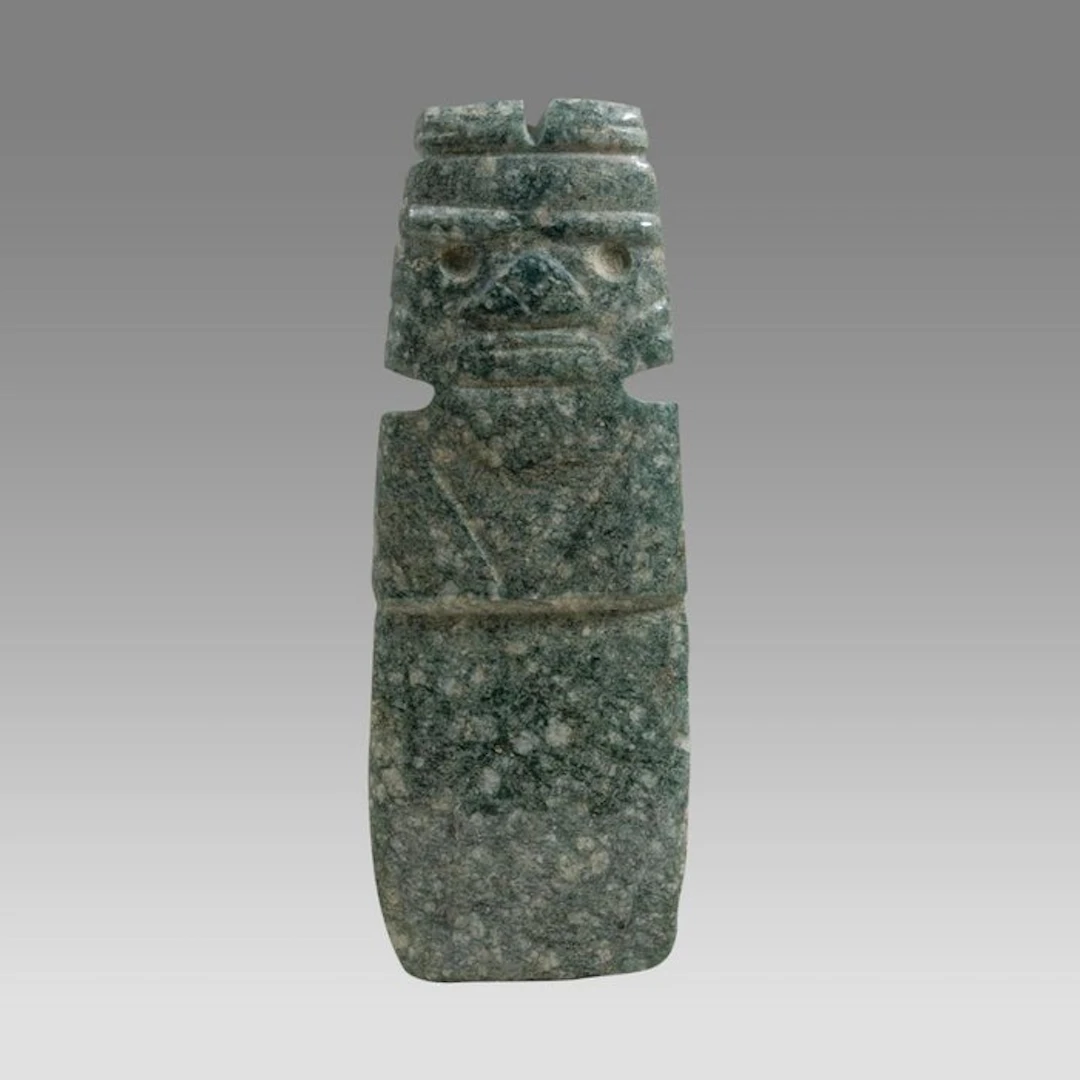
Axe God - extremly fine - - nice polished - Nicoya - Guanacaste, Costa Rica · c. 600 - 900 AD Green stone, Nephrite 10,8 cm height. PROVENANCE: - Private collection, Bllom, Miami, Florida, 1970 - 1980. - Private collection, New York, acquierd in the art market, 2001. Condition: Very Good, beautiful stone quality. Documents: With Spanish Export license. A string cut example with stylized geometric human features in low relief and drilled eyes. Perforated laterally through neck for suspension. Nephrite is one of the two mineral forms of jade, the other being jadeite. It has been valued for thousands of years in various cultures for its beauty, durability, and symbolic significance. Here’s more about nephrite: Mineral Class: Amphibole group, specifically a form of actinolite. Color: Typically green, creamy white (known as "mutton fat jade"), brown, or gray. The green color is due to iron content. Texture: Smooth and compact, with a fibrous structure that contributes to its exceptional toughness. Hardness: 6–6.5 on the Mohs scale, making it slightly softer than jadeite. The green stone was considered sacred in Mesoamerica; It was associated with water, the fertility of corn and life, therefore linking itself with the preservation of the agricultural cycle. Among these stones, the most appreciated was jade (jadeite), considered more valuable than gold and a key material at a religious, political and economic level throughout the region. It was reserved for the adornment of gods and kings, and even the latter could only wear it on certain occasions. Considered a symbol of life and purity, jade was especially used to make jewelry pieces such as pendants, nose rings or ear cuffs. Jadeite pendants were therefore highly prized objects, loaded with symbolic and religious meaning and only exhibited by the most powerful members of society. Greater Nicoya is an archaeological region that covers northwest Costa Rica and the Pacific coast of Nicaragua. The Southern Subregion, or Guanacaste, occupies the Nicoya peninsula, the Tempisque River basin and the Guanacaste and Tilarán mountain ranges. This is an area with human occupation for about 10,000 years, and important remains of material culture in ceramics, carved stone and jade have already been found in the Tempisque period (500-300 BC). In the Bagaces period (300-800 AD) there was already a complex social organization that was reflected in a greater variety in burial formulas, which included the use of large stone blocks. Around the year 800, the territory of Guanacaste was occupied by Chorotega groups from the north, from the Valley of Mexico, who were fleeing Olmec domination. This migration will bring the cultural influence of the Mayans and form the germ of the Kingdom of Nicoya, one of the main pre-Columbian chiefdoms existing in Mesoamerica upon the arrival of the Spanish.
Estimate:$3,146.4
To the auctionView all items fromCatawikiorAncient Art
Estimate:
$3,146.4
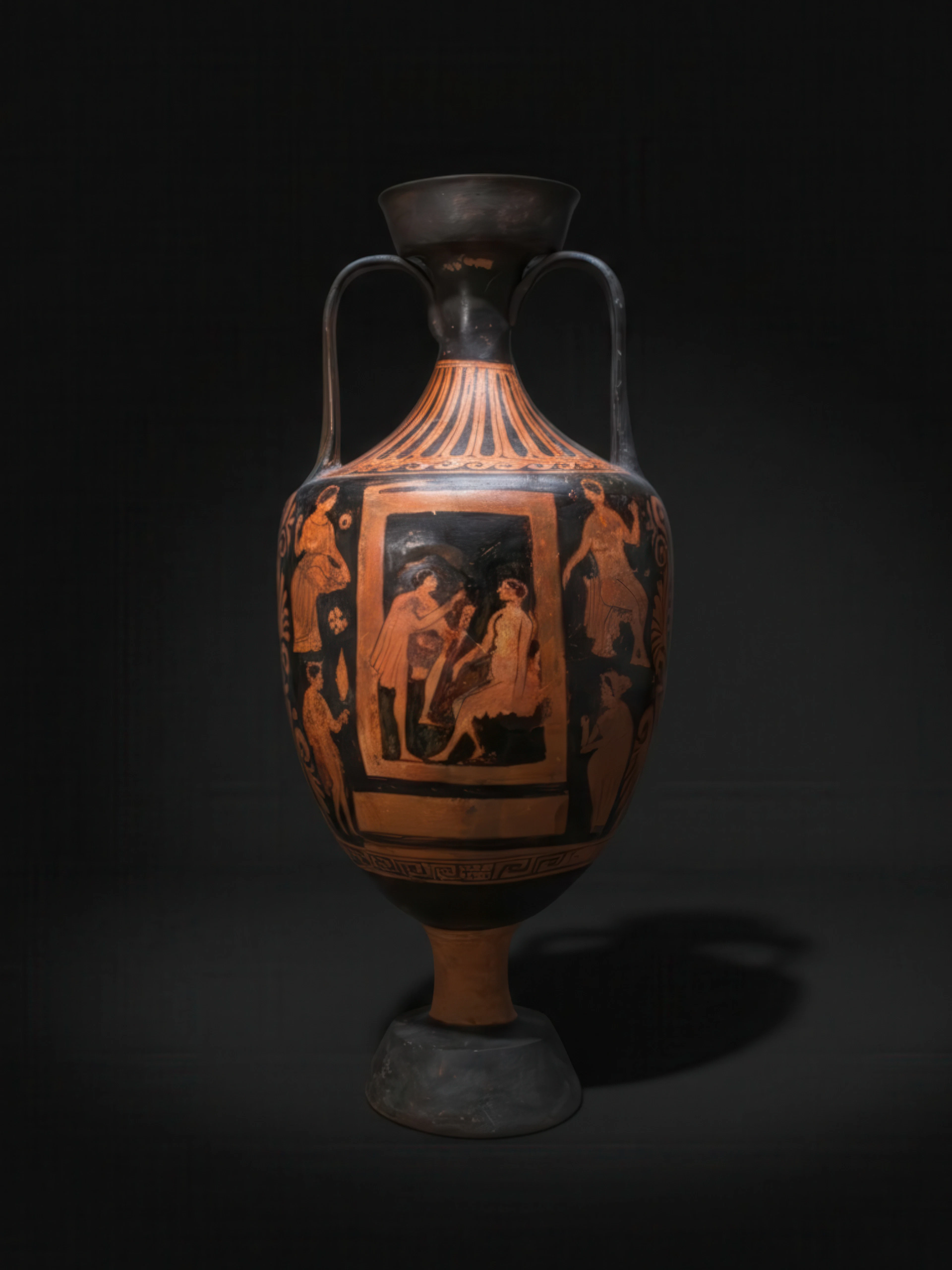
LARGE APULIAN RED-FIGURE AMPHORA WITH NAISKOS SCENE AND ALTAR
06/21/2026

$7,285.3
Est: $6,709.15





OCT 17 | 10:00 PM
Bring your auction to collectors worldwide!
Get listed nowBy subscribing, you are agreeing to the privacy policy. Unsubscribe anytime.
Barnebys HQ
Brahegatan 10
BOX 5038
114 37 Stockholm
