


All auctions / Ancient Art / Moche, Peru

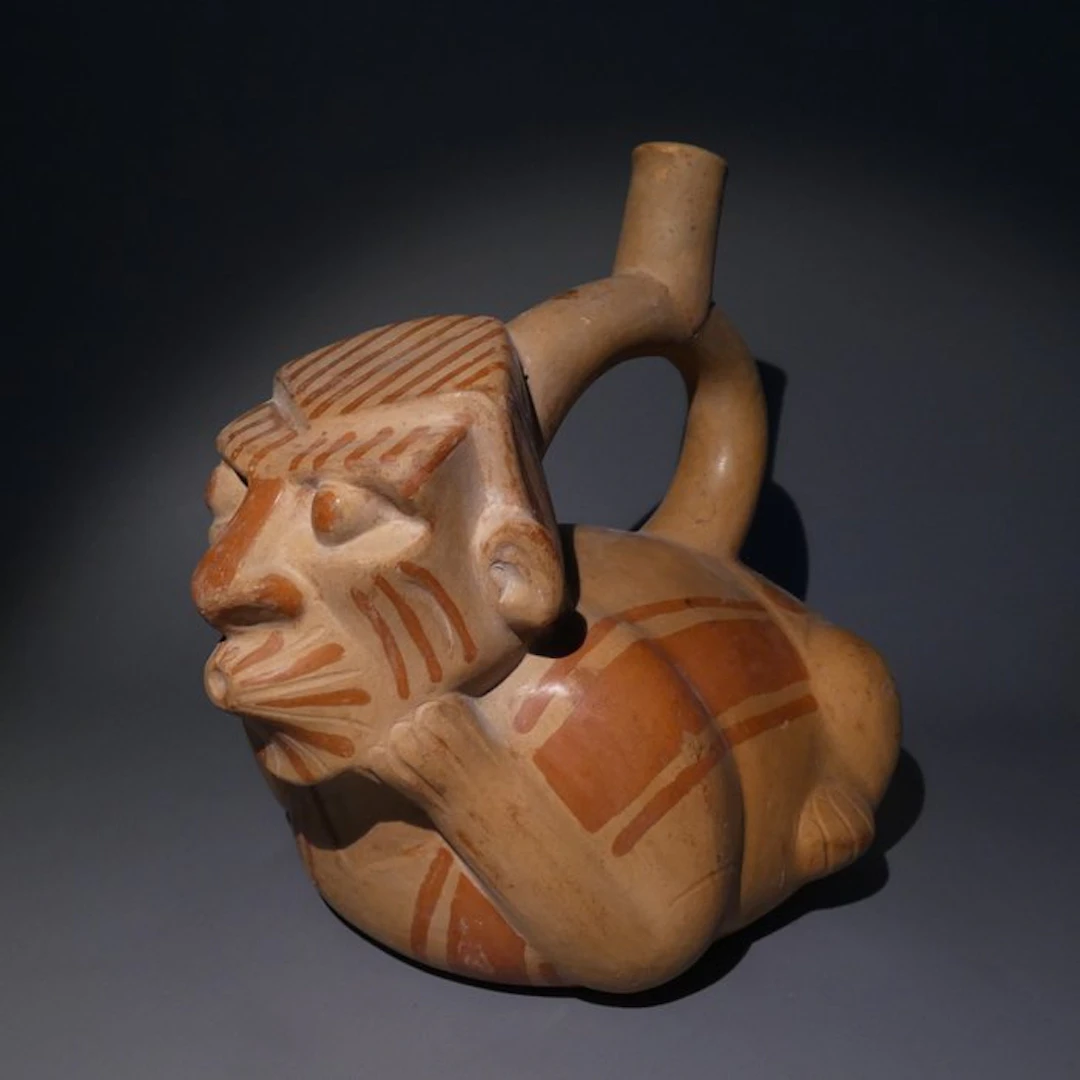
Fine Stirrup jar Huaco of a Figure - nice form - Moche, Peru, 400 - 800 AD. Terracotta and pigments 20 cm long and 18 cm height Provenance: - Private collection, Bordeaux, France, 1970 - 1980. Public acution. Thence by descendent. DOCUMENTS: - Spanish Export License. Condition: Good condition, a part of the base has lost its varnish and is scorched, see photos. The Moche culture inhabited the coast of present-day northern Peru, concentrating in the valleys of Lambayeque, Chicama, Moche and Virú. This desert region is crossed by several rivers that flow down into the Pacific Ocean, where marine resources are plentiful. The Moche produced fine ceramic, textile and precious metal pieces. Their characteristic style can be seen in a wide range of goods such as fire-engraved gourds, wall murals, featherwork art, body painting and tattoos. Their ceramic decoration displays a level of skill that has rarely been surpassed, and included such techniques as incision, bas-relief with stamps, and painting on smooth surfaces. Many were made in state-run workshops that mass-produced pieces from molds. Their ceramics came in a variety of forms and decorative styles and displayed myths and ritual motifs as well. Notable among these earthenware forms were the so-called “portrait bottles”, bottles molded with the face of a well-known Moche figure. These highly detailed facial portraits reflect the Moche’s own use of face paint and/or tattoos, as well as elaborate headdresses. This portrait-making expertise can also be observed in everyday scenes and erotic representations, as well as in figures of individuals that were hunch backed, blind, or suffered from other disorders. They were skillful metalworkers, using gold, copper and silver to make ear ornaments, nose rings, bracelets, necklace beads, tweezers and a variety of tools. Especially notable is the tumi or ceremonial knife that was usually only carried by Moche officials. Moche ceramics provide detailed representations of the culture’s supernatural world, including deities, myths, sacred animals and ceremonial practices. Their deities take the form of foxes, owls, hummingbirds, falcons and felines. These figures were servants of greater gods that had human form and sported elaborate outfits and ferocious faces with crossed fangs. Tombs of important Moche individuals were rectangular and made of adobe, with niches for offerings. Some bodies were laid on cane mats, while others were left in caves inside cane coffins. People of the elite class were buried with metal masks and a rich array of grave goods, servants and animals accompanying them. The famous “Lord of Sipán” is the most notable example of this kind of burial.
Estimate:$1,910.31
To the auctionView all items fromCatawikiorAncient Art
Estimate:
$1,910.31
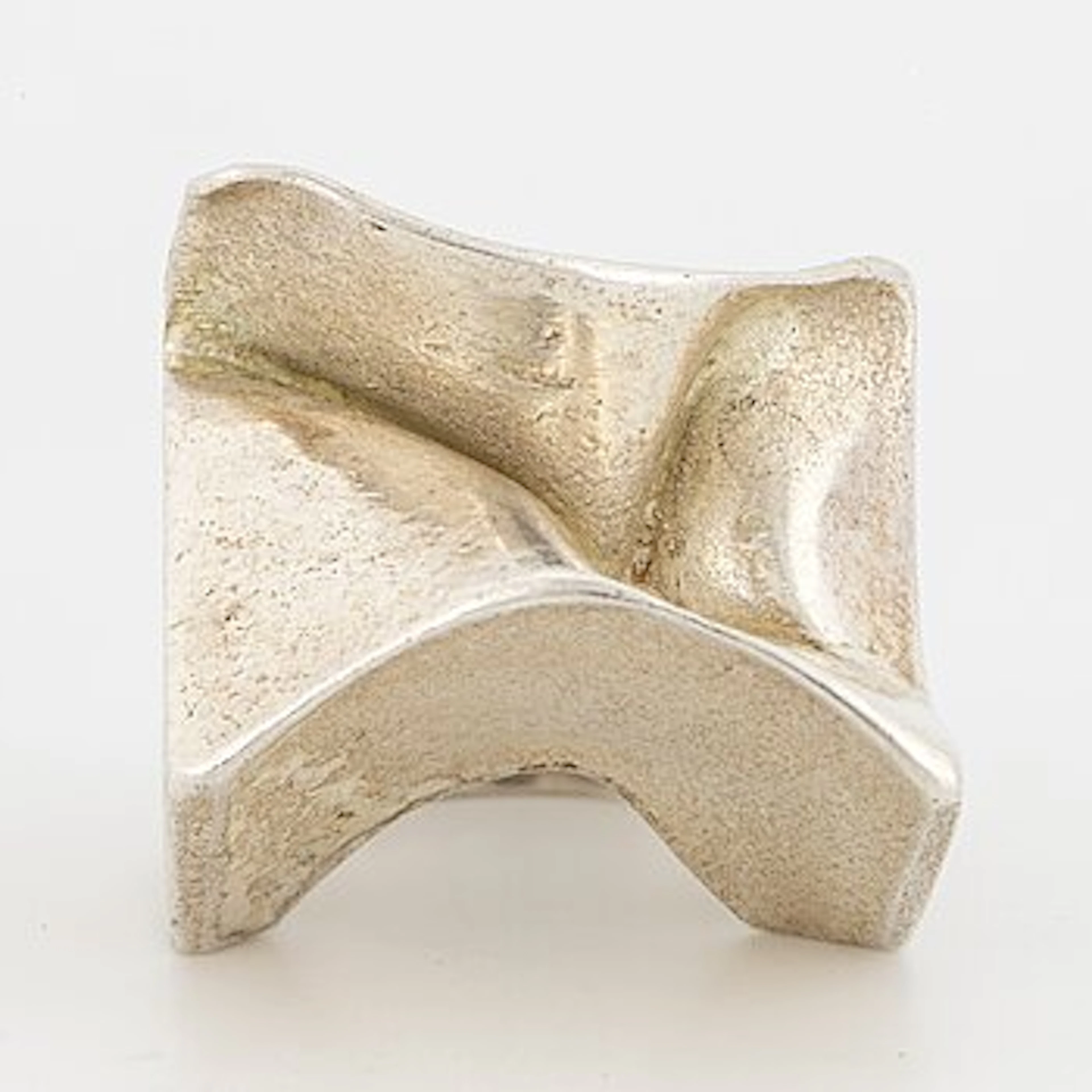
Björn Weckström sterling silver ring. Lapponia. Hesingfors 1971.
12/18/2019

$189.1
Est: $157.5
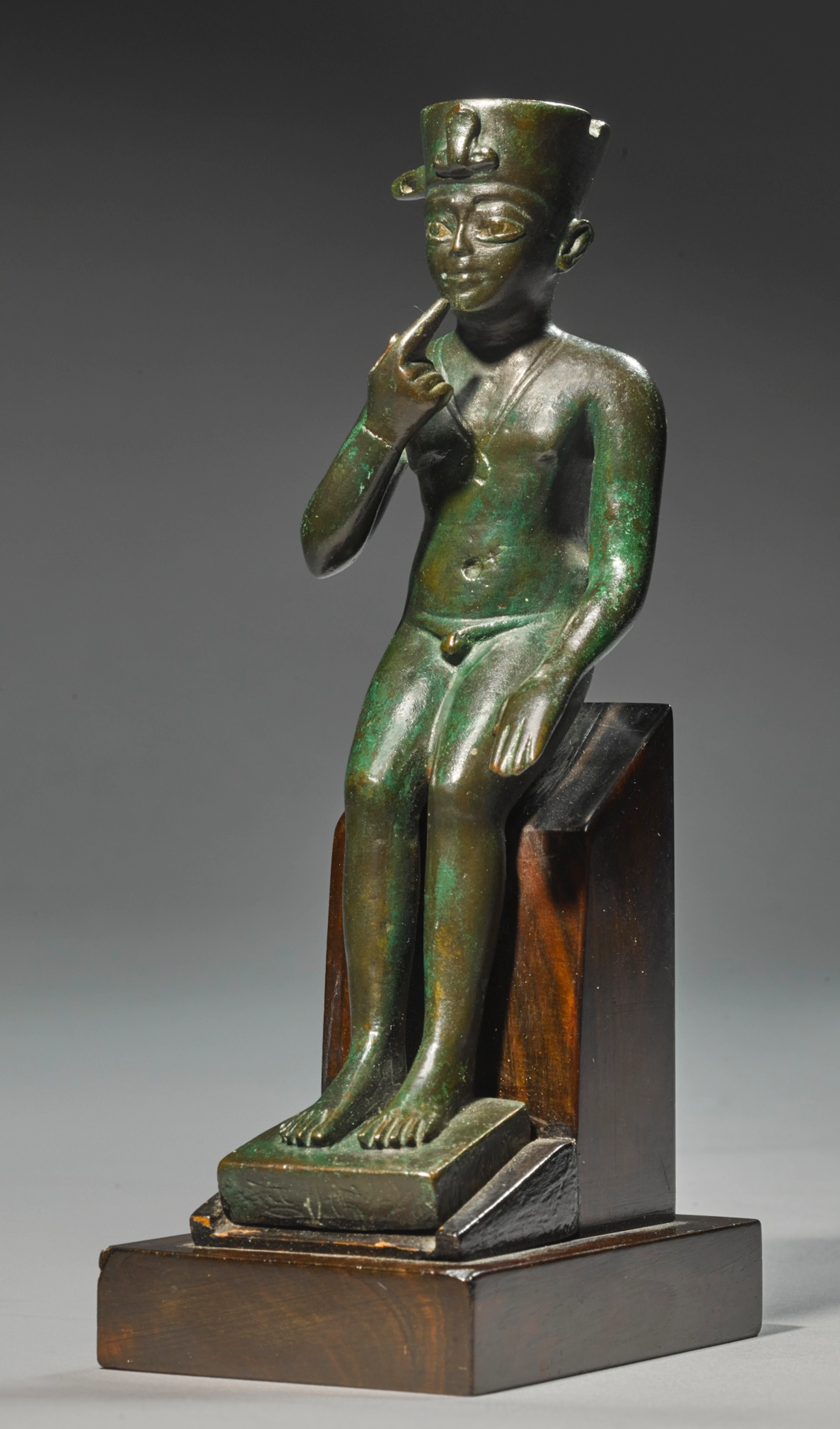
AN EGYPTIAN BRONZE FIGURE OF HARPOCRATES, LATE PERIOD, 716-30 B.C.
12/15/2016

$15,000
Est: $15,000




OCT 17 | 10:00 PM
Bring your auction to collectors worldwide!
Get listed nowBy subscribing, you are agreeing to the privacy policy. Unsubscribe anytime.
Barnebys HQ
Brahegatan 10
BOX 5038
114 37 Stockholm
