
OCT 17 | 10:00 PM

Bring your auction to collectors worldwide!
Get listed nowBy subscribing, you are agreeing to the privacy policy. Unsubscribe anytime.
Barnebys HQ
Brahegatan 10
BOX 5038
114 37 Stockholm
All auctions / Ancient Art / Medieval

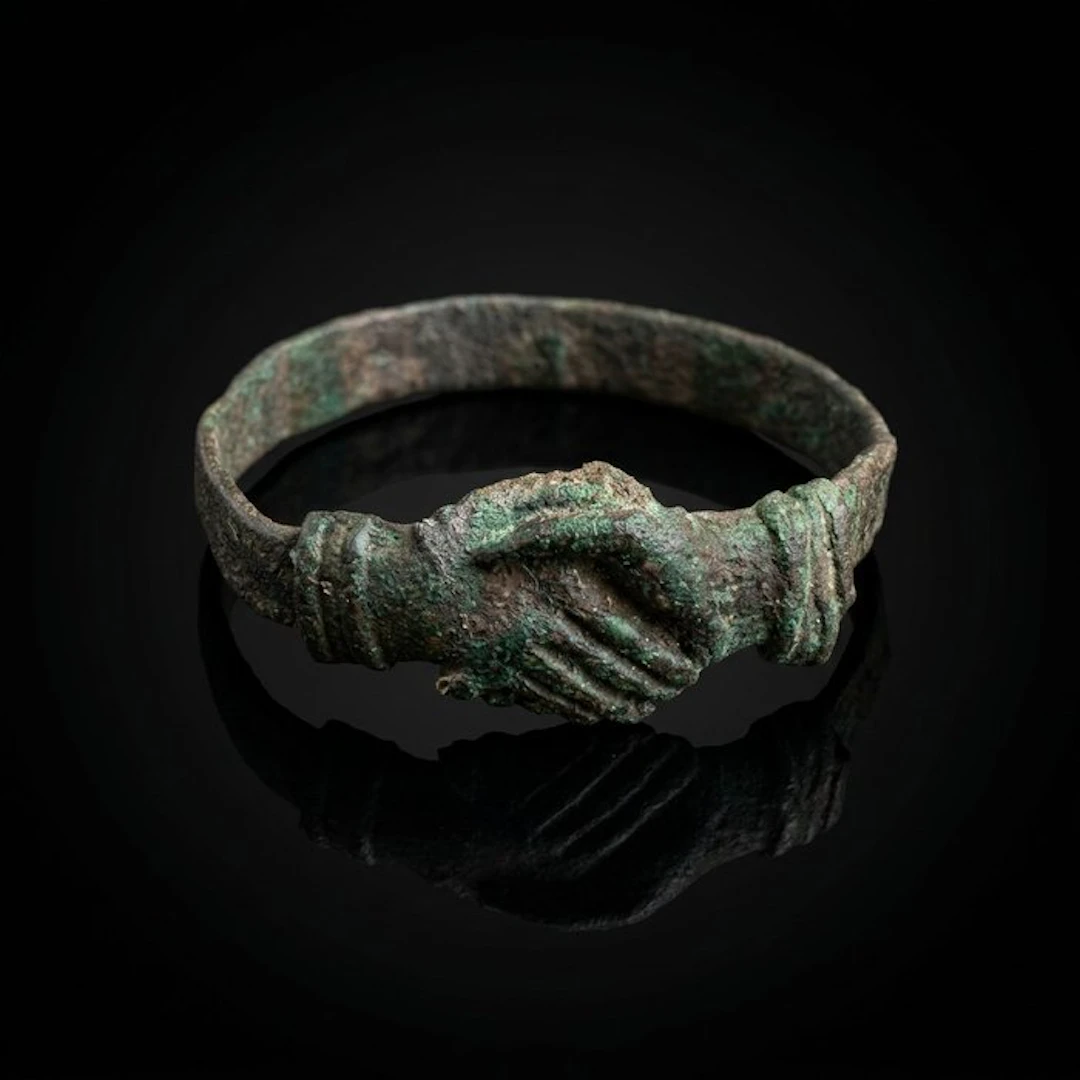
A distinctive medieval bronze finger ring depicting two hands joined together, belonging to the long tradition of so-called Fede rings — jewelry in which clasped hands could represent fidelity, trust, union and commitment. The ring dates approximately to the 11th–13th century, within the broader historical world of Byzantium and the Crusader era. Its internal diameter is approximately 21 mm, with a weight of 1.63 g. The most compelling feature is the remarkably recognizable central image: despite centuries of age and archaeological surface alteration, the two hands and their joined fingers remain clearly visible. Two Hands Joined Centuries Ago At the centre of the ring is a sculptural representation of a handclasp. Two hands approach one another from opposite directions and meet at the centre. The elongated fingers remain visible, while transverse moulded lines on either side resemble stylized garment cuffs. This is therefore not merely an abstract geometric pattern, but a deliberately represented human gesture. That small detail gives the ring an unusually intimate character. Mani in Fede — Hands of Fidelity The motif of clasped hands has an ancient history. Within European jewelry, rings using this imagery became known as Fede rings, from the expression mani in fede — “hands in faith” or “hands in trust.” Joined hands could communicate ideas of fidelity, agreement, friendship, union or mutual commitment. In later European tradition, the motif became particularly associated with betrothal and marriage jewelry. Without a documented archaeological context, however, it would be speculative to describe this particular example definitively as a wedding or betrothal ring. It is more appropriate to understand the handclasp as a medieval symbol of a bond or commitment between people. Between Byzantium and the Crusader World The 11th–13th centuries were an extraordinary period of interaction between East and West. Byzantine territories, Crusader states, Mediterranean trading centres and pilgrimage routes formed interconnected worlds through which people, objects and artistic ideas travelled. Small pieces of personal jewelry provide an especially intimate connection with this period. Unlike monumental architecture or ceremonial objects, a ring belonged to an individual. It was carried directly on the body, and its imagery could possess a deeply personal meaning. A Symbol Seen Every Day The construction is simple and functional. A relatively narrow band expands toward the central figural composition. Raised transverse elements on either side visually separate the clasped hands from the hoop and emphasize the central image. The viewer's attention is immediately drawn toward the handshake. Its original owner may have seen the same small symbol every time they looked at their hand. Whether it recalled a spouse, loved one, friend or another personal bond can no longer be known. Condition The bronze retains a rich natural archaeological patina with green, dark brown and earthy tones. Mineral deposits, localized wear and characteristic traces of considerable age remain visible across the surface. Importantly, the principal imagery survives remarkably well for such a small object: the hands, individual fingers and lateral decorative elements remain clearly legible. Details Culture: Byzantine / Medieval European Historical Context: Crusader Era Dating: 11th–13th Century Object: Fede Ring / Clasped-Hands Finger Ring Material: Bronze Internal Diameter: approx. 21 mm Weight: 1.63 g Decoration: Two hands joined in a clasp Symbolism: Fidelity, trust, union and commitment Condition: Authentic ancient condition with natural green-brown patina, mineral deposits and characteristic age-related wear. The central clasped-hands motif remains clearly preserved. Provenance: Acquired on the European antiquities market. From a private collection. Shipping: European Union only. A Handshake That Survived the Centuries Perhaps the most remarkable aspect of this ring is how immediately understandable its image remains. Nearly a thousand years have passed. Languages, kingdoms and cultures have changed, yet the gesture requires no translation. Two hands are joined together. To its medieval owner they may have represented fidelity, trust, union or a promise made to another person. The person's name has disappeared. The promise has been forgotten. But the hands remain joined. A rare medieval Fede ring from the Byzantine and Crusader-era world — an intimate personal object carrying one of the most human and enduring motifs in medieval jewelry.
Estimate:$168.01
To the auctionView all items fromCatawikiorAncient Art
Estimate:
$168.01
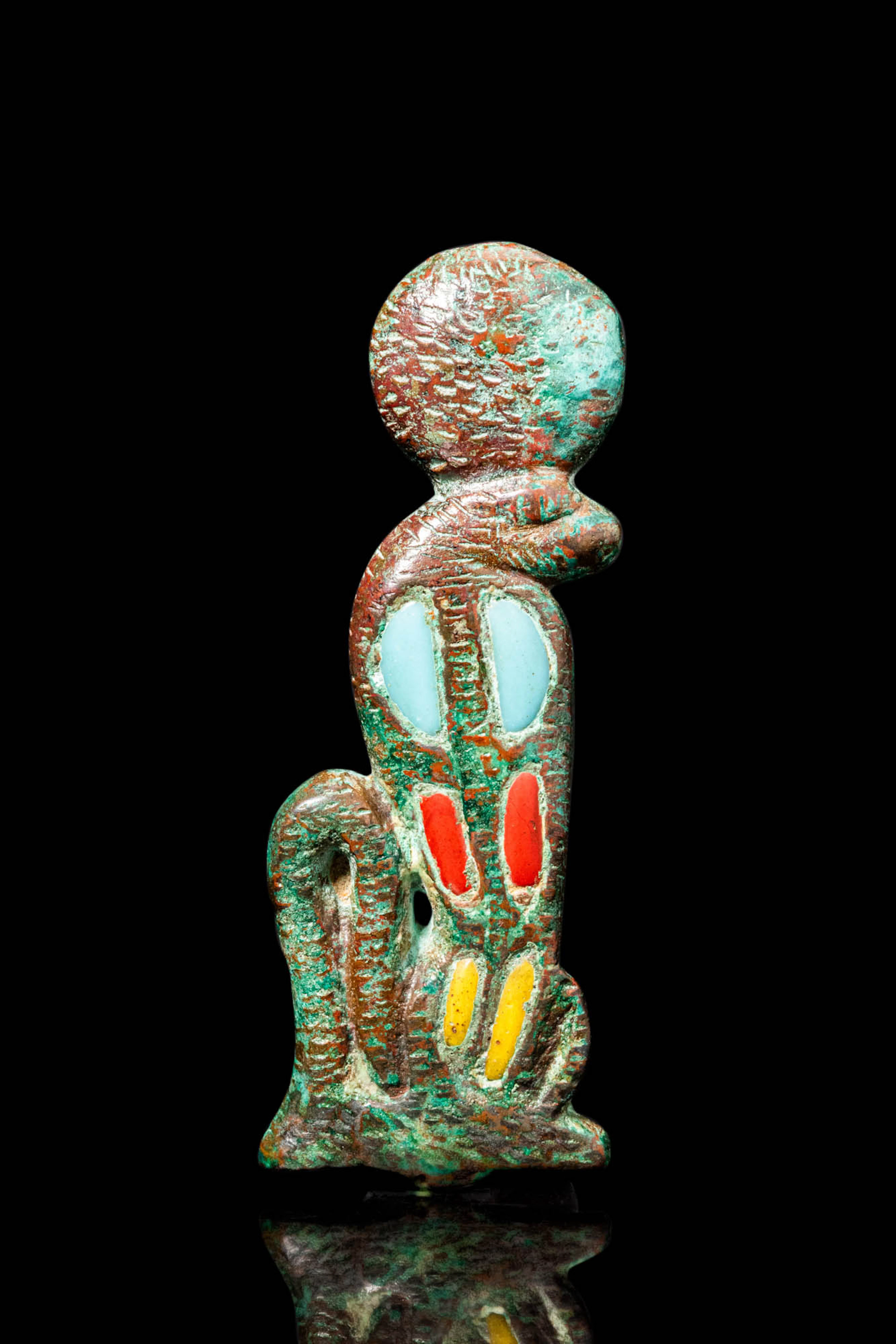
EGYPTIAN BRONZE INLAID APPLIQUE OF URAEUS - MUSEUM EXHIBITED
06/21/2026

$1,854.44
Est: $1,341.83
OCT 17 | 10:00 PM


Bring your auction to collectors worldwide!
Get listed now$309.43