



Bring your auction to collectors worldwide!
Get listed nowBy subscribing, you are agreeing to the privacy policy. Unsubscribe anytime.
Barnebys HQ
Brahegatan 10
BOX 5038
114 37 Stockholm
All auctions / Jewelry & Gems / Large Shell Cameo with Themistocles & Nike in Front of Athena in Gold, c. 1850

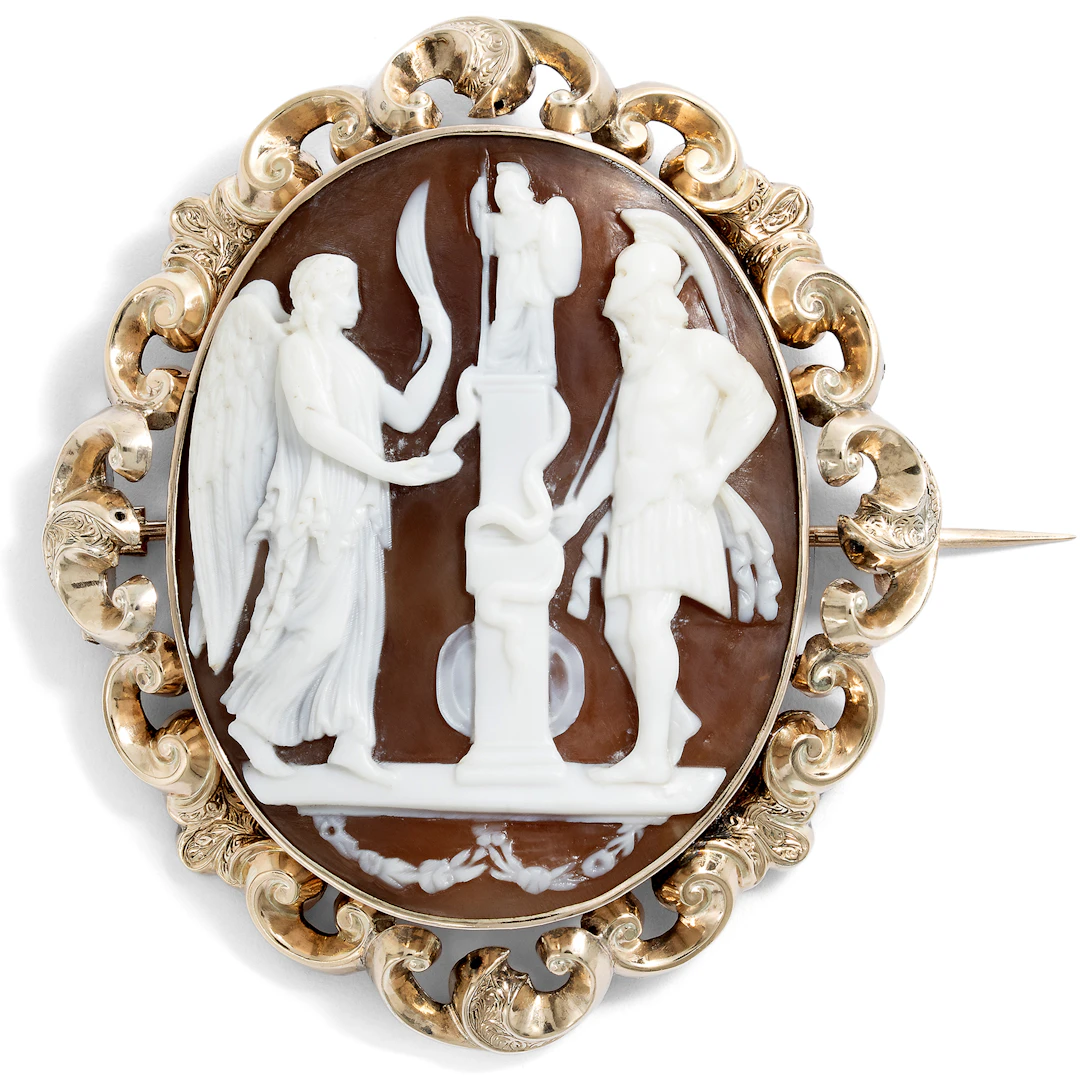
A winged deity enters the scene from the left. She carries a palm frond in her left hand. In her right hand she holds a bowl in which she is offering food to a snake. She is the goddess of victory, known as Nike to the Greeks and Victoria to the Romans. The snake is coiled around a stele, a pillar or altar, on top of which stands a small statue of the ancient goddess Athena or Minerva. With spear, helmet and shield, she is easy to recognize. Her statue, the Palladion, was an altarpiece that promised protection and was first kept in Troy and later in Rome. Finally, on the right is a warrior, wearing a helmet and armor. Obviously a victory is being celebrated here. The warrior enters the scene from the right, the goddess of victory has sacrificed to Athena and will hand the palm of victory to the warrior. But who is depicted on the right? The scene is based on an ancient relief that is now kept in the Louvre. It comes from the Albani collection in Rome and was selected by J. J. Winckelmann; it later came to Paris with Napoleon. Its description can be found here in the Louvre catalog. The relief was published several times in the 19th century. The catalog of the Louvre collection by Frédéric de Clarac: Musée de sculpture antique et moderne, Paris 1830, p. 79f., describes the scene as Thémistocle et Victoire, the edition can be found online here. The corresponding plate 223 with the reproduction of the relief is reproduced above. But who was Themistocles? He was a general in the service of Athens and defeated the Persians in a famous naval battle, the Battle of Salamis. The relief may allude to this victory. In later times, however, Themistocles became famous above all as a pioneer of Attic democracy. He strengthened the democratic institutions in Athens and pushed back the nobility. Whether the relief in the Louvre actually depicts Themistocles or another general is not entirely clear. What is important, however, is that in the 19th century, when the cameo was created, it was considered a depiction of Themistocles - and the cameo was thus acquired as a depiction of Themistocles. At its time that was itself very much torn by the conflicts between the nobility of the Restoration and the democratic aspirations of the bourgeoisie around 1848, this choice was certainly no coincidence. And its choice still can be a clear sign. An elaborate setting of warmly shimmering gold keeps the cameo entirely in the taste of the mid-19th century. We see sculpted curves made from chased sheet gold, reminiscent of acanthus leaves. We discovered the brooch in the south of England.
Estimate:$1,809.05
To the auctionView all items fromHofer AntikschmuckorJewelry & Gems
Estimate:
$1,809.05
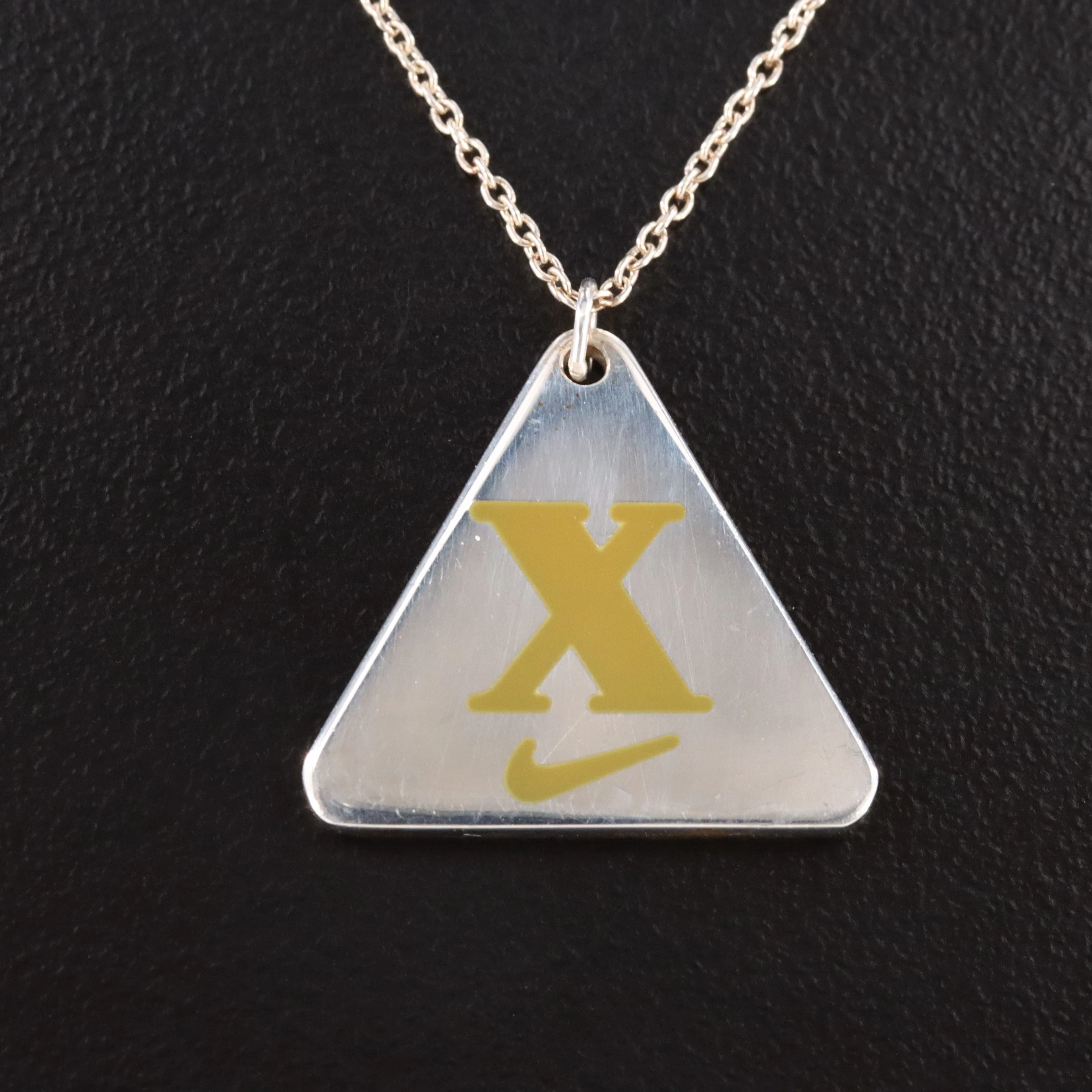
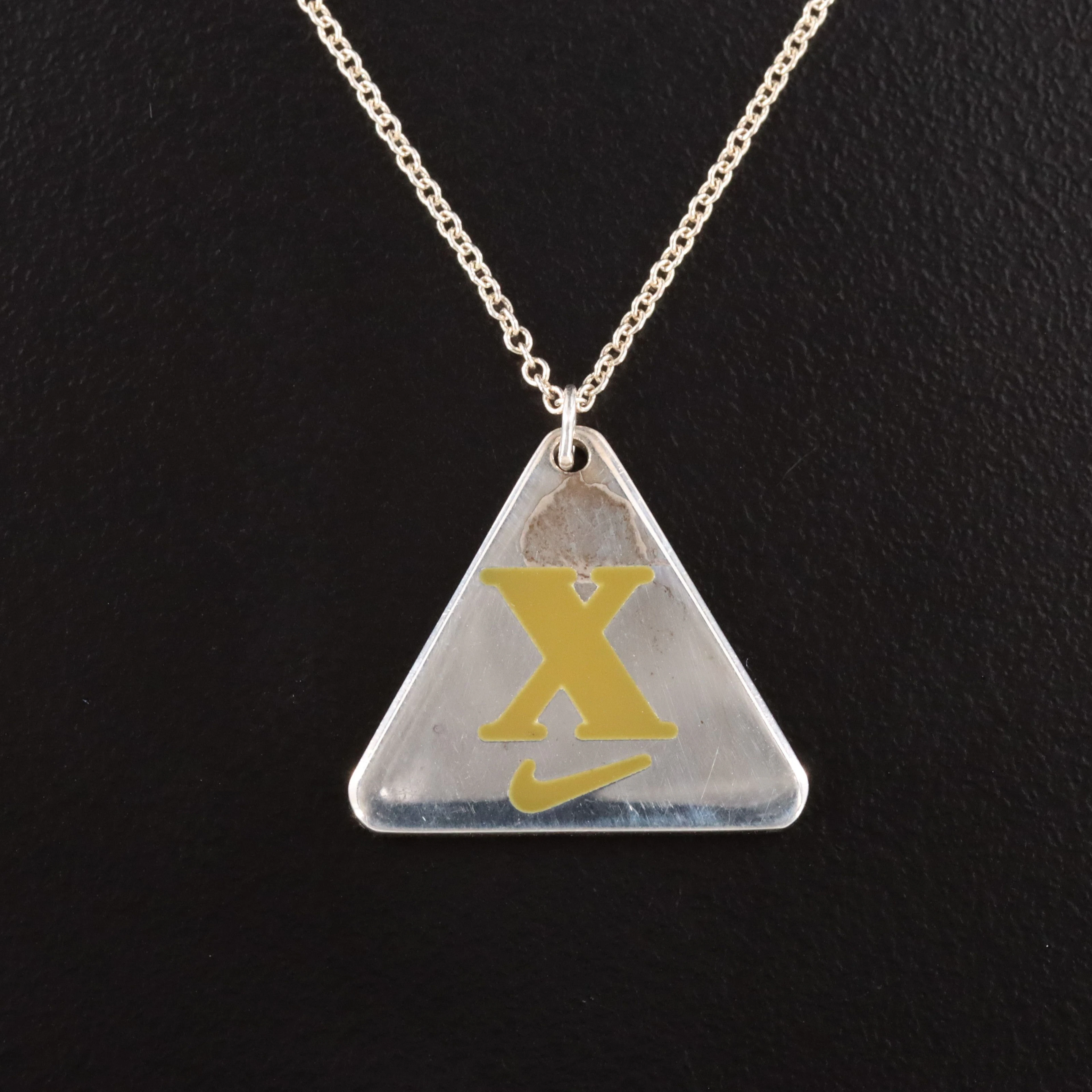
Tiffany & Co. Sterling Nike 2013 Women's Marathon Necklace
07/27/2026
$57
Est: $52


Bring your auction to collectors worldwide!
Get listed now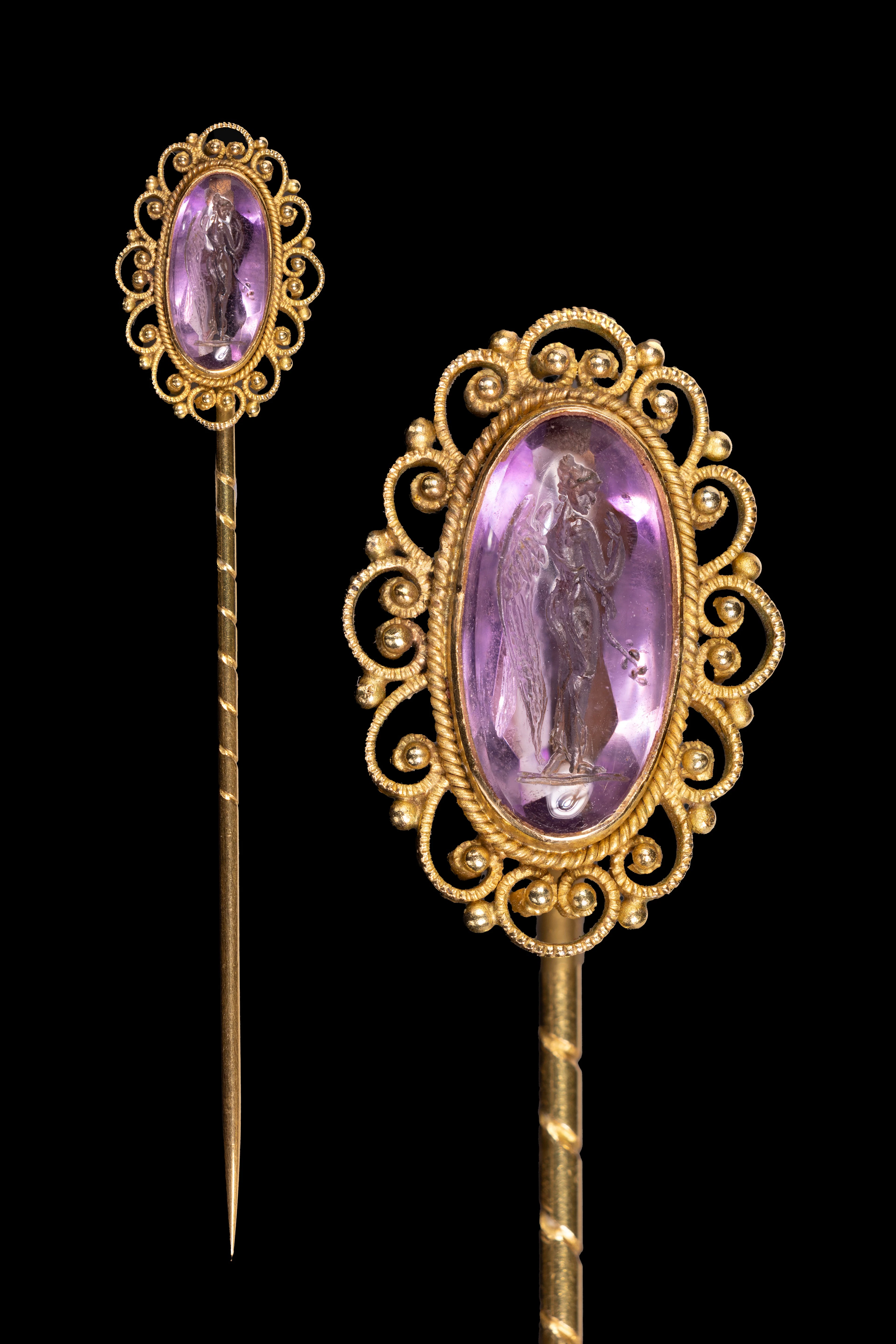
Tiffany & Co. Sterling Nike 2013 Women's Marathon Necklace
07/23/2026
$22
Est: $22
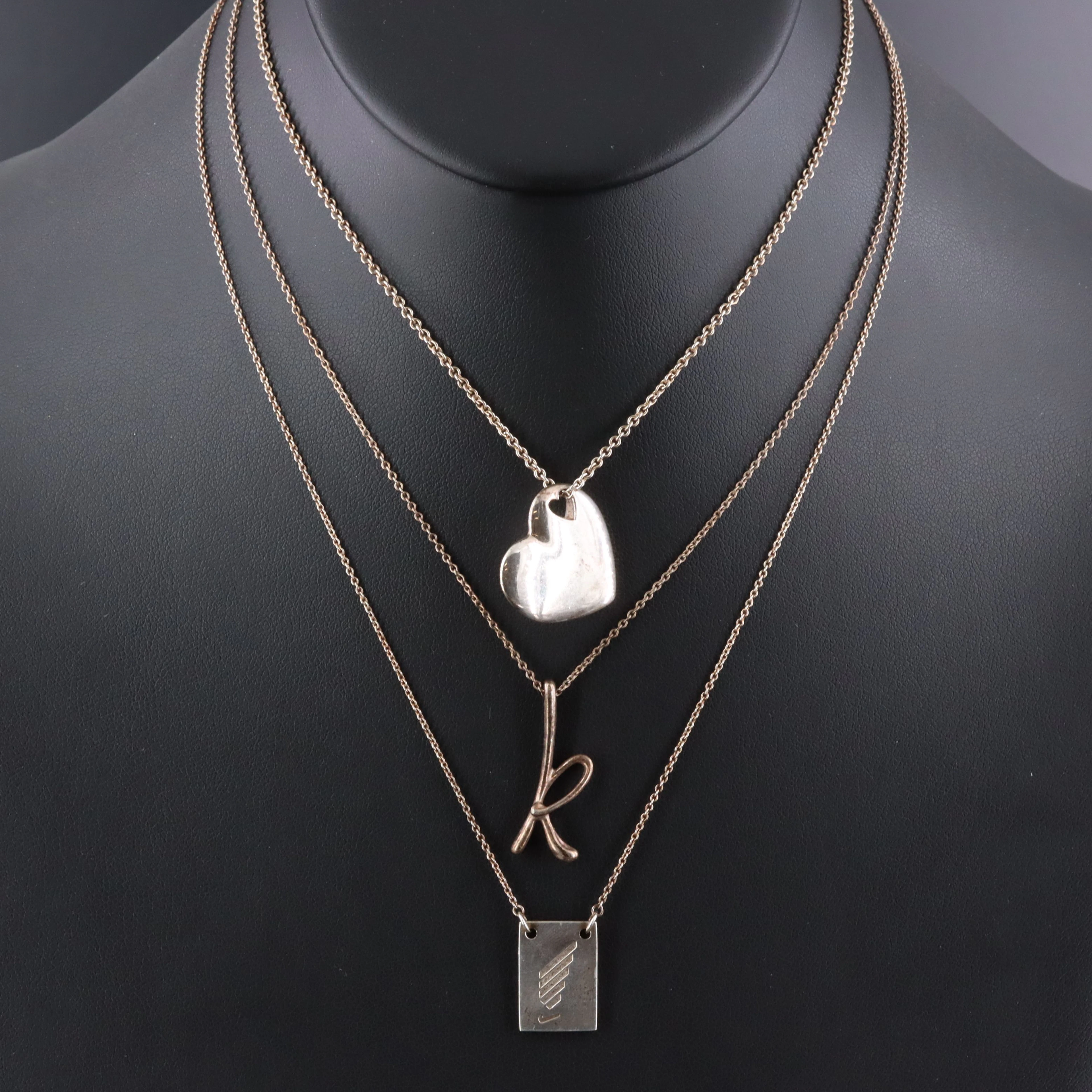
Tiffany & Co. Alphabet 'K', Nike Marathon, and Heart Stencil Necklaces
04/30/2026
$217
Est: $75