





NOV 8 | 1:00 PM

All auctions / Books, Maps & Manuscripts / Johannes ab Indagine - (MAGIC & WITCHCRAFT, PALMISTRY) Chiromantia - 1543

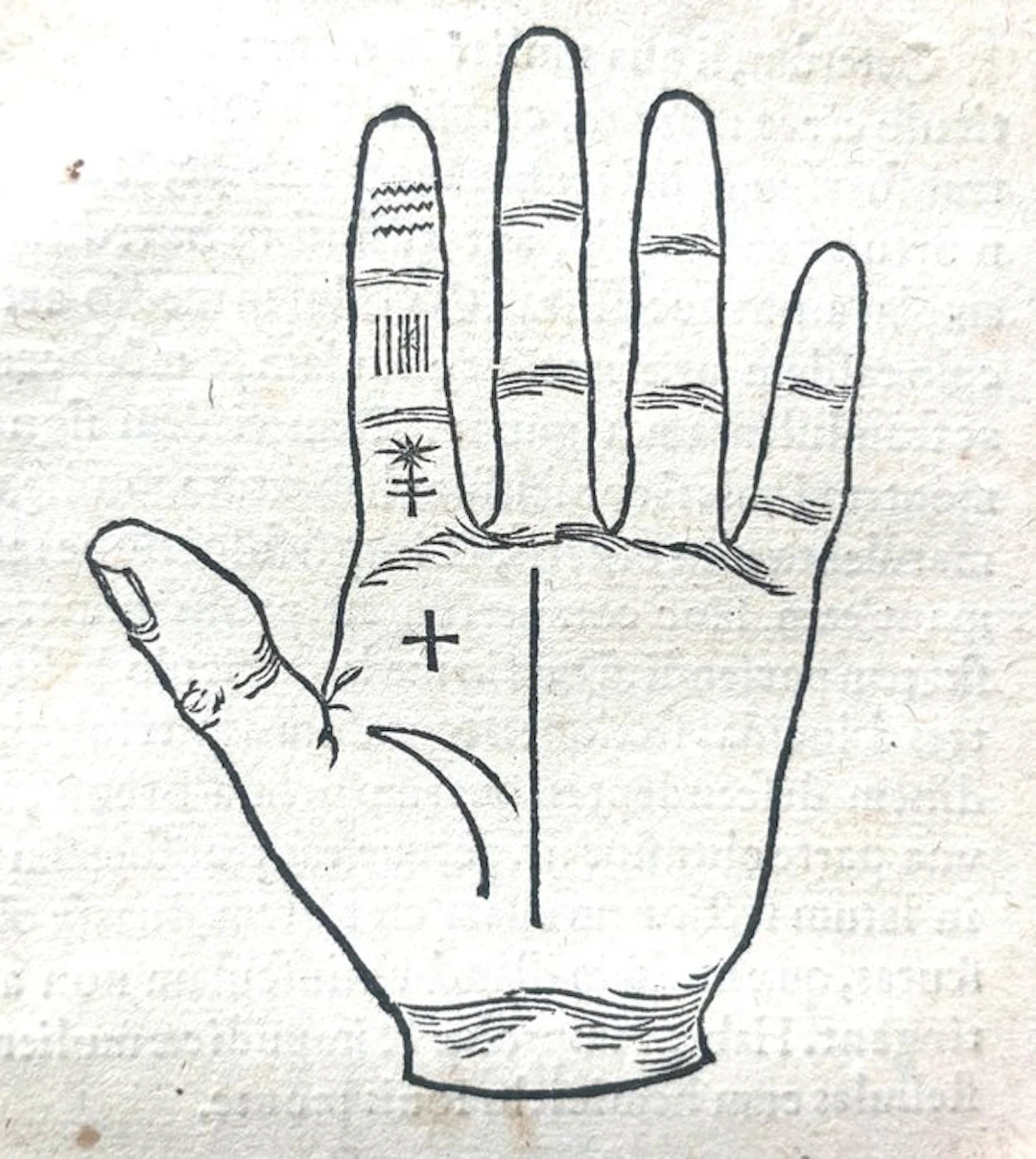
A book of magic and astronomy immersed in myths and legends throughout history The volume examined is a precious sixteenth-century edition of Chiromantia (often published under the broader title Introductiones Apotelesmaticae), the work of the German priest, humanist, and astrologer Johannes ab Indagine (also known as Johannes Rosenbach or Jean d'Indagine, c. 1467–1537). Printed in Cologne at the renowned Petrus Regnault printing house, this treatise represents one of the keystone texts of Renaissance European esoteric, astrological, and divinatory literature. 1. The Author: A Priest Between Faith and Astrology Johannes ab Indagine was a complex and fascinating figure of German humanism. Pastor of Steinheim and later a learned canon of the cathedral chapter of Mainz, Indagine saw no contradiction between his deep Christian faith and the study of occult sciences. On the contrary, for him and for many contemporaries, astrology and the reading of signs in the body were tools to understand the divine order imprinted in the macrocosm and the microcosm. His solid theological training and his contacts with the era’s brightest minds allowed him to give a systematic and “scientific” form to disciplines that had hitherto often been considered magical or popular. 2. Content and Meaning of the Work The treatise does not limit itself to palm-reading; it constitutes an encyclopedia of the analogical and divinatory sciences of the sixteenth century. The title page clearly lists the five sections that form the core of Indagine’s thought: • Chiromancy and Physiognomy: The analysis of the lines of the hand and facial features not as superstition, but as a mirror of the soul, the character, and the biological destiny of the individual. • Natural Astrology and Iatromathematics: The application of astrology to medicine (the judgment of diseases). At the time it was firmly believed that every organ was governed by a planet or a zodiac sign, and that celestial configurations influenced the course of pathologies. • The Compressions and the Planets: The study of the four humors (sanguine, choleric, melancholic, phlegmatic) determined by the astral dominion at the moment of birth. The deep meaning of the work lies in the Renaissance anthropocentric vision: man is a microcosm that perfectly reflects the laws of the cosmos (macrocosm). Knowing oneself through these signs meant aligning with universal harmony. 3. Impact on Society, Beliefs, and Historical Links In the first half of the sixteenth century, astrology was a dominant discipline. Monarchs, popes, and leaders did not make important decisions without consulting the stars. Indagine’s work had a huge impact on both the educated classes and the emerging literate middle class. • The link with the Emperor: Johannes ab Indagine was in close contact with Emperor Maximilian I of Habsburg, a famous patron of the arts and of occult sciences, who encouraged astrological studies to legitimize his political and dynastic power. • The Lutheran Reformation: The work sits in the midst of the Reform ferment. Although Indagine was a Catholic priest, his rational and textual approach influenced even thinkers close to Martin Luther, such as Philipp Melanchthon, who was a fervent advocate of astrology. • Ecclesiastical censorship: Despite the author’s pious intentions, the Counter-Reformation’s evolution led to a drastic change of course. With the Council of Trent and the subsequent drafting of the Index Librorum Prohibitorum under Pope Paul IV and Pius IV, Indagine’s book was officially prohibited by the Catholic Church due to its implications on predestination and free will, making surviving copies even rarer and more sought after. 4. The Woodcuts and the Illustrative Program One of the reasons for the book’s global success was its exceptional visual apparatus. The author’s portrait in a medallion on the title page and the numerous internal woodcuts (illustrating palm lines carved on hands, physiognomic profiles, and zodiac emblems) were designed and executed by the celebrated German artist and engraver Hans Baldung Grien (c. 1484–1545), a favored pupil of Albrecht Dürer. Baldung Grien’s bold, expressive, and almost dramatic lines not only decorated the text but also served as a true visual manual, enabling the reader to compare the drawings with their own hands or with the faces of acquaintances. 5. Bibliographic Curiosities and Legends • The Marginal Notes Enigma: The photographed copy shows dense comments and hand-written glosses in contemporary ink along the margins of the text. This proves that the book was not merely a display item but a real working tool, consulted and annotated by physicians, astrologers, or scholars of the time for practical purposes. • The Premonition Legend: Numerous legends grew around Indagine. It was said that by applying the rules of his own book, the author was able to predict with exactness the day of his death and the sack of certain German towns during the upheavals of the Reform, earning him among the people the fame of a true prophet. Conclusion Johannes ab Indagine’s Chiromantia is a monument of European Renaissance culture. It marks the perfect transitional point between medieval mysticism and the modern age’s desire for systematic cataloging. Beyond its invaluable historical, philosophical, and artistic value—enriched by the graphic genius of Hans Baldung Grien—this volume stands as tangible evidence of an era in which medical science, art, and magic still walked hand in hand in the search for the secrets of the universe. If you wish, I can help you with: • Translating or analyzing any of the marginal notes visible on the title-page margins. • Delving into the artistic style of Hans Baldung Grien and his impact on esoteric illustrations of the era. Collation and preservation status: Fair preservation with foxing and minor edge wear; the book appears as in the photo and requires a new cover since it is missing one. 1p.(110pp) Express shipping in just 24 working hours for EU countries, and will require only 48 working hours for non-EU countries.
Estimate:$2,240.46
To the auctionView all items fromCatawikiorBooks, Maps & Manuscripts
Estimate:
$2,240.46
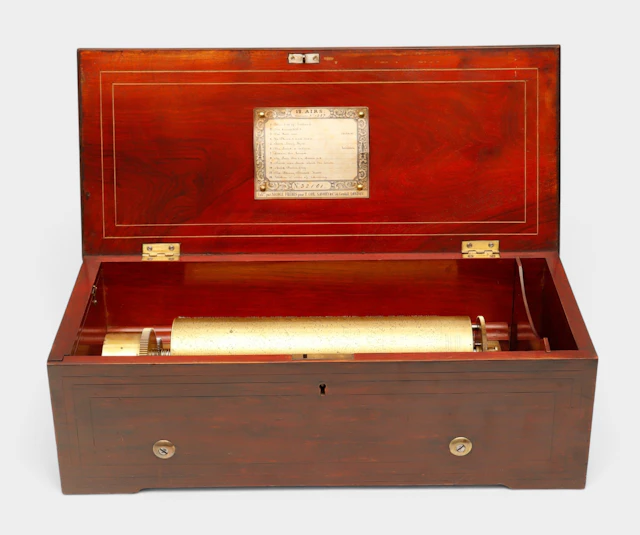
Caja de música suiza de doce canciones de Nicole Frères, hacia 1848-1852.
10/22/2026
$1,512.31
Est: $1,460.33
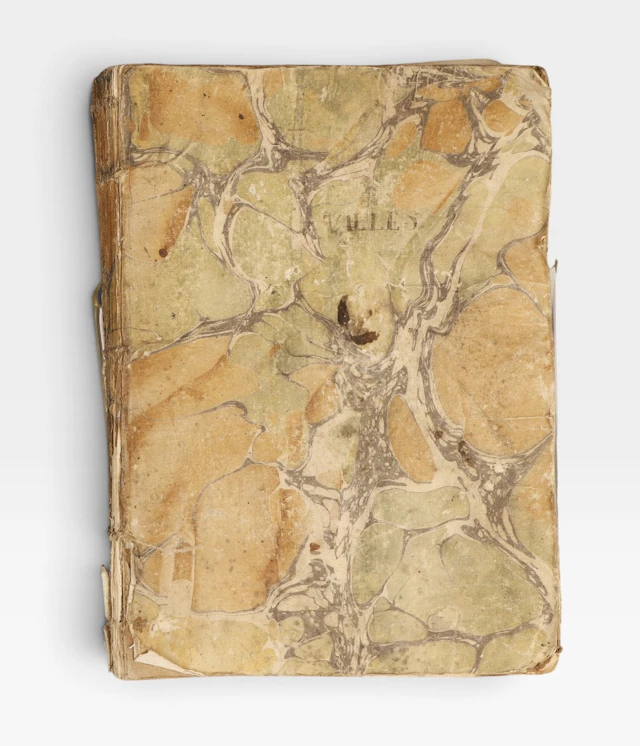
Guerra de la Independencia, Cataluña, 1808-1809.
10/22/2026
$145.63
Est: $157.63
NOV 8 | 1:00 PM


OCT 31 | 4:00 PM


OCT 27 | 4:00 PM
Bring your auction to collectors worldwide!
Get listed nowBy subscribing, you are agreeing to the privacy policy. Unsubscribe anytime.
Barnebys HQ
Brahegatan 10
BOX 5038
114 37 Stockholm
