




NOV 8 | 1:00 PM

All auctions / Ethnographic / Impressive Ice Age Steppe Bison Subfossil Foot from...

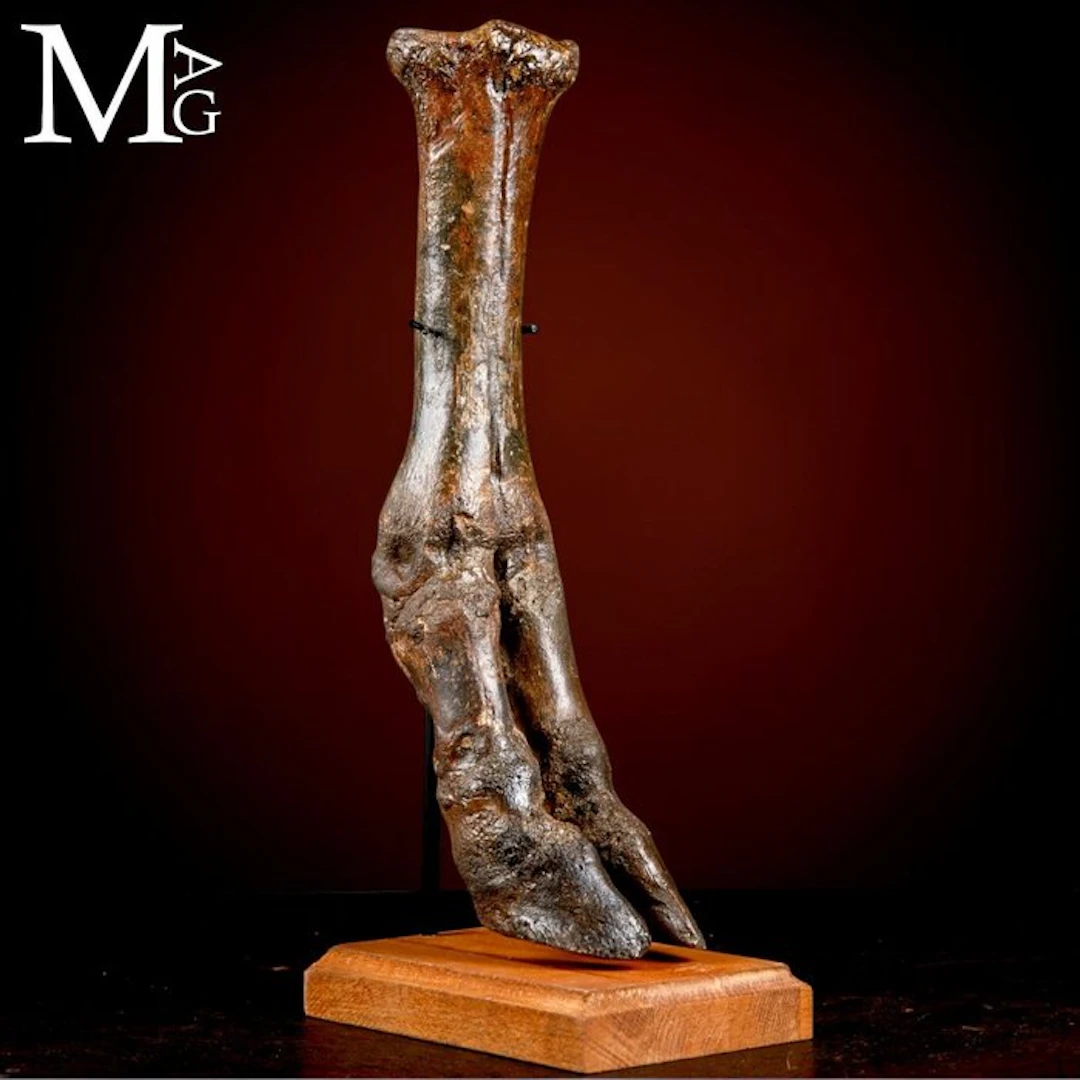
Bison priscus - Pleistocene, ca. 100,000 years — This lot presents an exceptional paleontological find: a distal portion of a limb, or hoof, belonging to a Steppe Bison (*Bison priscus*). The specimen, in a remarkable state of preservation, comes from the waters of the North Sea, tangible testimony of the ancient submerged continent of Doggerland. Elegantly mounted on a turned wooden base with a metal support, this fossil is not only a scientific specimen but a true natural sculpture, ready to be displayed and admired. Direct observation of the find reveals an anatomically surprisingly readable structure. The long bone, a metatarsus or metacarpus, shows a robust form that ends by branching into the phalanges that once supported the animal’s massive hoof. The surface is a palimpsest of its long history: it is not polished, but rich in organic texture, with porosity and irregularities that tell the process of fossilization. The coloration is the result of millennia of residence in marine sediments; a dark and deep patina, with shades ranging from deep brown to black, gives the piece an aura of antiquity and mystery. The provenance of this fossil is as fascinating as the specimen itself. During the glacial eras of the Pleistocene, sea level was much lower, and a vast plain, known today as Doggerland, connected the British Isles to continental Europe. This area was an immense steppe-tundra, an ecosystem rich in megafauna, including woolly mammoths, rhinoceroses, giant deer, and, of course, imposing herds of bison. With the end of the last glaciation and the rise of the seas, Doggerland was submerged, and its secrets sealed beneath the waves. Today, finds like this are occasionally brought to light by fishing nets, fragments of a lost world resurfacing in the present. The *Bison priscus* is one of the most iconic species of the Ice Age. Larger and with longer horns than its modern descendant, this bovine was perfectly adapted to the cold climate and the open spaces of the Eurasian steppes. For hundreds of thousands of years it was a key element of this ecosystem, until its extinction, about 10,000 years ago, due to drastic climate changes and the transformation of its habitat. Possessing a remnant of it means safeguarding the testimony of a majestic creature that once dominated an Europe today unrecognizable. Presented on a customized base that highlights its verticality and sculptural form, this find becomes an extraordinary collectible and a striking piece of décor. It is an ideal piece for a Cabinet of Curiosities, a professional study, a library or a gallery, capable of stimulating conversation and imagination. It represents a direct bridge to prehistory, an authentic fragment of the natural history of our continent. Technical details: Name: Zampa di *Bison priscus*; Classification: Mammalia, Bovidae; Geological period: Late Pleistocene; Estimated age: Around 40,000 – 100,000 years; Provenance: North Sea, Europe (paleogeographic Doggerland area); Dimensions: 360 x 80 x 125 mm; Weight: 1336 g; Base: Wooden base and included metal support; Condition: Natural subfossil specimen, without restorations. The patina and surface irregularities are authentic features due to the fossilization process.
Estimate:$561.32
To the auctionView all items fromCatawikiorEthnographic
Estimate:
$561.32
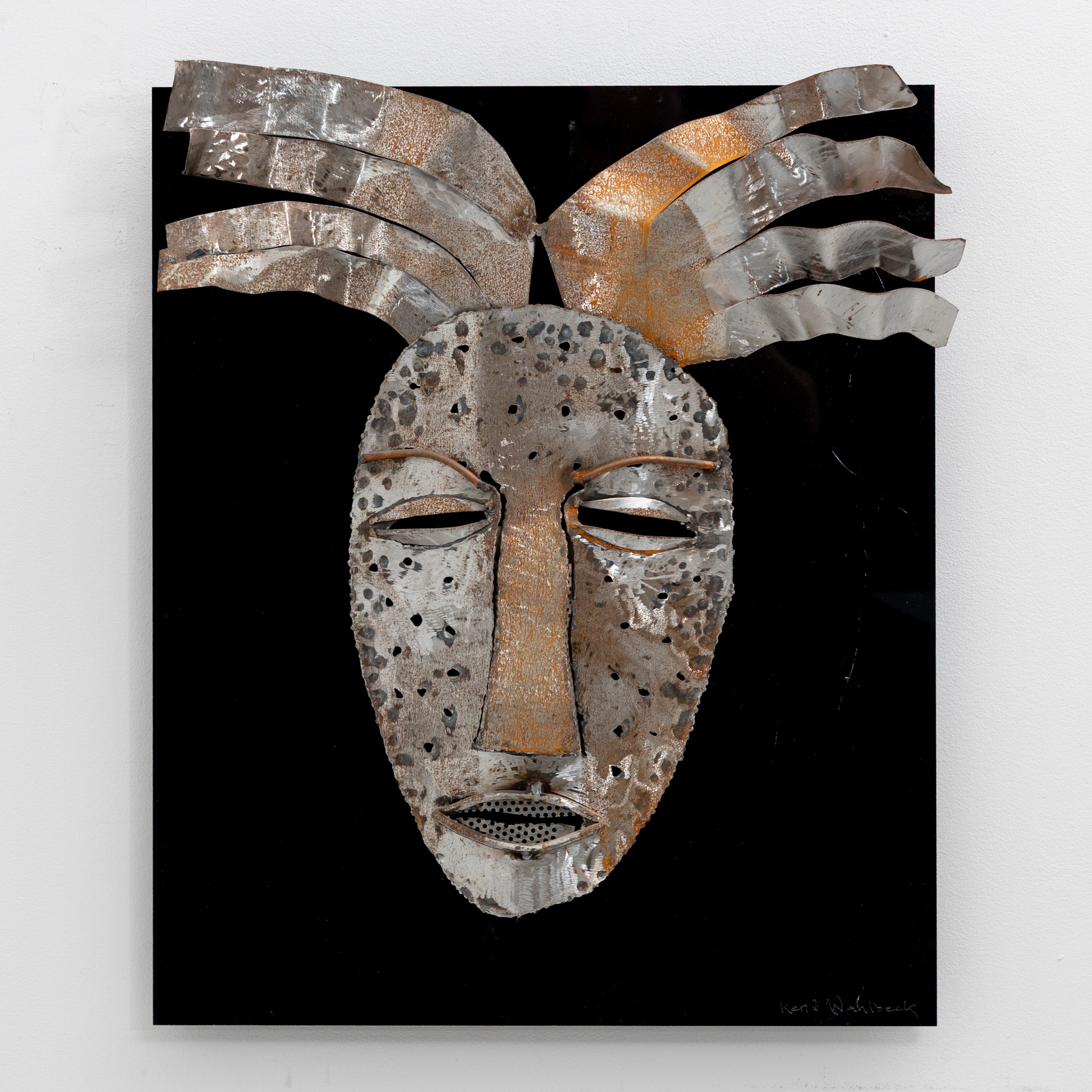
KENT WAHLBECK. "Olka", skulptur, plåt monterad på plexiglasplatta, signerad.
10/21/2026
$80.74
Est: $150.7
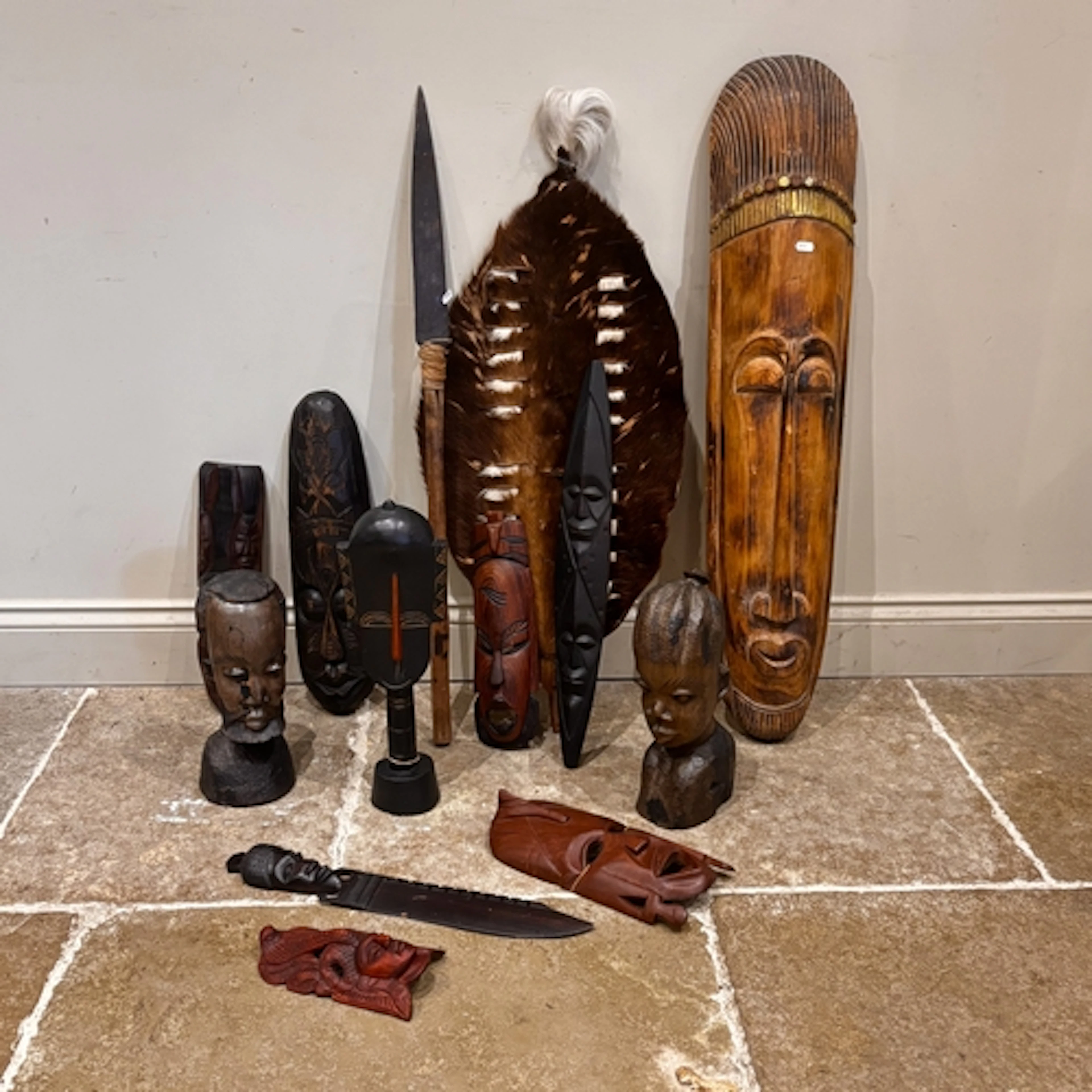
A quantity of tribal pieces, 20th century, to include a West...
10/21/2026

$107.22
Est: $105.71
NOV 8 | 1:00 PM


OCT 31 | 4:00 PM


OCT 27 | 4:00 PM
Bring your auction to collectors worldwide!
Get listed nowBy subscribing, you are agreeing to the privacy policy. Unsubscribe anytime.
Barnebys HQ
Brahegatan 10
BOX 5038
114 37 Stockholm
