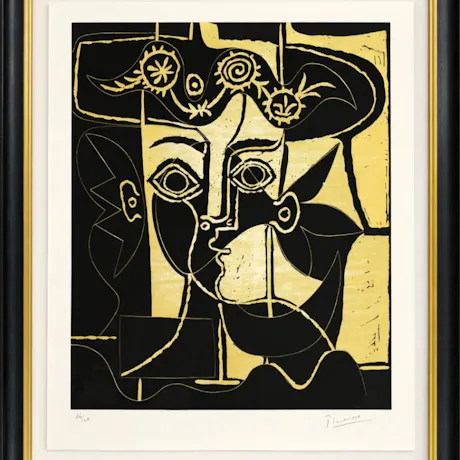

NOV 8 | 1:00 PM

All auctions / Ancient Art / HIROSHIGE · 1891 Memorial Edition · Mount Fuji · Sumida...

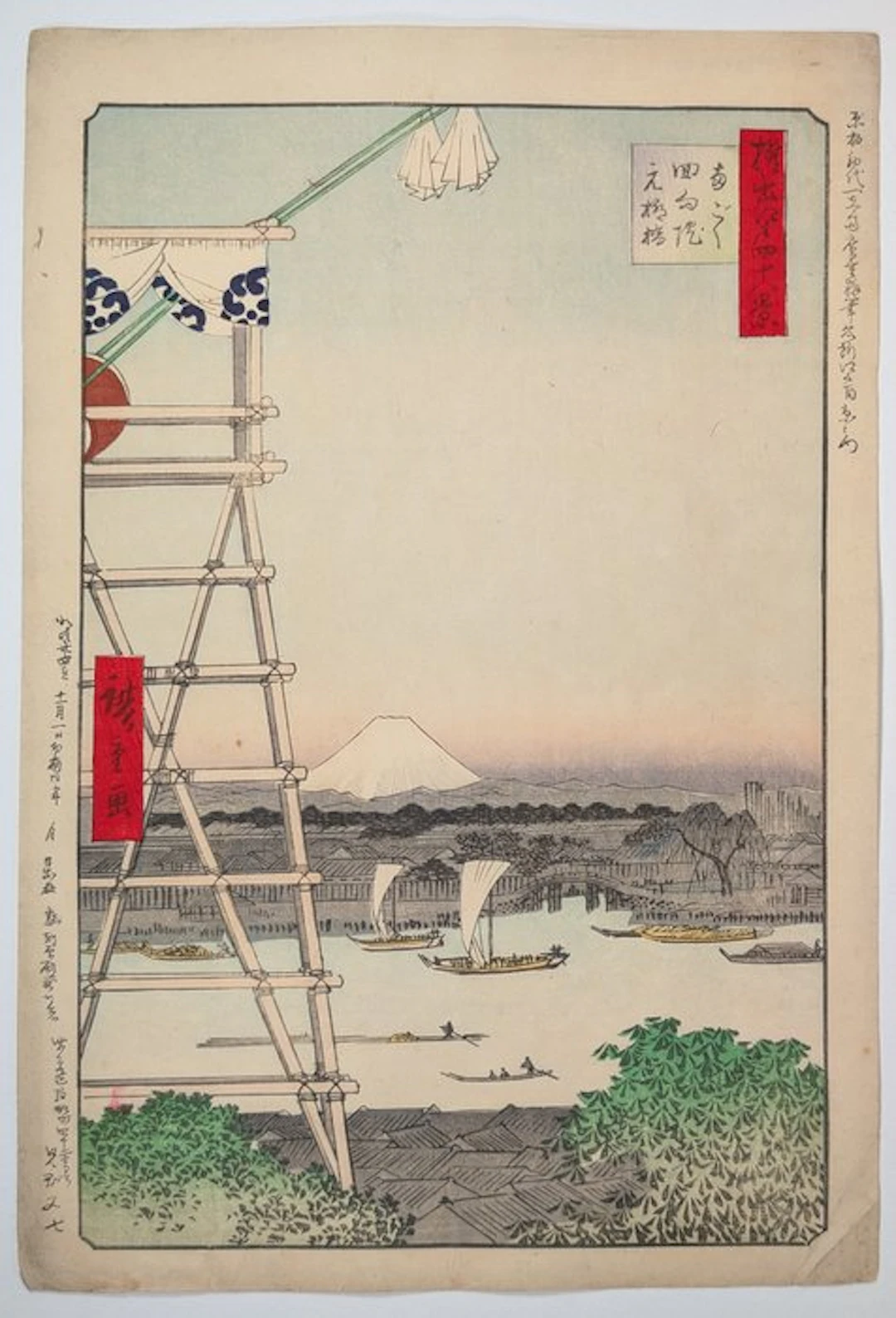
** Edo-period first impressions from this series sell at a high premium in comparable condition. This is the 1891 Memorial Edition, the Meiji commemorative issue of these designs, dated and documented as such in its own margin. It is an attractive way to collect Hiroshige's Edo views: printed from recut blocks with traditional woodblock craftsmanship, in genuinely high quality, with Meiji-era colouring. It is also a Meiji antique in its own right, now more than 130 years old. ** Artist: Utagawa Hiroshige (歌川広重, 1797–1858), signed Hiroshige ga (広重画) Title: 両ごく回向院元柳橋 Ryōgoku Ekōin Moto-Yanagibashi, Ekōin Temple at Ryōgoku and Moto-Yanagi Bridge Series: 撰出江戸四十八景 Senshutsu Edo Shijūhakkei, Forty-eight Selected Views of Edo. Original design No. 5 (spring section) of 名所江戸百景 One Hundred Famous Views of Edo, first published in the 5th month of 1857 This Edition: 1891 Memorial Edition (Meiji recut), dated Meiji 24 (1891) in the left margin Technique: Woodblock print (mokuhanga), polychrome (nishiki-e) Format: Ōban tate-e, approx. 36 × 24 cm (14.2 × 9.4 inches) Paper & condition Very good impression with very fine colours!. A few minor soiling and toning spots in the margins. Otherwise sound. Please study the images! About the print Ekōin at Ryōgoku began as a memorial temple. The Tokugawa shogunate built it to hold services for the souls of the people who died in the Great Meireki Fire of 1657, the worst fire in Edo's history. The events held there drew large crowds, and over time the area around the temple became one of Edo's most popular entertainment districts. Sumo matches were held there often from the Tenmei era (1781–89). From the 1820s Ekōin had a near monopoly on the Edo tournaments, helped by its position next to the busy amusement quarter by Ryōgoku Bridge, which lies just outside the right edge of this view. The sport stayed on this site into the twentieth century: the first Ryōgoku Kokugikan stadium was built there in 1909. Hiroshige chose the tower as the emblem of the place. The drum tower stood for both Ekōin and sumo, and in the Edo period it was put up without a single nail or piece of wire. The drum at its top, the sumo taiko, was beaten to announce the start of the matches, which were held twice a year in spring and autumn on the temple grounds. The two white cloths hanging from the tower signalled that the weather was good enough for a match that day. Beyond it, small boats carry cargo down the Sumida towards the central markets of Edo, with Mount Fuji on the horizon. The timing of the original was commercial as well: the print came out two months after a popular exhibition of temple treasures at Ekōi
Estimate:$168.31
To the auctionView all items fromCatawikiorAncient Art
Estimate:
$168.31
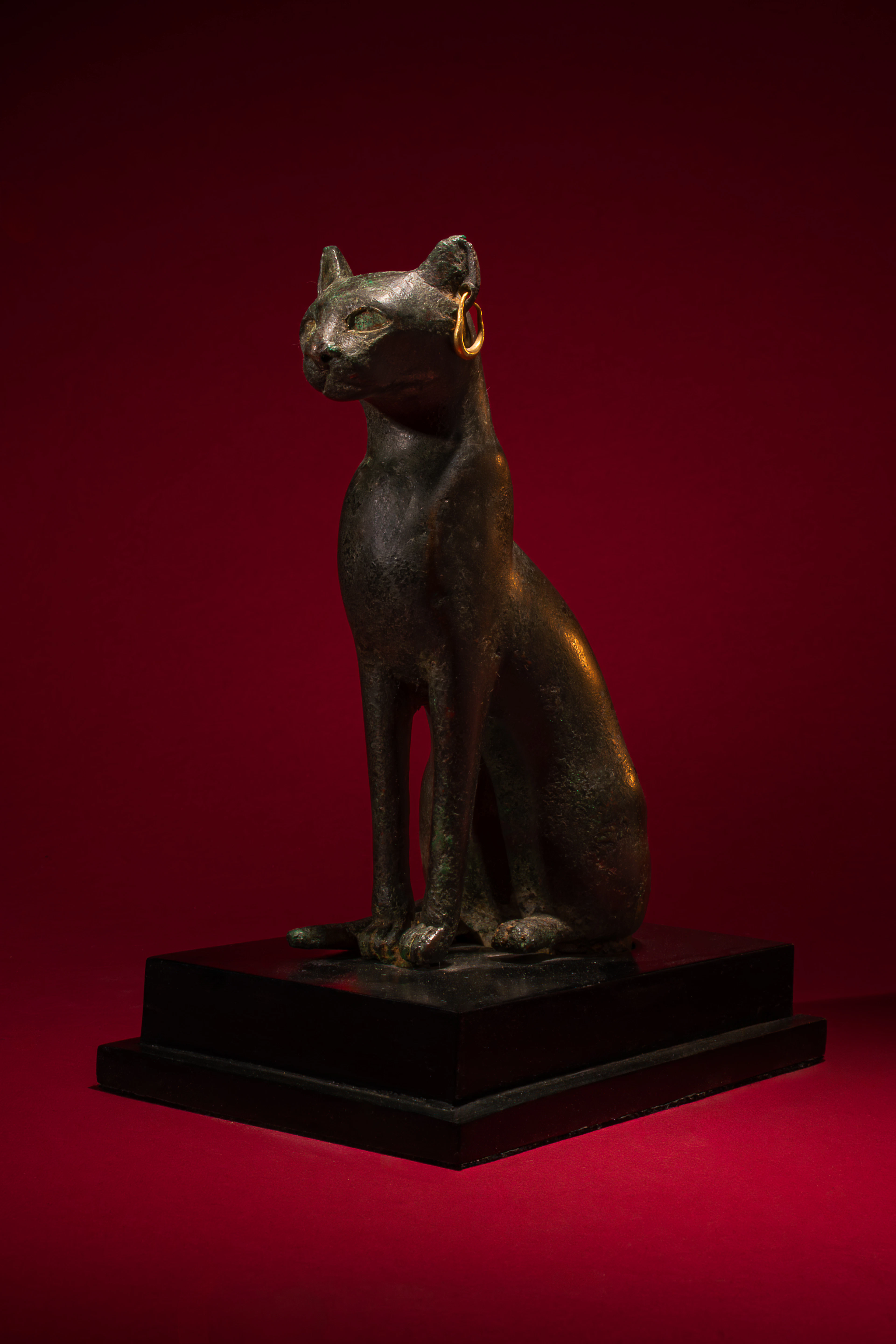
RARE EGYPTIAN BRONZE CAT STATUETTE WITH GOLD EARRINGS - LARGE SIZE
06/21/2026

$29,141.2
Est: $26,836.62
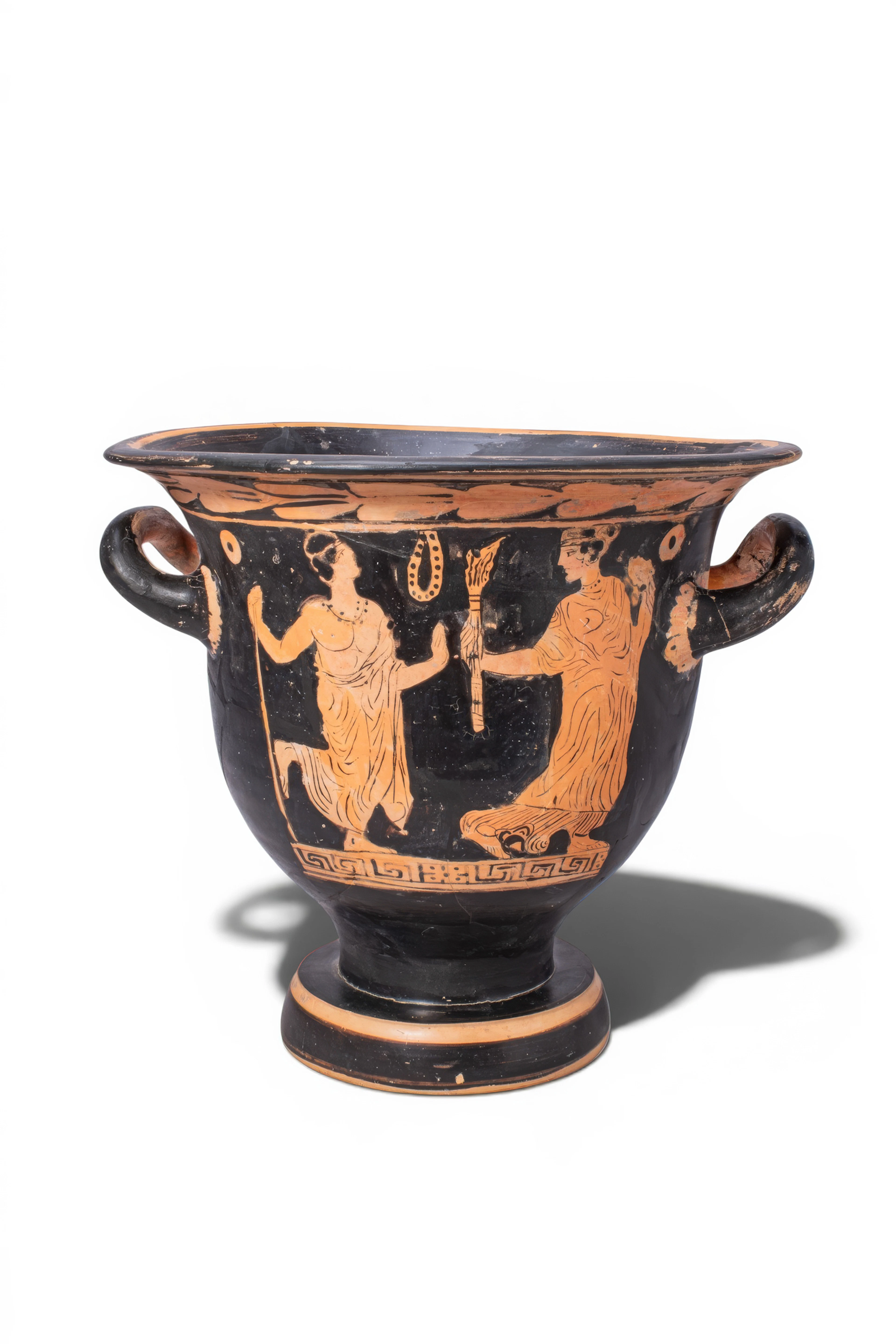
APULIAN RED-FIGURE BELL KRATER WITH KOMASTOS AND MAENAD - TL TESTED
06/21/2026
$3,443.96
Est: $2,640.96
NOV 8 | 1:00 PM


OCT 31 | 4:00 PM


OCT 27 | 4:00 PM
Bring your auction to collectors worldwide!
Get listed nowBy subscribing, you are agreeing to the privacy policy. Unsubscribe anytime.
Barnebys HQ
Brahegatan 10
BOX 5038
114 37 Stockholm
