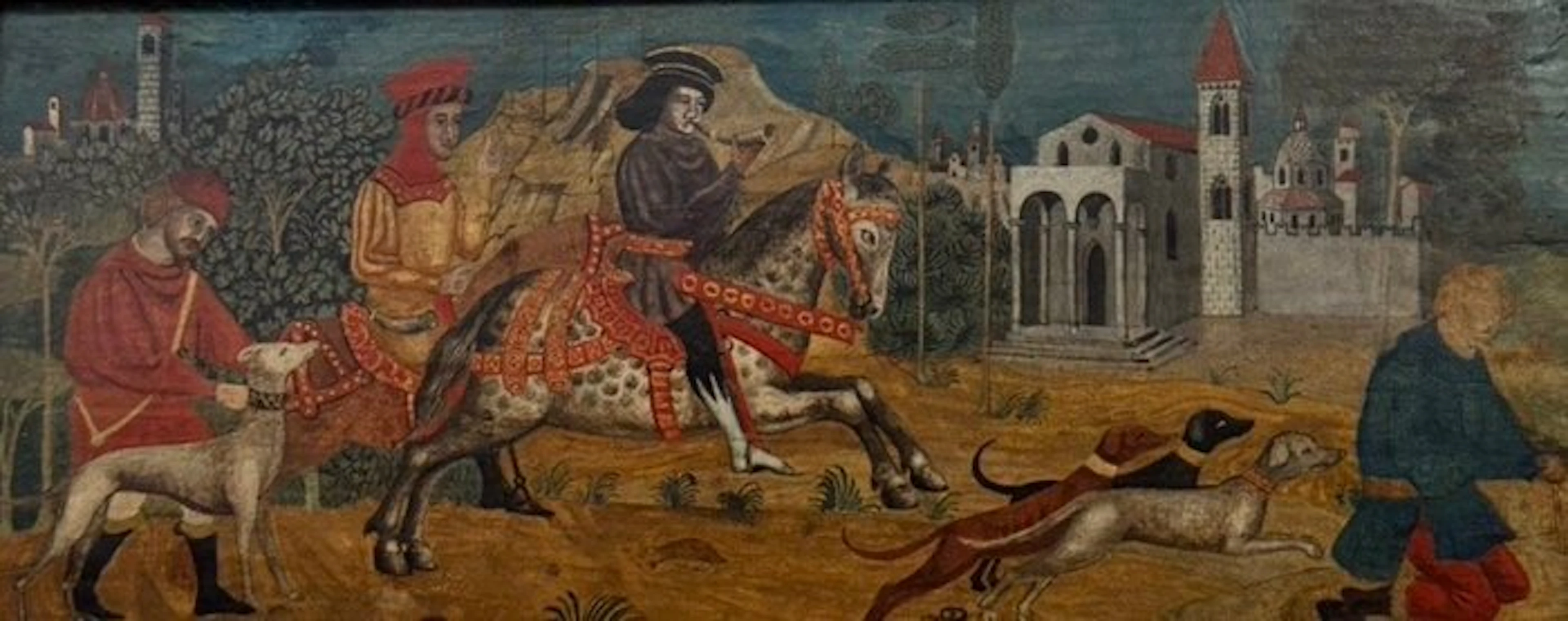




OCT 27 | 4:00 PM

All auctions / Miscellaneous / Francesco Guardi (1712 – 1793)

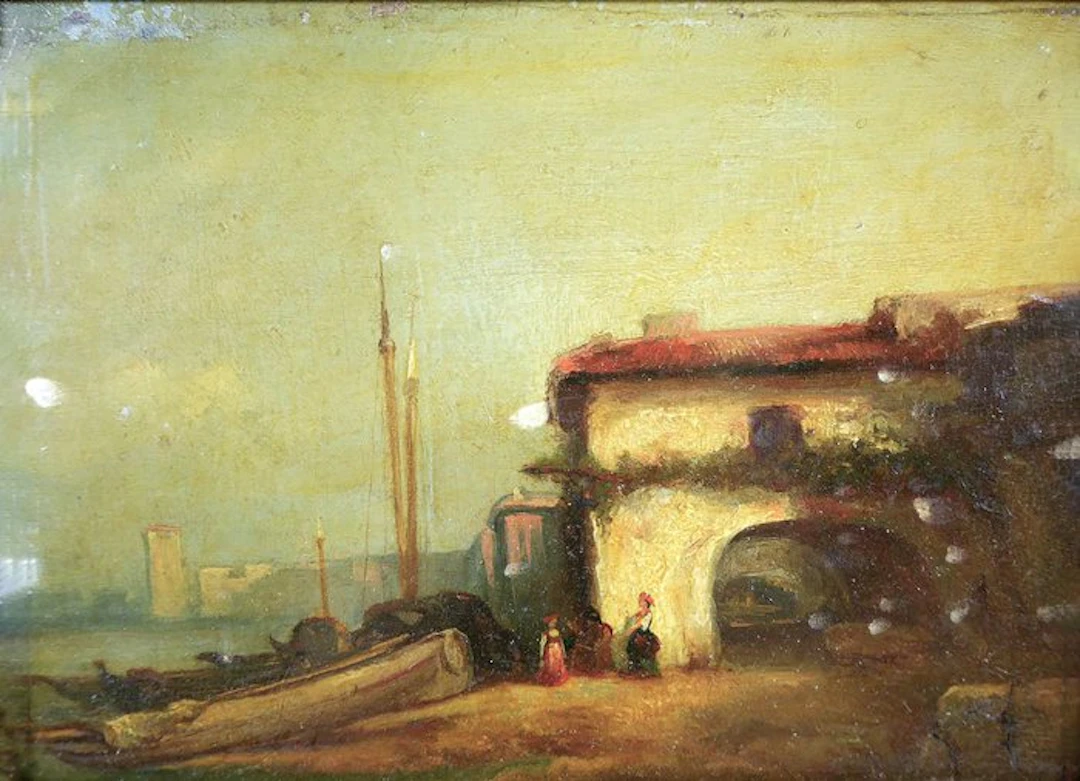
Follower of FRANCESCO GUARDI (Venice, 1712 – 1793) Coastal landscape with architectures and figures Oil on panel, 16 x 20 cm Frame size, about 35 x 41 x 6 cm NOTE: Publication catalog of Intermidiart collection works. Certificate of Guarantee and Legitimate Provenance. Work with a rich carved and gilded wooden frame (defects): The painting depicts a suggestive invented coastal view, linked to the fortunate lagoon capriccio tradition. The composition is dominated on the right by a monumental rural or fortified architecture, characterized by a large arched opening that reveals a shadowed interior. The building, topped by climbing vegetation that accentuates its picturesque and decadent character, serves as a stage backdrop for the scene. In front of the arch entrance, small caricatural figures in period costumes stand, delineated with quick brushstrokes. On the left, the scene opens toward a sloping sheet of water: in the foreground lies a shallow-drafted fishing boat (a flat-bottom boat typical of the Venetian or riverine tradition), while in the background, along the horizon line immersed in a warm twilight atmosphere, the profile of a medieval-looking fortified tower rises. The strong chiaroscuro contrasts and the choice of a warm color palette, dominated by earths, browns, and ochre of the sky, give the scene a suspended and romantic atmosphere, reinterpreting in an eighteenth-century key the poetical concept of the “picturesque.” Although the nineteenth-century label on the frame alludes to the famous French Romantic and Orientalist painter Alexandre-Gabriel Decamps (1803–1860) – from whom the work takes its material density and interest in Mediterranean views – the compositional setup and iconographic motifs have their roots in Venetian vedutismo. The structure of the scene, which juxtaposes a ruined monumental arch, small figures of fishermen or wayfarers (the so-called “macchiette”) and a tower in the watery background, faithfully follows the prototypes invented by Francesco Guardi and carried forward by his son Giacomo. The anonymous author of this panel shows careful attention to that repertoire, softening its agile eighteenth-century handwriting in favor of a more fused and atmospheric rendering, typical of the reception of Guardi’s painting in the nineteenth century. Francesco Guardi (Venice, 1712 – 1793) was, along with Canaletto, the leading exponent of Venetian vedutismo in the eighteenth century. Trained initially in the family workshop with his elder brother Gianantonio, in the early part of his career he devoted himself to historical and religious compositions. Only starting from the 1760s did he steadily orient himself toward landscape and caprice painting. Unlike Canaletto’s geometric and almost photographic precision, Guardi developed a unique and extremely personal style, characterized by a vibrant, concise brushwork rich in “tasto” (the so-called painterly touch). His views of the lagoon and his famous capricci did not seek exact topographic rendering, but aimed to capture atmospheric effects, changing light, and a sense of poetic nostalgia for a Venice in decline. His extraordinary expressive freedom anticipated formal solutions that would be fully understood and appreciated only with the advent of Impressionism and Romanticism in the nineteenth century. The painting presents in a decent state of structural conservation, maintaining its original historicity. On the painting surface there is a widespread and natural craquelure consistent with the period. The colors are partly obscured by a protective varnish layer that is yellowed and oxidized, altering the original brightness and pushing the sky and lights toward warmer, browner tones. There are also minimal, superficial abrasions from rubbing around the perimeter near the edge. The work is adorn'd with a rich carved and gilded wooden frame and is structurally solid, though it shows conspicuous shrinkage cracks at the internal corner joints. The gilding shows a beautiful patina of the period, interrupted only by small dust deposits in the carvings’ crevices and by slight losses of the preparation and gold leaf on the outer edges and more exposed corners (frame size about 35 x 41 x 6 cm, frame with defects). "The frame shown in the photos above has been added to the artwork by the seller or a third party. The frame is supplied to you at no additional cost so that it is ready to display as soon as it arrives. The frame is included as a courtesy and is not considered an integral part of the artwork. Therefore, any potential damage to the frame that does not affect the artwork itself will not be accepted as grounds for filing a claim or canceling the order." Provenance: Private collection Publication: - I Miti e il Territorio nella Sicilia dalle mille culture. INEDITA QUADRERIA general catalog of the paintings of the cycle “I Miti e il territorio,” 2026 (Pdf). The work will be shipped – due to fragility – with a wooden crate and polystyrene. In the case of sale outside Italian territory, the buyer must wait for the export paperwork processing times.
Estimate:$1,568.62
To the auctionView all items fromCatawikiorMiscellaneous
Estimate:
$1,568.62
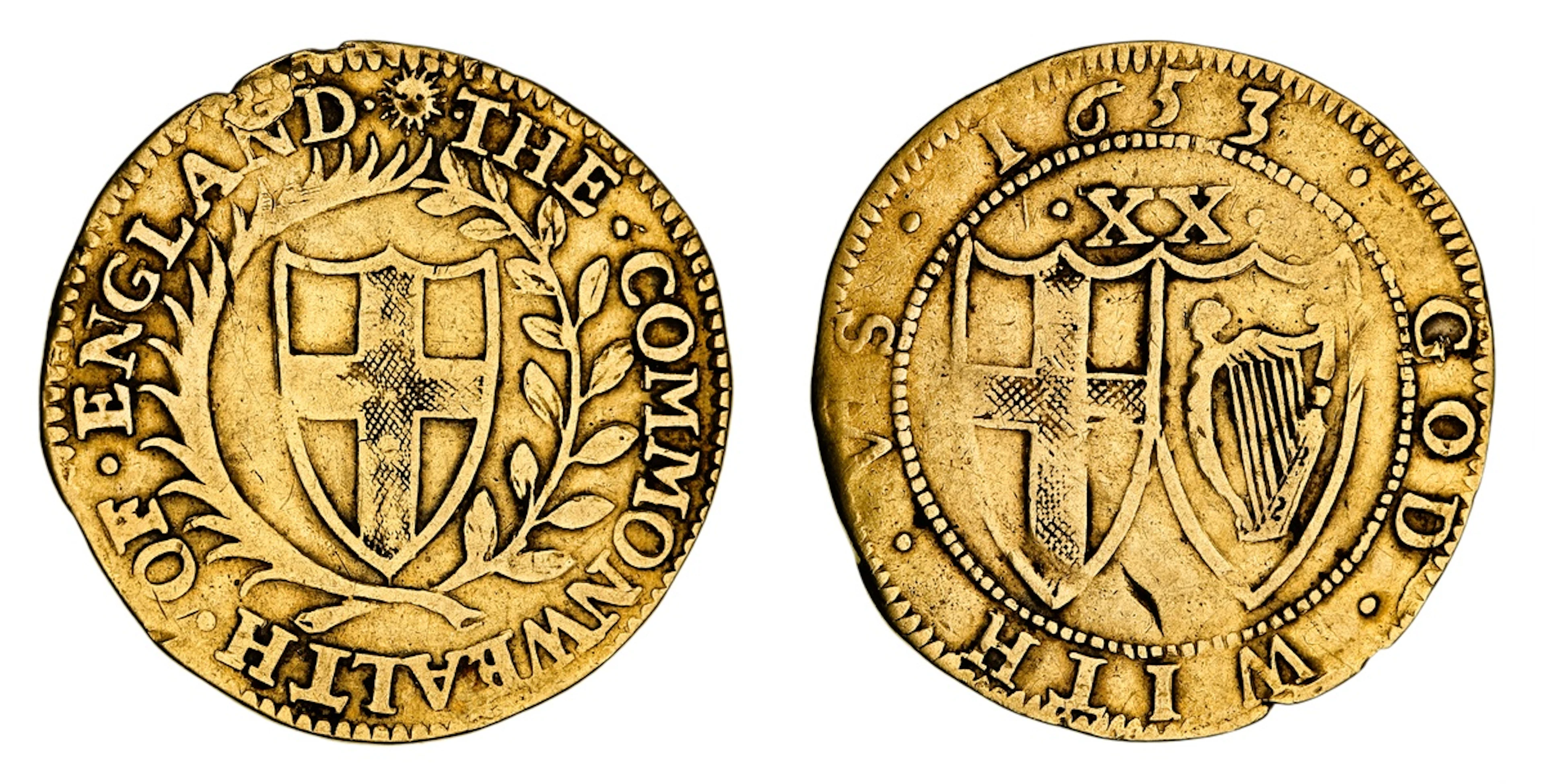
Commonwealth (1649-1660), Gold Unite, 1653, Tower, (i.m.) • THE •
12/11/2025
$4,003.35
Est: $2,650.3
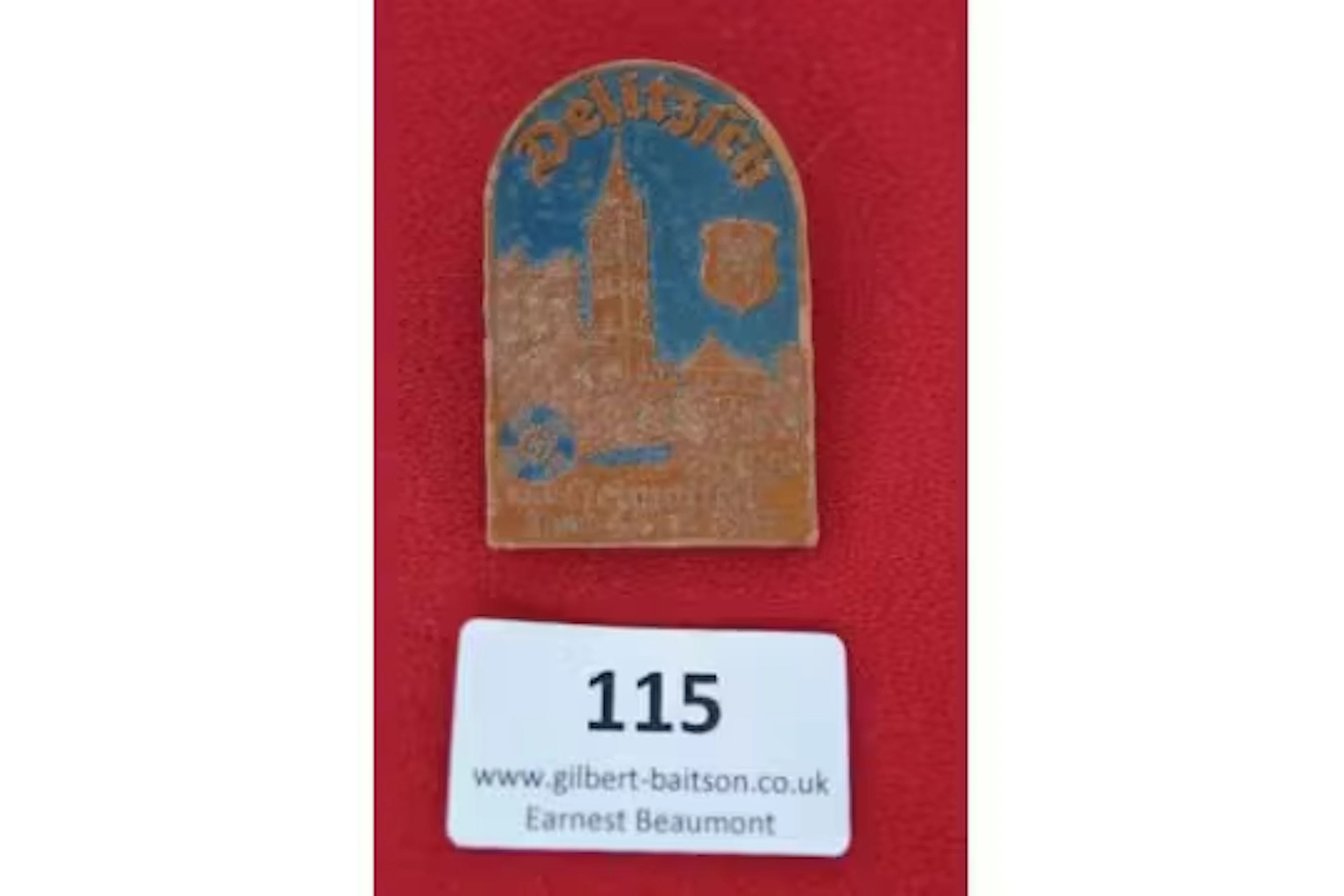
A German Day Badge, pressed brown plastic issue with coloured highlights
09/29/2025
$6.72
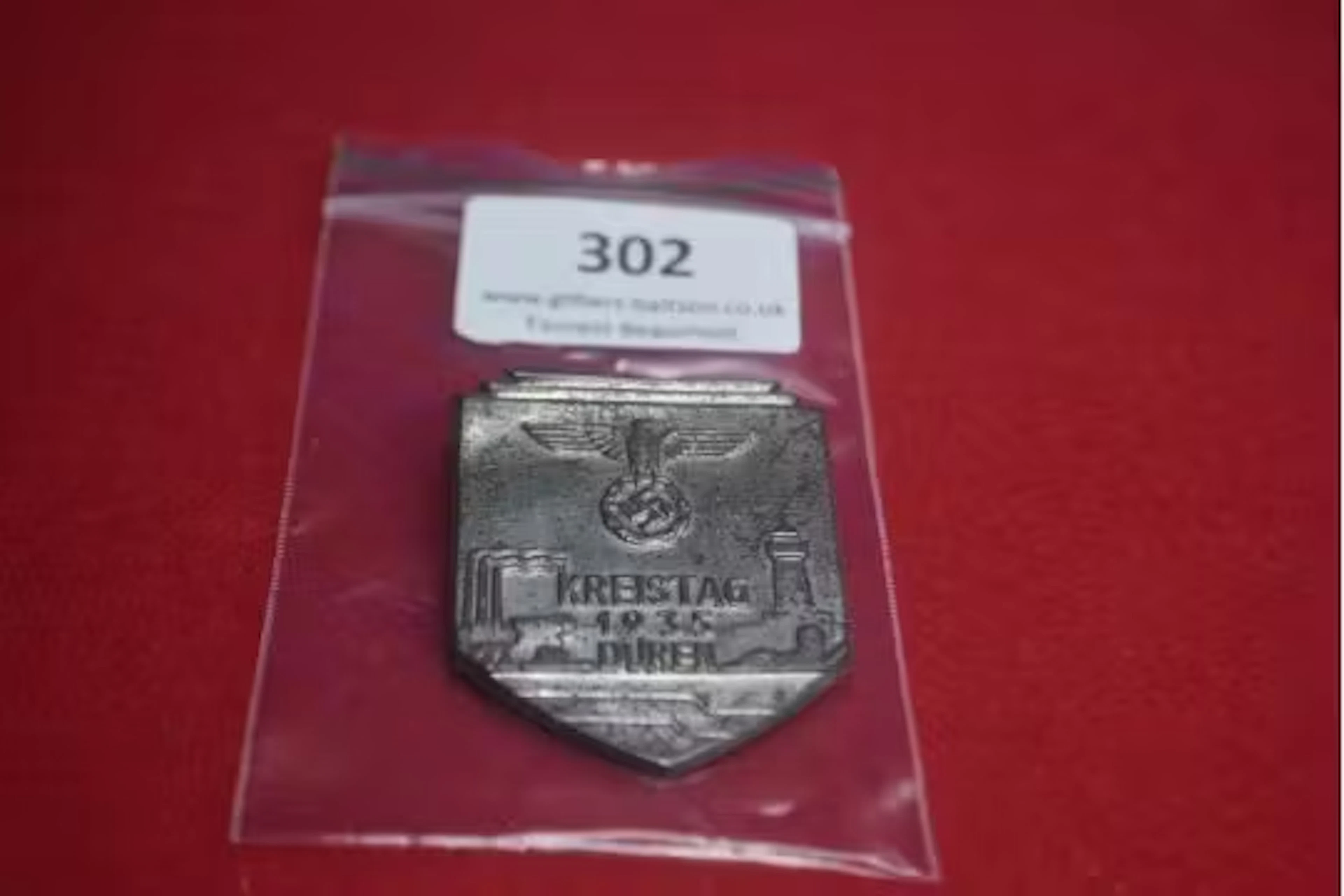
Pressed Tin Commemorative Badge “Kreistag 1935 Düren” – A shield-shaped
09/29/2025
$24.21
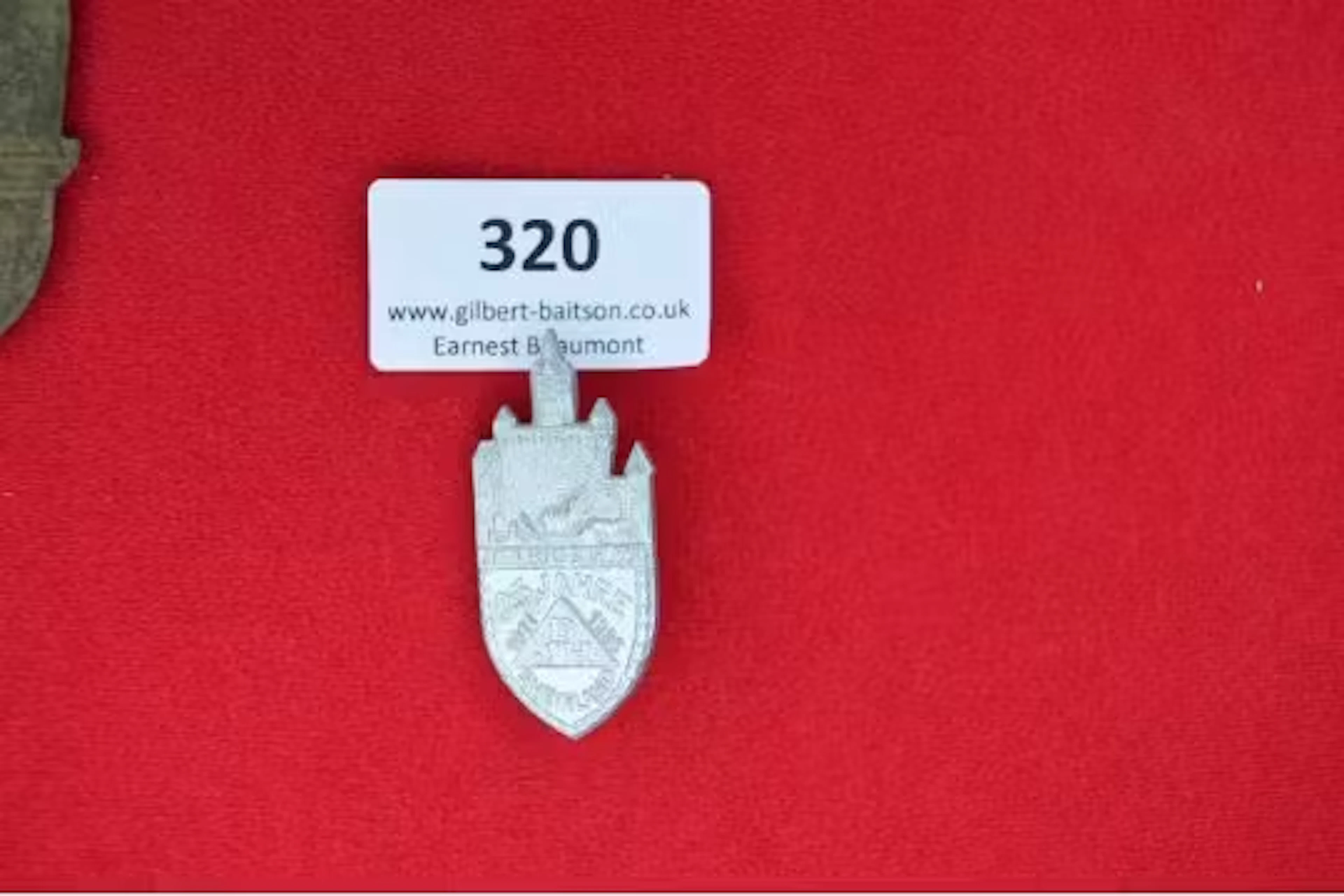
Rectangular-Topped Shield Badge – Light alloy pressed badge, shaped
09/29/2025
$18.84
OCT 27 | 4:00 PM


OCT 23 | 8:00 AM


OCT 17 | 10:00 PM
Bring your auction to collectors worldwide!
Get listed nowBy subscribing, you are agreeing to the privacy policy. Unsubscribe anytime.
Barnebys HQ
Brahegatan 10
BOX 5038
114 37 Stockholm
