



NOV 8 | 1:00 PM

All auctions / Arts & Graphics / École moderniste française (XIX-XX) - La Femme au regard lointain

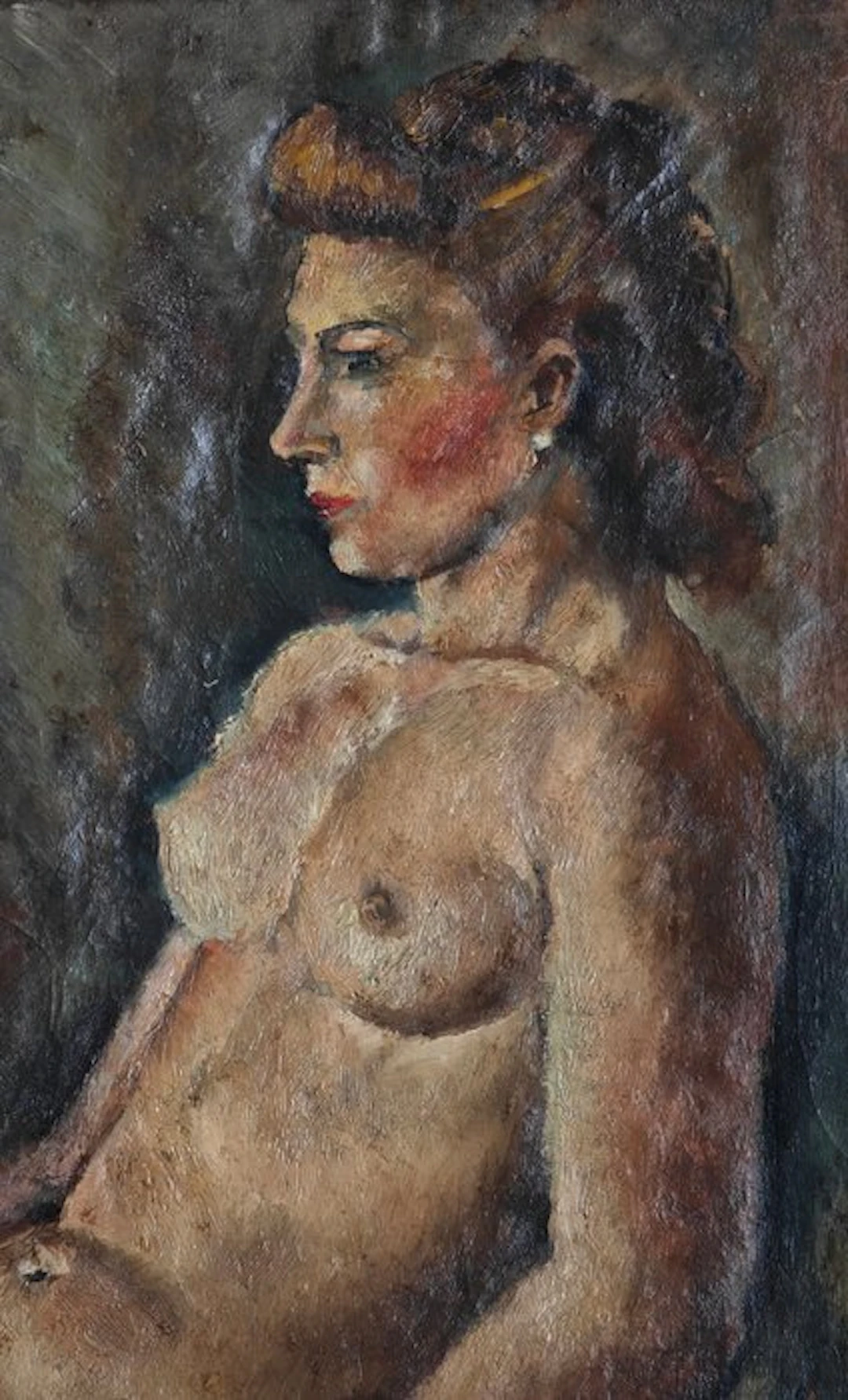
French School of the 19th Century Female Nude Study – Oil on Canvas An interesting oil painting on canvas, cataloged as French school of the 19th century, representing a half-length female nude, with a young seated figure, viewed three-quarters, and with the face oriented to the left. The work stands out for its intimate character, the expressive handling of the flesh tones, and a vigorous brushstroke that gives special prominence to the anatomical construction through color. The model is depicted in a serene and composed attitude, with dark hair pulled back and the torso exposed. The lighting falls on the face, chest, and shoulders, creating contrasts with the background in grayish- and greenish-toned hues. The composition bears affinities with the tradition of the French academic nude, although its relatively free execution and chromatic treatment also allow relating it to the transformations experienced by figurative painting during the last decades of the 19th century. It is a work of notable visual presence, in which the study of the human figure takes absolute prominence. Description of the work The painting represents a young woman seated, with the body arranged in a slightly diagonal position. The figure nearly fills the entire pictorial surface and is cut against a dark background, in gray, green, and brown tones. The face is presented in partial profile, oriented to the left, while the torso is shown in three-quarters. This arrangement allows the artist to develop an anatomical study of the neck, shoulders, chest, and upper abdomen. The model has dark hair, gathered in a voluminous hairstyle that reveals part of the forehead and face. In the upper area of the hair there are small ochre and golden highlights, which help to suggest its volume. The face is treated with a combination of warm tones and dark shadows. Especially notable are the cheekbones, rendered with reddish accents, and the lips, defined with a small stroke of intense color. The gaze is directed toward a point outside the composition, conveying a sense of introspection. The neck is lit with warm lighting, with shadows that help suggest the transition to the shoulders. The torso is built with visible brushstrokes of ochres, pinks, light browns, and grayish tones. The artist pays special attention to the volume of the chest and the natural arrangement of the body. The position of the arms and the tilt of the torso contribute to a relaxed pose, distant from a rigid or overly idealized representation. In the lower zone, the figure is partially interrupted by the edge of the composition. The background appears resolved with broad color patches, without clearly identifiable architectural or decorative elements. This simplification allows the viewer to focus entirely on the female figure. The female nude in 19th-century French painting During the 19th century, the female nude was one of the main genres of French academic painting. The study of the human body occupied a fundamental place in artistic training. Students of academies and workshops developed numerous drawing and painting exercises from models, with the aim of perfecting their anatomical knowledge. The representation of the nude allowed the study of proportions, bodily structure, movement, and the relationships between light and shadow. In France, this tradition achieved extraordinary development during the 19th century. Academic painting gave particular importance to anatomical precision and the idealization of forms. However, throughout the century, numerous artists began to develop more personal interpretations of the human figure. The emergence of Realism and, later, the transformations introduced by Impressionism and Post-Impressionism contributed to changing the treatment of the nude. Painters began to pay increasing attention to the spontaneity of the pose, the perception of light, and freedom of brushwork. The present work can be positioned stylistically within this tradition of figure studies. The absence of narrative elements and the focus on the torso and face suggest a conception close to a model study. The French Academic Tradition 19th-century French academic training placed fundamental importance on drawing and anatomical study. Model representation constituted one of the essential exercises of the studios. Artists developed studies of heads, hands, torsos, and full figures. These works could function as preparatory exercises for larger-scale compositions or as independent paintings. In this composition, the attention given to flesh tones and volumetric construction allows establishing connections with this tradition. The artist appears interested in representing the figure through direct observation of its forms. The model’s pose allows studying the relationship between the neck, shoulders, and torso. Lighting helps define volumes through a sequence of lights and shadows. Nevertheless, the visible brushstroke and the relative freedom of execution differentiate the work from the more polished manifestations of academicism. This combination is especially interesting within the context of 19th-century figurative painting. Affinities with Realism and late-century painting The work shows characteristics that allow establishing general connections with certain realist and naturalist trends in French painting. Realism defended a more direct representation of reality, moving away from excessive idealization. In the realm of portraiture and the nude, this sensibility favored depicting models with individual features and natural postures. The present painting shows a female figure treated with a certain spontaneity. The facial expression and the arrangement of the body convey a sense of naturalness. The artist uses a relatively loose brushstroke, especially evident in the torso and the background. Anatomical forms are built up through color patches, without resorting to a completely smooth finish. This characteristic brings the work closer to certain manifestations of late-19th-century figurative painting. There are also affinities with the interest in painterly matter and in building form through color that became important in the transition toward modernity. These references should be understood exclusively as stylistic relationships, without implying a direct attribution to any specific artist. The treatment of flesh tones One of the most notable aspects of the work is the representation of the skin. The artist uses a palette made up of ochres, pinks, light browns, grays, and small reddish accents. Illuminated areas present warm tones, while shadows incorporate darker and cooler nuances. The face shows relatively precise treatment, with special attention to the cheekbones, the nose, and the lips. The neck is constructed through color transitions that suggest its volume. In the chest and shoulders, the brushwork becomes more visible. Different color patches are overlaid to represent the light variations on the skin. The artist does not seek a completely uniform surface, but rather a painterly interpretation in which material contributes to building the anatomy. This freedom of execution adds expressiveness to the whole. Light and atmosphere Lighting plays a fundamental role in the composition. The figure stands out against a dark background, which helps reinforce its presence. Light falls mainly on the face, neck, shoulders, and the upper part of the torso. Illuminated areas present warm tones that contrast with the grays and greens of the background. The artist uses relatively deep shadows to define the body’s structure. The transition between light and dark areas is handled with visible brushstrokes. The lighting does not appear to respond to a light source depicted within the scene. Its function is mainly to model the figure and focus the viewer’s attention. The result is an intimate, sober, and poised atmosphere. Color and brushwork The work presents a restrained color palette dominated by earthy and grayish tones. Warm ochres and browns of the flesh contrast with the dark greens and grays of the background. The hair introduces a deep color mass, enriched with small golden reflections. The lips and cheekbones show reddish accents that bring vitality to the face. The brushwork is visible and relatively vigorous. In certain areas of the torso, the artist uses broad strokes that follow the anatomical structure. In the background, there are looser brushstrokes, aimed at creating a chromatic surface without descriptive details. This difference in execution allows establishing a visual hierarchy. The face receives more precise attention, while the body and background present a more spontaneous interpretation. The result is a composition of notable pictorial expressiveness. Composition and visual balance The painting presents a vertical composition organized around the female figure. The model appears slightly shifted to the right, with the face oriented to the left. This arrangement introduces a visual diagonal that runs through the composition. The head tilt and the torso’s posture generate a sensation of controlled movement. The dark background helps to emphasize the volumes. The absence of secondary elements reinforces the focus on the human figure. The composition is simple and balanced, with a clear intention of anatomical and expressive study. Technique: oil on canvas The work is executed in oil on canvas, a technique that allows a wide variety of chromatic and textural effects. The painting shows a visible brushstroke execution, especially noticeable in the flesh tones and in the background. The different anatomical zones are built up by color overlays. The artist combines relatively precise strokes on the face with a more free execution on the torso. The painted surface shows variations in texture and density. These features contribute to reinforcing the expressive character of the study. Condition report In the photograph, texture variations and some superficial irregularities can be seen. It is not possible to determine with certainty, solely from the image, the existence of previous restorations or the complete conservation state of the canvas. It is recommended to carefully examine all the photographs, which are an integral part of the description, to adequately assess the current condition of the work. Frame and presentation The painting is framed by an ornamental molding of considerable width. The frame combines dark brown tones, aged golds, and a wide inner clear finish. It features different relief decorative elements with vegetal motifs and traditional-inspired moldings. The color combination of the frame harmonizes with the ocher and brown palette of the painting. Its structure provides a presentation with notable decorative presence. Signs of wear and small alterations in the frame finish are observed. The frame is offered as a gift to the buyer, with no commercial value, and is not part of the artwork’s valuation. Any possible defects shall not be a cause for claim. Artistic and decorative interest The painting constitutes an interesting example of the tradition of studying the female nude, cataloged as a French school of the 19th century. Its main appeal lies in the naturalness of the pose, the expressiveness of the face, and the painterly handling of the flesh tones. The work combines a traditional figurative conception with relatively free brushwork. The sobriety of the background allows concentrating attention on the figure. The composition presents an intimate character and notable visual strength. It is particularly attractive for collectors of 19th-century French painting, academic studies, female nude, figurative painting, and model portraits. Features Artist: French school of the 19th century. Technique: oil on canvas. Genre: figure study / female nude. Theme: seated half-length woman. Style: French academic tradition, with realist and naturalist affinities. Attributed era: 19th century. Signature: no signature identified in the provided photograph. Presentation: framed. Shipping The work will be carefully and professionally packaged using suitable protective materials to ensure its safety during transport. Out-of-EU shipments may be subject to taxes, duties, import fees, clearance costs, and customs procedures. These potential costs will be the sole responsibility of the buyer and are not included in the hammer price or shipping charges. Additionally, shipments to islands, insular territories, or remote or hard-to-access areas by shipping companies may incur extra charges. Any surcharge applied by the shipping company for this reason shall be borne by the buyer. It is recommended to check in advance the applicable customs conditions and potential transport supplements for the destination.
Estimate:$672.14
To the auctionView all items fromCatawikiorArts & Graphics
Estimate:
$672.14
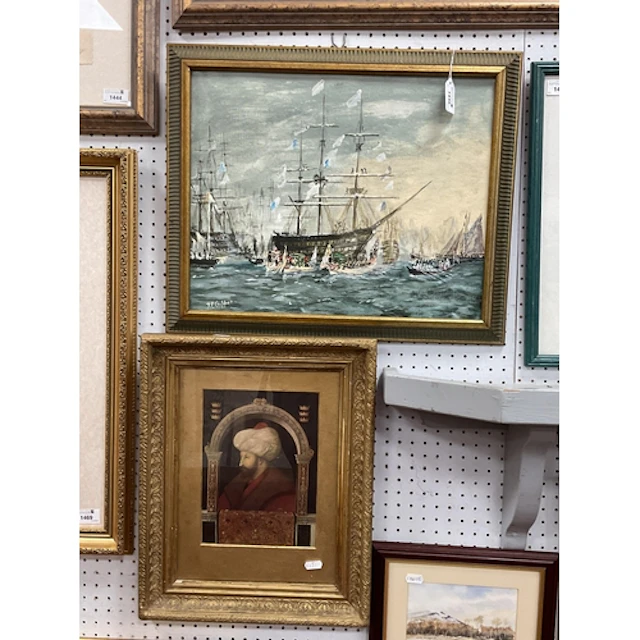
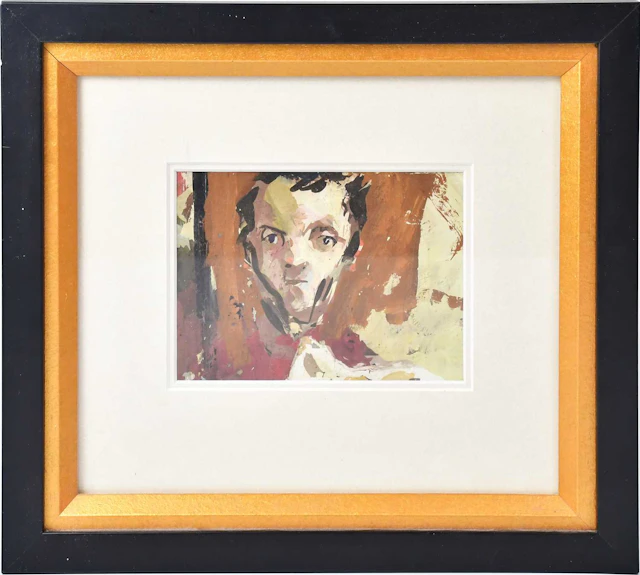
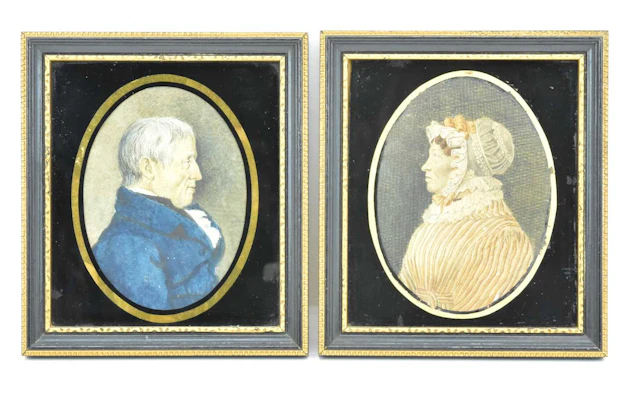
A pair of early 19th century miniature watercolour on paper portraits
10/23/2026

$60.18
Est: $52.83
NOV 8 | 1:00 PM


OCT 31 | 4:00 PM


OCT 27 | 4:00 PM
Bring your auction to collectors worldwide!
Get listed nowBy subscribing, you are agreeing to the privacy policy. Unsubscribe anytime.
Barnebys HQ
Brahegatan 10
BOX 5038
114 37 Stockholm
