




Bring your auction to collectors worldwide!
Get listed nowBy subscribing, you are agreeing to the privacy policy. Unsubscribe anytime.
Barnebys HQ
Brahegatan 10
BOX 5038
114 37 Stockholm
All auctions / Coins & Banknotes / Eadgar (959-975), 'Two Line' Type, Penny, "With and From God", Æthelwulf
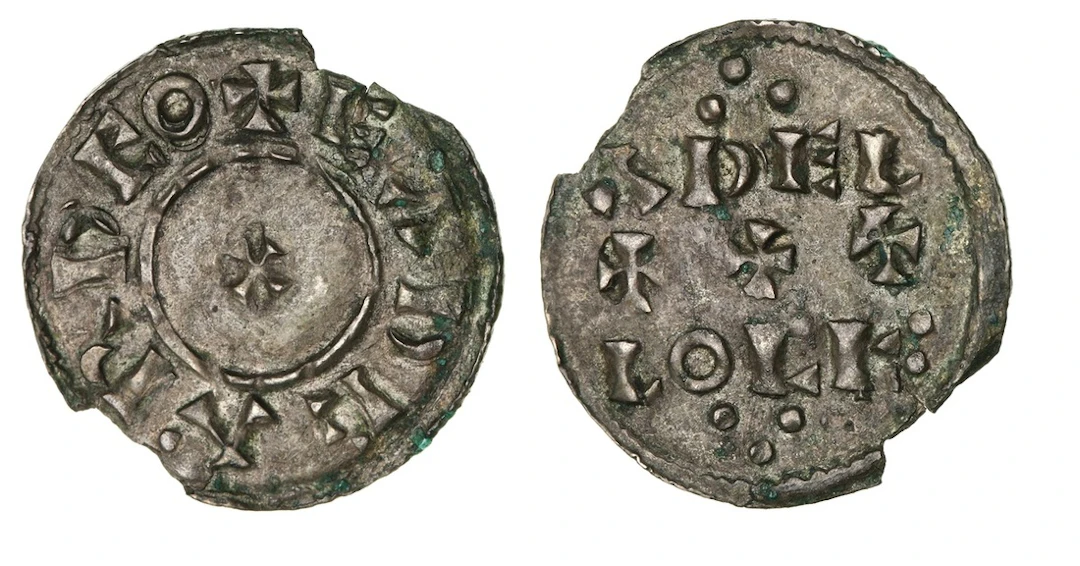
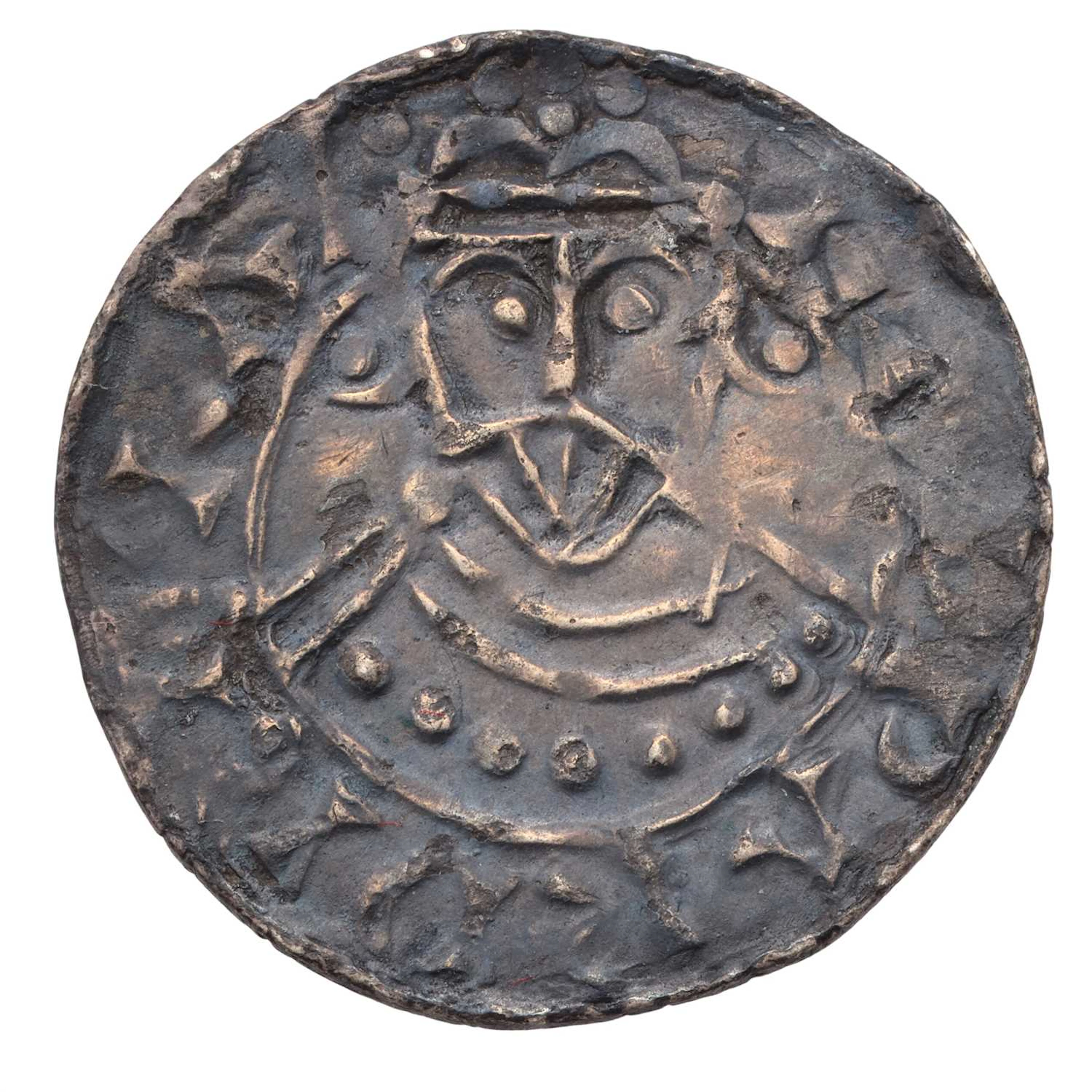
(x) Eadgar (959-975), 'Two Line' Type, Penny, "With and From God", Æthelwulf, + EADGA•R DEO, the O deliberately re-sunk, small cross pattée in centre, rev. ADEL | LOLF:, legend in two lines, divided by three cross pattées, trefoil above and below, 1.27g [19.60grns], 6h (HT 1 NE V; SCBI -; CTCE, 19, and Pl. 17, this coin; North 741; BMC i [Coll. no. -]; S.1129), two minor edge breaks and a touch of verdigris, otherwise uniformly toned and very fine, presumed UNIQUE, and of tantalising intrigue to Anglo-Saxon scholarship given the Latin dative or ablative juxtaposition of 'DEO' with the King's name! Provenance The Martin Waldron Collection of Anglo-Saxon, Norman and Plantagenet Coins Captain 'Peter' Arnot, Buckland, Dix & Wood, 21 March 1995, lot 79 Floyd E Wolfson, Superior Stamp and Coin Inc, 9 June 1975, lot 212 - "Two small chips out of edge. Fine to Very Fine" One might be forgiven for paying little attention to the diverse, sporadic and often inconsistent letter puncheons utilised across the tenth Century 'Horizontal Two Line' series of 'All England'. In this instance, the punching of a D for an R, could easily be classified as a die-sinker's error, yet another of many encountered across the seemingly endless varieties of this specie. However it would seem rather more deliberate given the introduction of an enlarged 'annulet' (really an O) punched not once, but twice. This no longer feels an error, but a deliberate attempt to invoke 'Deus' - God himself. This prompts a numismatist to explore the subtle nuances of the Latin language, with the suffix 'DEO' rendering in the dative - the sense of 'to' or possibly 'for God'. Equally it could invoke the ablative case - giving the meaning of 'by', 'with' or 'from God'. In a numismatic canon, this is immediately reminiscent of several later Plantagenet numismatic devices from 'POSVI DEVM ADIVTOREVM MEVM - I have placed God as my helper' popularised by Edward III, to permutations of 'DEI GRATIA' - 'By the Grace of God' utilised by every monarch since 1279 - with the 'Godless' Florin causing an infamous exception upon its release in 1849. None of this interpretation matters, unless one contextualises Eadgar's remarkable life. Eadgar, at barely sixteen years of age, inherited the throne and a fractured England in 959. His political inheritance was shaped almost entirely by the churchmen his father and former co-ruling brother Eadwig had already begun elevating. He had spent his boyhood years, while Eadwig ruled in Wessex, as the chosen king of Mercia and Northumbria under the tutelage of men steeped in Continental monastic reform. Chief among these principals was Dunstan, whom Eadwig had forcibly exiled to the continent, but whom Edgar had recalled and made Bishop of Worcester, then London, and eventually Archbishop of Canterbury in 960. From the outset, Eadgar's kingship was wedded to Dunstan's churchmanship: the young king's early charters are dense with the reforming vocabulary of men like Dunstan, Æthelwold (made Bishop of Winchester in 963) and Oswald (Bishop of Worcester, later Archbishop of York), the triumvirate who together drove the astonishing expansion of Benedictine monasticism across England in this period (one only needs to look at the refounding of the houses at Glastonbury, Abingdon, Winchester, Ely, Peterborough, Ramsey amongst others). More significant, however, than the foundation stone, was the stroke of the ecclesiastical triumvirate's pen. At Winchester, in 973, the Regularis Concordia was agreed at council, a meeting that Edgar described in its own preface as having convened and presided over "like a shepherd gathering his flock." Later medieval writers, and the Concordia's own proem, went so far as to cast Edgar as a second Josiah or Constantine; being a King who used the machinery of Royal power expressly to purify and reorder the Church itself. But behind the shroud of piety, emerges a very different reputation for Eadgar; who would act with a notable lack of personal restraint in his youth, so much so that Dunstan did not simply advise him but actively corrected him. The most vivid account survives from Osbern of Canterbury's Vita Sancti Dunstani. In it, Eadgar either seduces, or more likely abducts a nun sheltering at Wilton Abbey, sometimes naming her as Wulfthryth, mother of the future St Edith of Wilton. In response, Dunstan, as Archbishop, imposed a formal penance on the king for the blasphemous offense - barring him from wearing his Royal crown for seven years. Whatever the precise historicity of the episode, it narrates the powerful fable of a wayward young king brought under the moral discipline of the Church through Dunstan's personal intervention, and emerging from that discipline a genuinely reformed, appropriately humbled Christian ruler. At Bath, in this great display of renewal, King Eadgar undertook a second, deliberately staged Coronation, conducted by Dunstan with Oswald in close attendance, using rites that scholars generally connect to the so-called "Second English Ordo" — a much more elaborately liturgical, anointing-centred rite than earlier Anglo-Saxon practice. Symbolically this event coincided with the completion of Edgar's seven-year penance and the Winchester council. The King was showing that Royal power was ultimately answerable to Ecclesiastical and divine authority, could it be that this very coin was struck to reflect an historic alignment of the English church and state? Subject to 5% tax on Hammer Price in addition to 20% VAT on Buyer’s Premium.
Estimate:$662.02
To the auctionView all items fromSpink AuctionsorCoins & Banknotes
Estimate:
$662.02
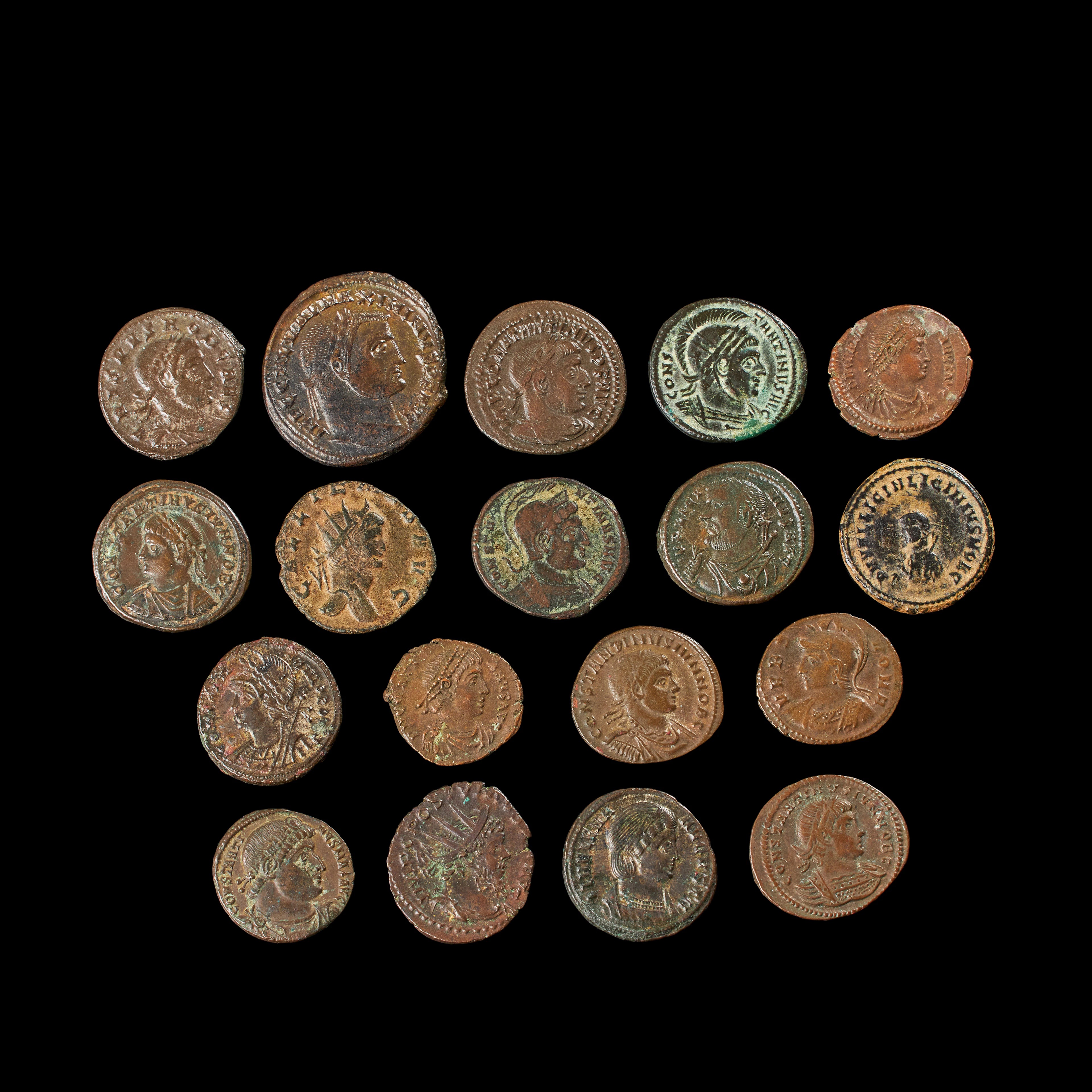
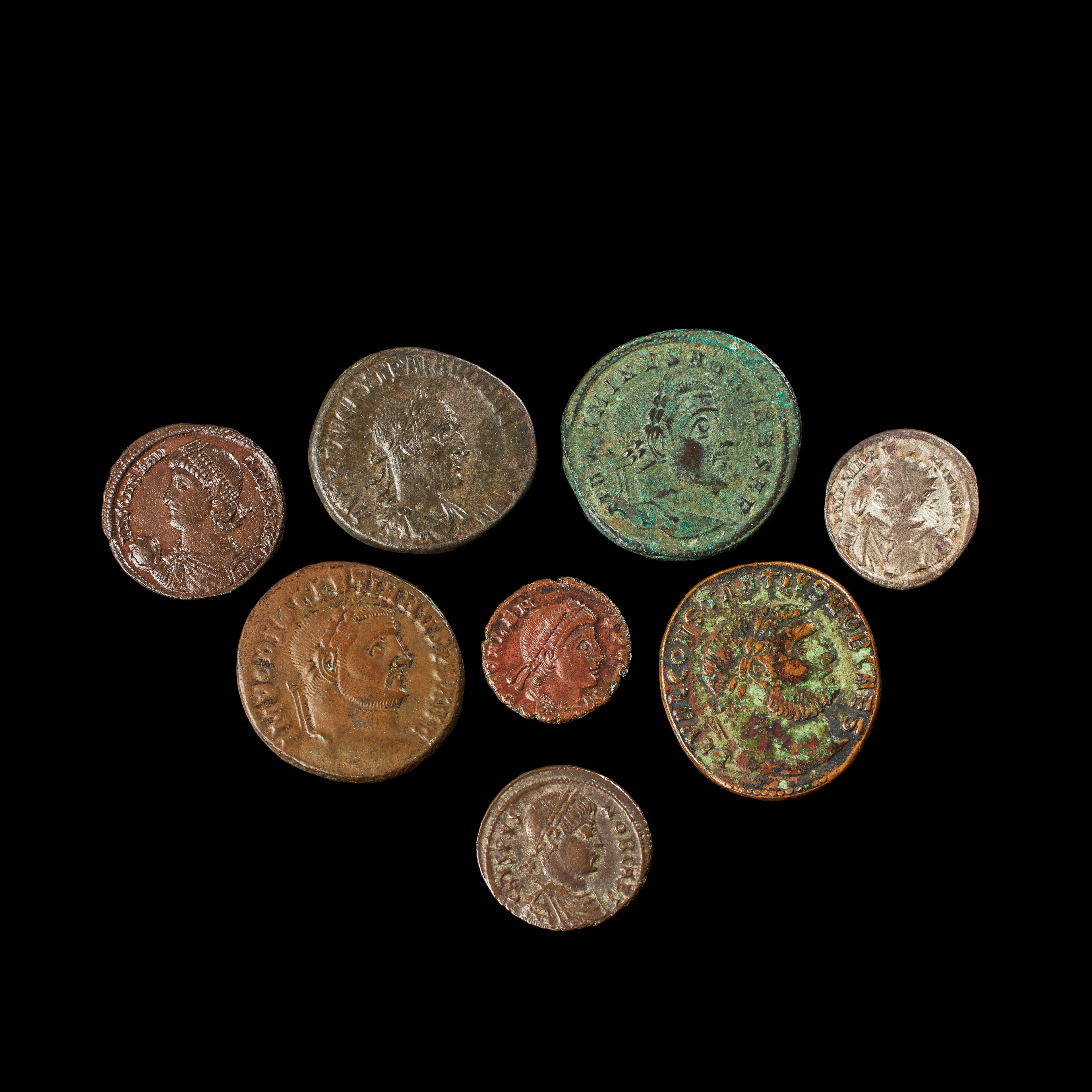
BRONSMYNT, 18 st, senromerska, 200-400 e Kr.
09/28/2026
$200.4
Est: $305.19


Bring your auction to collectors worldwide!
Get listed now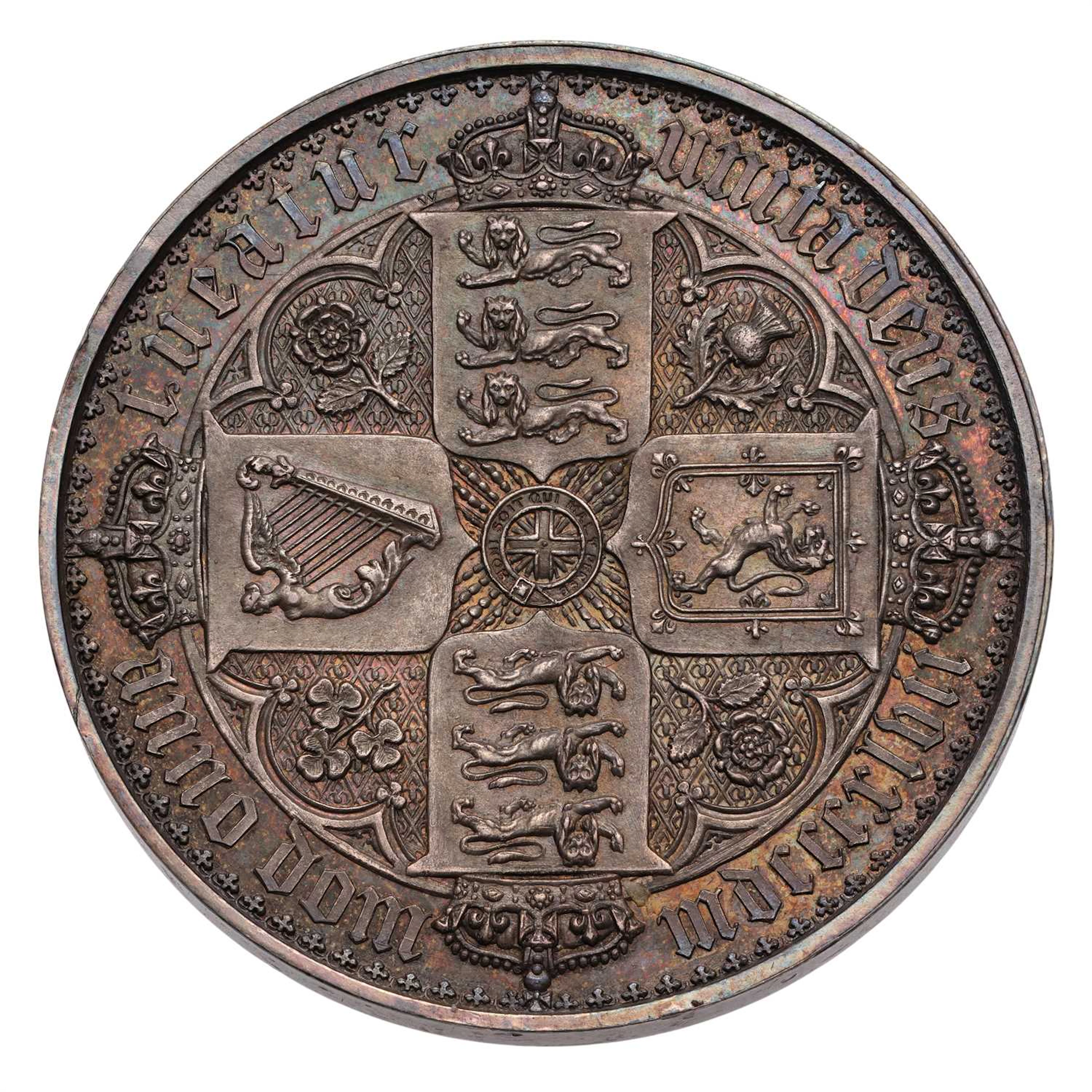
BRONSMYNT samt SILVERMYNT, 8 st, romerska, bl a Trajanus tetradrakma
09/28/2026
$200.4
Est: $305.19
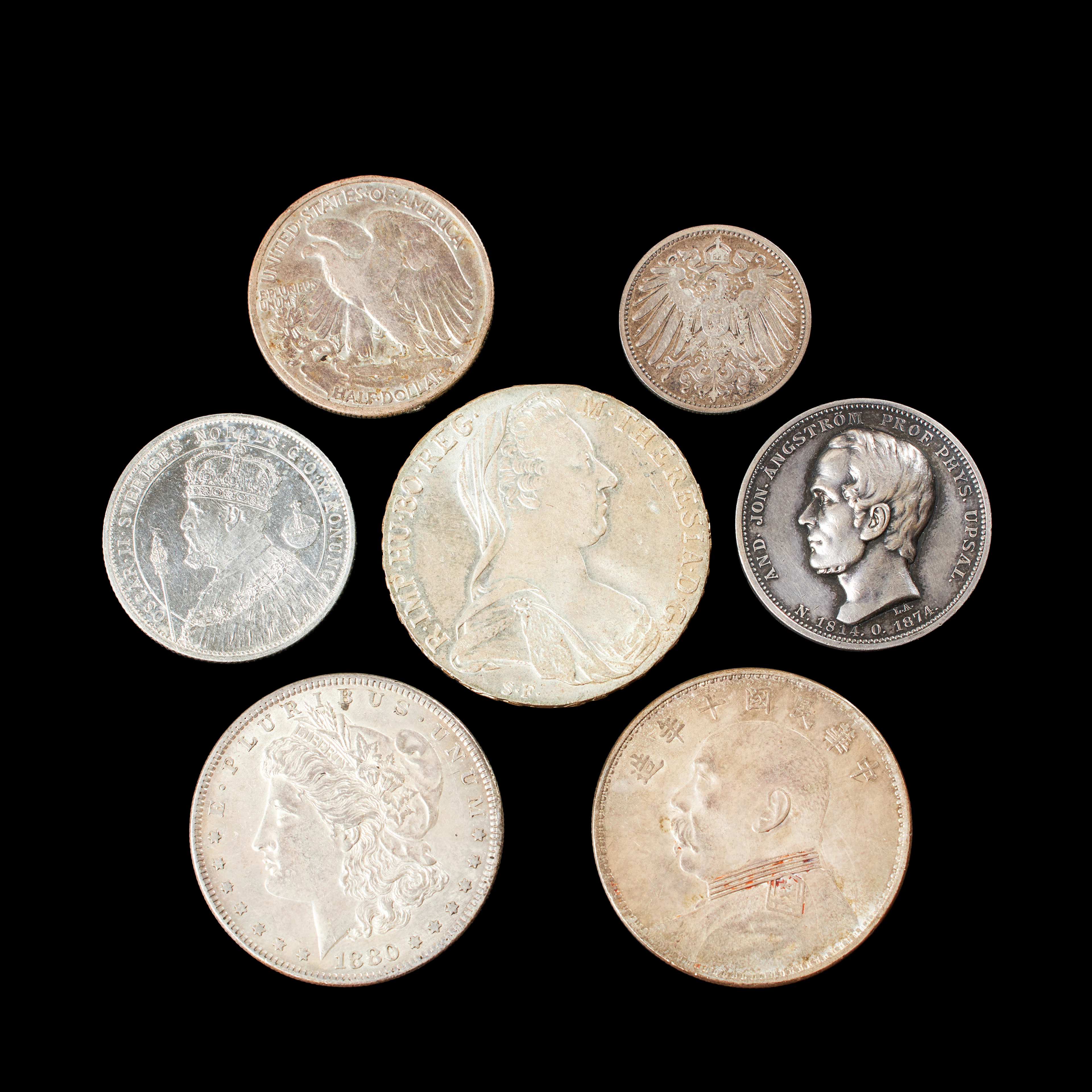
SILVERMYNT samt MEDALJ 7 st, 1 dollar 1880, 1/2 dollar 1939, Maria
09/28/2026
$300.6
Est: $402.61
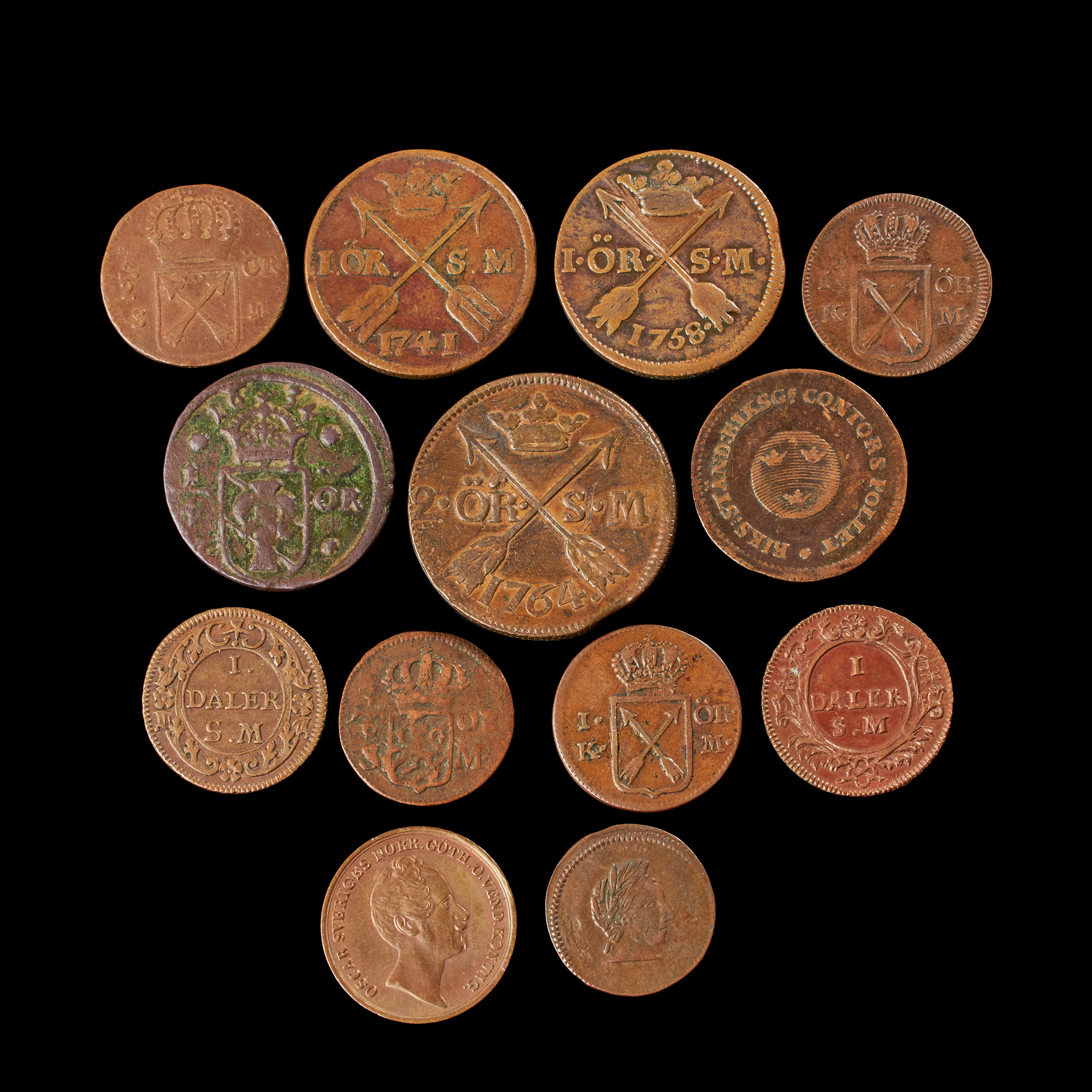
KOPPARMYNT, 13 st, Sverige 1600-1800-tal.
09/28/2026
$140.28
Est: $201.65
