




Bring your auction to collectors worldwide!
Get listed nowBy subscribing, you are agreeing to the privacy policy. Unsubscribe anytime.
Barnebys HQ
Brahegatan 10
BOX 5038
114 37 Stockholm
All auctions / Medals, Arms & Armor / Dinastia Patrizia dei Moro - Venezia - Manoscritto in...

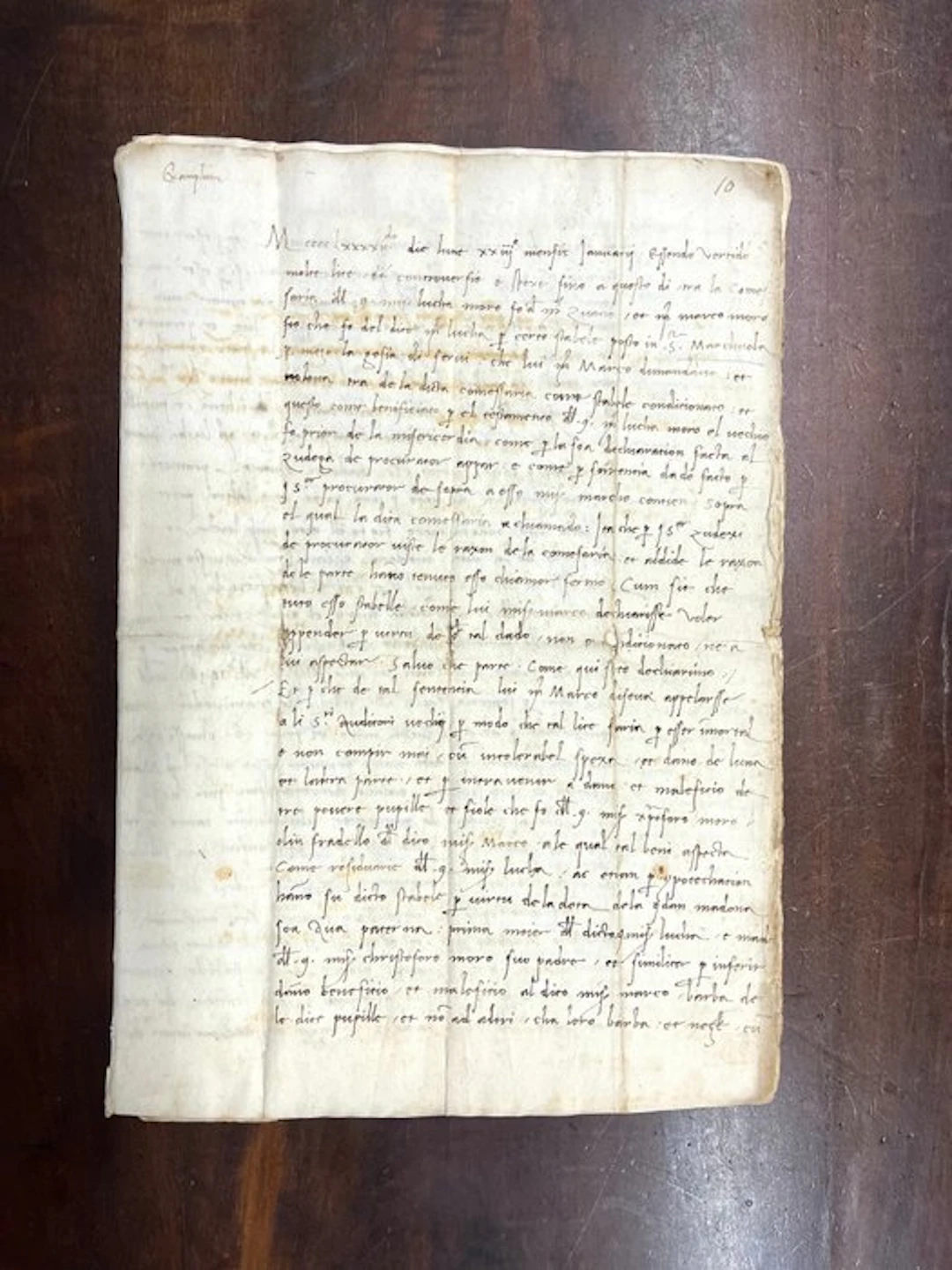
Rare Manuscript of 1494 in Venetian Vernacular “Exemplum” from the Archive with traces of the Moro Succession Seal, dowry, and boundaries at Santa Marcuola (Venice) Incunabula / Renaissance Era Exceptional and lengthy original judicial file complete with 6 pages, numbered at the time as 10, 11, 12 and concluding. It deals with a patrimonial and dowry transaction internal to the famous patrician Moro family, rich in Venetian urban toponyms and substantial sums in gold ducats. It bears the archival annotation "Exemplum" and traces of the old red sealing wax seal. The original Renaissance Venetian historical document is dated 23 January 1494 (M cccc lxxxxiiii, die lune xxiii mensis Januarii). The manuscript stands out for a linguistic peculiarity: it is not written in the classic notarial Latin, but almost entirely in a rich and flavorful fourteenth-fifteenth century Venetian vernacular. It offers a vivid snapshot of the language of business and daily life in the heart of the Serenissima Republic, making it a piece of enormous paleographic, historical, and linguistic interest. The arbitration act ends a wearisome and complex dispute ("controversia et lite"), started to avoid further "intolerabel spesa et danno", concerning the hereditary ward, property boundaries and the dowries of the patrician Moro branch. In the upper left on the first page is the clear archival annotation "Exemplum". This term formally certifies that the file is not a simple private writing, but an official extract, namely a contemporaneous certified copy (1494) drawn directly from the original registers of the Venetian judicial chancery. It was prepared by the office scribe to be delivered to the Moro family for their home archives. People named The Moro Patrician Dynasty and the Kindred The document offers an extraordinary genealogical map of Venetian patriciate, describing kinship ties, safeguards, and hereditary transitions of the family branch: Miser Lucha Moro (indicated as deceased): the key figure from whom the dispute originates; the text speaks of the "commessaria del ditto miser Lucha Moro". Miser Marco Moro: brother of the deceased Luca ("olin fratello di ditto miser Marco"), main actor of the act, signatory and guardian of the minors’ welfare. Miser Christoforo Moro: explicitly cited as the father of the two brothers ("ditto miser Christoforo Moro suo padre"). Madona Chiara Moro: noble lady, central figure of the transaction, holder of hereditary and stable boundary rights in the agreement. Madona Isabetta Moro (also cited as Isabeta): another noble lady of the family, mentioned for the restitution and payment of her dowry ("restituzion della dote... de madona Isabeta"). The "Poor Ward" (The Povero Pupillo): the minor son and ward of the deceased brother of Marco is mentioned and protected ("per muova vegnir a danno... al povero pupillo o fiole cho fo... di ditto olin fratello"). Miser Alvise Moro (written in the final text as Alaramoro or Aluise Moro): cited in the list of final expense reimbursements. Miser Zuanne Moro: another member of the house mentioned in the history of the hereditary transfers ("miser Zuanne Moro olin suo misio paterno"). Places, Toponyms and Magistratures The manuscript is geographically and institutionally precise, naming real places in the Venetian topography and tribunals of the Republic: Contrada of Santa Marcuola (S. Marchuola / S. Marchola): Famous quarter in Cannaregio. The text defines the exact position of the hereditary properties near the "gofia de forni" (the area of the ovens in the zone), the economic heart of the boundary dispute ("i confini... nel luogo de S. Marchuola"). Zudexi de Procurator (Judges of the Procurator): The Venetian court charged with overseeing wills, guardianship of minors (pupilli), and guardianships, which issues the decree. Zudexi de Examinador (Judges of the Examiner): Magistracy responsible for dowries and marriage contracts. The text explicitly recalls an ancient ruling from 1410 ("visto la sentencia facta al zudego de examinador... del 1410 a dì 2 de zugno"), used as legal precedent. Signori de Notte: Venetian magistracy mentioned in relation to constraints and enforceable guarantees on property. Lugar di Rogito: The city of Venice ("Actum Venetiis" / "A dì in Venetia"). Values, Coins and Renaissance Finance The sums involved are enormous, expressed in the era’s strong currency, the gold ducato d’oro (duccatos) and in titles of Venetian public debt: 200 Gold Ducats ("ducati duoxento de imprestedi"): A sum tied to the value of the dowry and to the transfer of state loan titles (imprestidi) to Madona Chiara or Isabetta. 60 Ducats per year ("ducat. 60. al anno... in fine di sempre"): An exceptional and very generous perpetual annual pension established at the definitive end of the dispute. For the period, 60 ducats per year guaranteed a noble income higher than the annual wage of any master artisan in the Arsenal. 160 Ducats and 25 Ducats: Additional sums established for property appraisals, damage estimates and deposits ("donarli duc. 25"). Legal costs: On the final pages, the text itemizes the live costs of the suit paid in ducats to pay the lawyers ("in palco in avocati"), the notarized writings ("scritture") and the experts’ estimates. The deed concludes at the bottom left with the official abbreviated notarial formula ("A dì Venetiis presentibus..."). Since this is an Exemplum (archive copy for the parties), it does not bear the autograph signature or the notary’s attestation mark, which appeared only on the master register. Conditions Entire file consisting of 6 handwritten pages, contemporaneously numbered by the notary or archivist as sheets 10, 11, 12 and the closing sheet. Valued, old watermark paper from the period, sturdy and heavy. Iron gall ink of the era, with the characteristic dark brown color, perfectly legible. Condition: Good Sound paper, lightly crackling, original wide margins, complete absence of woodworm galleries or invasive restorations. Only slight and natural time stains and bloom that enhance its undeniable charm and authenticity. On the pages are visible the typical passing holes for binding (used to thread the closure thong or cord) and a clear residue of red sealing wax, evidence of the ancient official seal of the chancery of the Procurators, lost over the centuries due to opening the file for consultation. Tracked shipping Careful packaging
Estimate:$193.64
To the auctionView all items fromCatawikiorMedals, Arms & Armor
Estimate:
$193.64
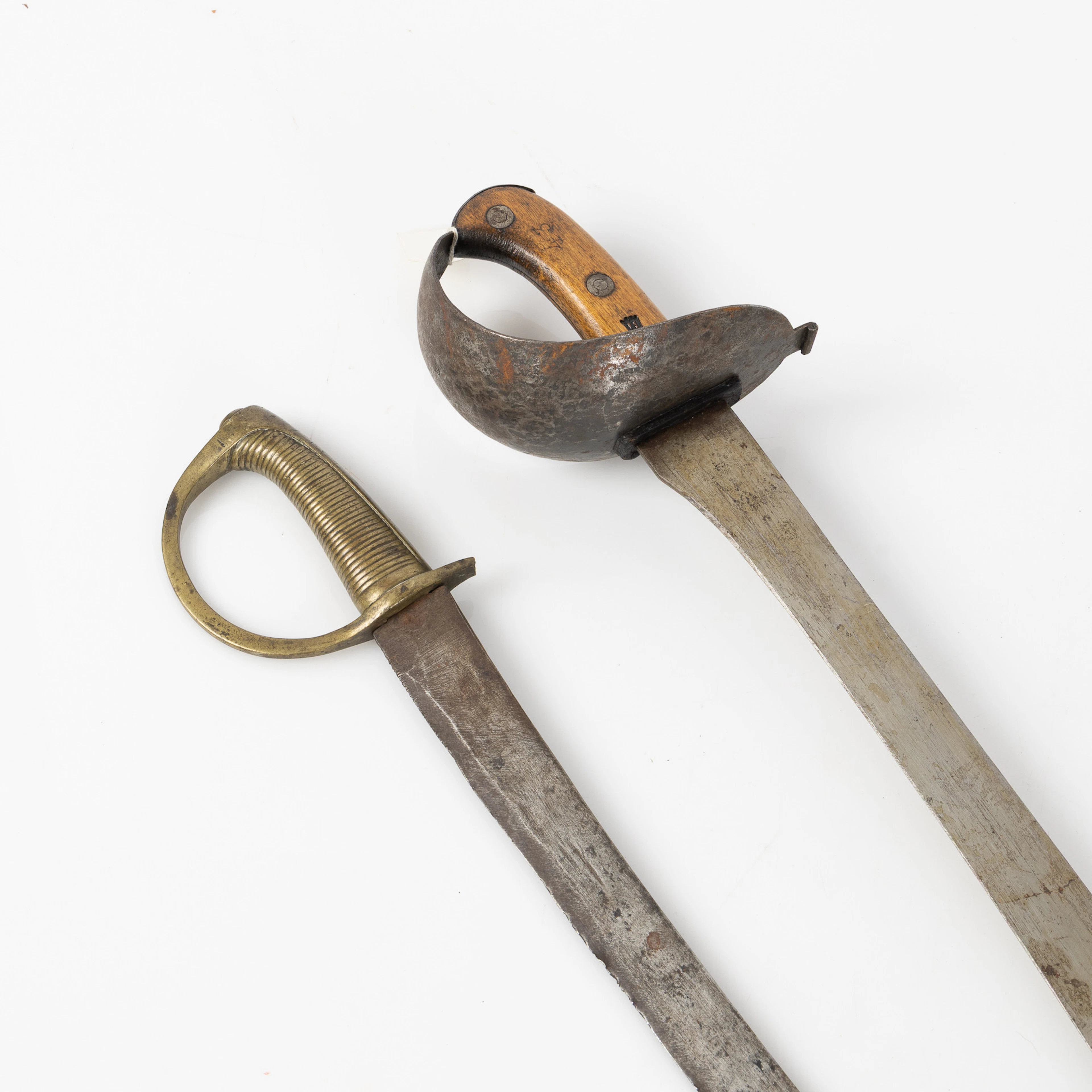
HUGGARE, två st, bland annat m/1851, GE Svalling Rosenfors, 1800-tal.
09/28/2026
$202.91
Est: $252.07
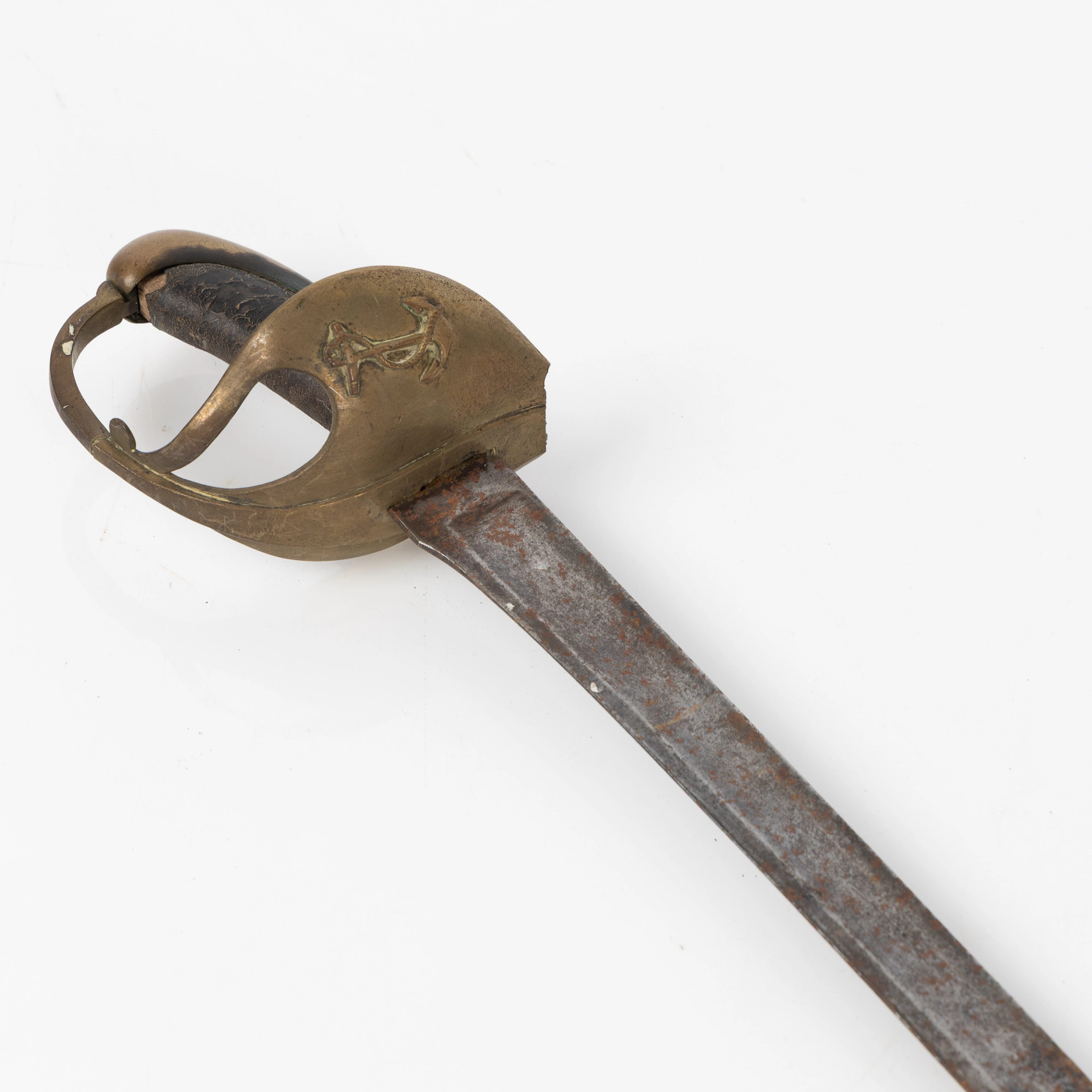
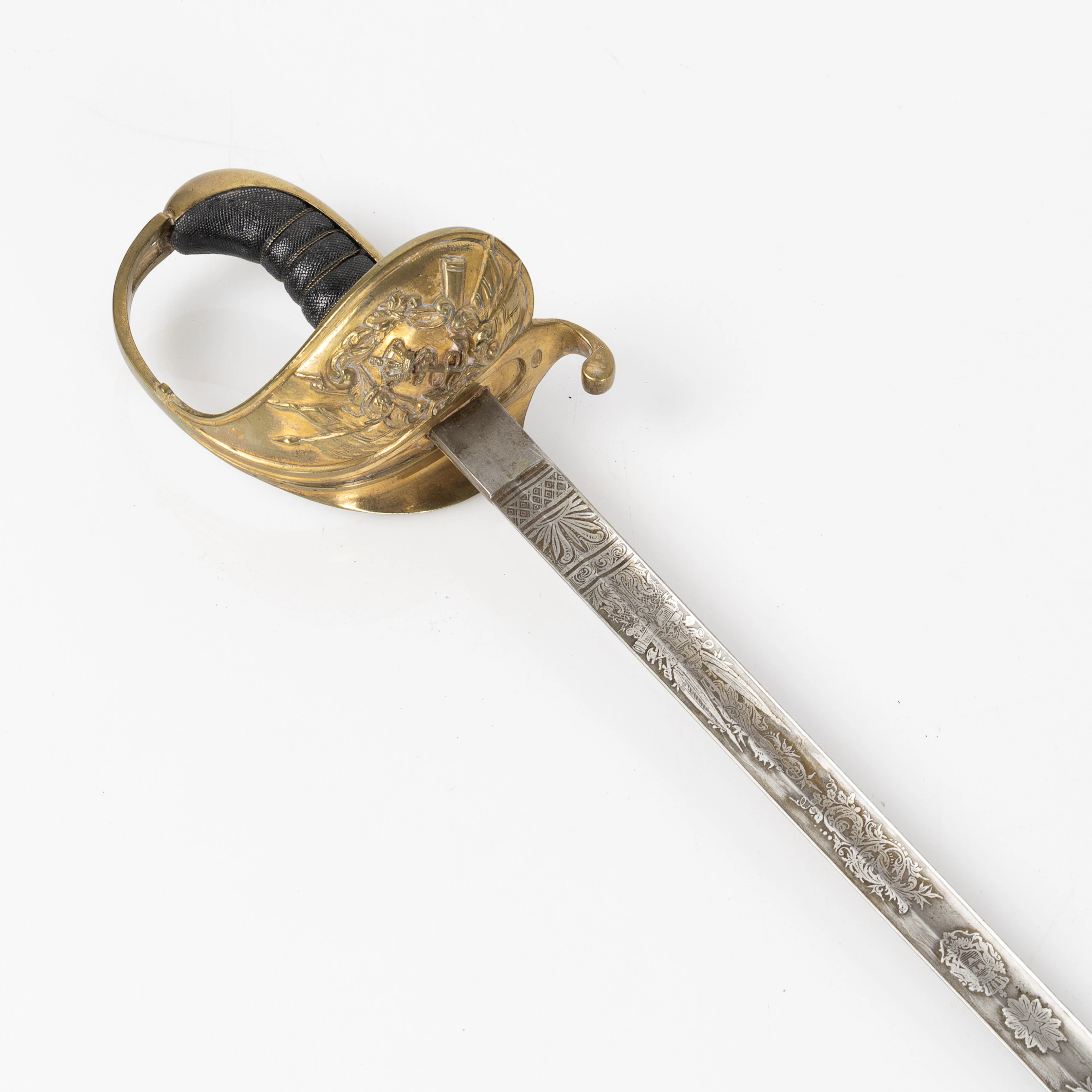
SABEL, m/1878, för flottan/underofficer, balja av läder, Sverige.
09/28/2026
$300.6
Est: $403.31


Bring your auction to collectors worldwide!
Get listed now