



OCT 27 | 4:00 PM

All auctions / Arts & Graphics / Devotion before the Forest Chapel Carl Spitzweg

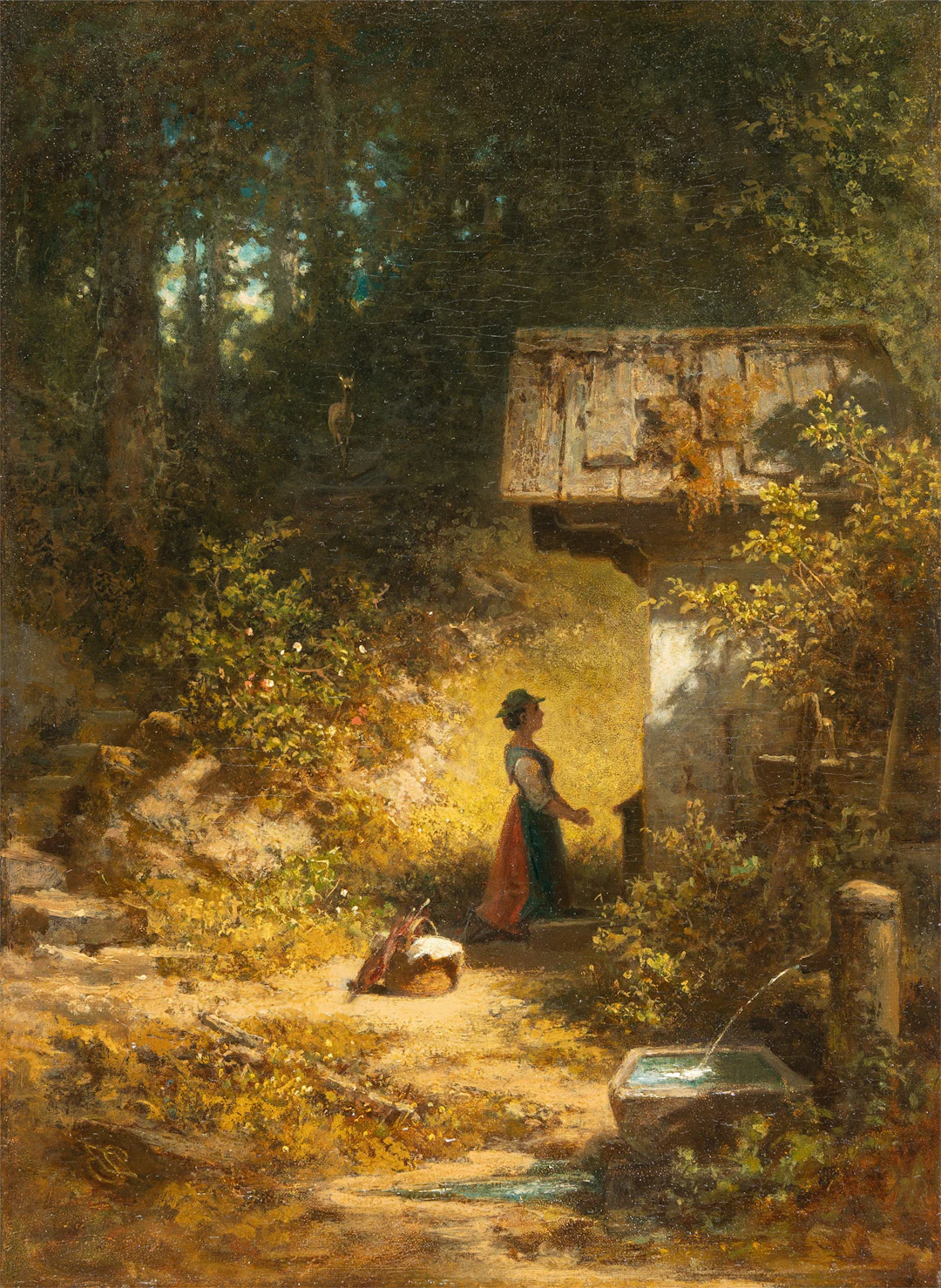
Secularisation at the beginning of the 19th century had far-reaching consequences for the Catholic Church in Bavaria – not only were the ecclesiastical imperial estates largely abolished and numerous parishes dissolved, but religious life also came to a near-complete standstill as a result. What weighed even more heavily, however, was the accompanying loss of significance of the clergy in general and their traditions in the public consciousness. As a result of the dissolution of numerous monasteries and parishes, which had noticeably reduced the visibility of the Catholic Church, the Church therefore pursued a Eucharistic revival in the second half of the century, centred on private prayer. Away from the large parishes, private prayer was specifically encouraged, and small places of worship were established in rural areas. Particularly popular and deeply rooted in popular piety were places of devotion in the forest, which served as sites for inner contemplation. Countless small wayside shrines and wayside crosses sprang up along forest paths, often made of wood or stone, frequently marking the sites of misfortune or places of thanksgiving. They spontaneously invited forest workers, shepherds or dairymaids to offer a short prayer or engage in inner contemplation. Spitzweg depicts just such a moment of prayer before a wayside shrine in his small painting. In a sunny clearing, situated slightly off the path to which a stone staircase leads, stands a woodland chapel, covered with a panel roof. A well and a small stream complete the picture of an idyllic scene full of a sense of security. In front of the chapel, a peasant woman kneels on a step, her hands raised slightly in prayer or quiet reflection. She is wearing a dirndl in the colour scheme of red, blue and white so characteristic of Spitzweg, along with a hat – an overall very fashionable appearance. What might she be asking for help with? Perhaps a rendezvous with her beloved – the basket she has set aside, which she has prepared for a picnic, could be a clue to this. Spitzweg explored the motif of the woodland chapel in countless versions (Wichmann 1052–1072), each of which varies the theme in the same way: a kneeling woman prays before a wooden panel shrine or a small chapel, usually situated in a clearing with a well or a stream. The motif of the woodland chapel characteristically reveals Spitzweg’s conception of nature, in which he links nature with the human emotional world. The seclusion of the clearing affords the peasant woman a moment of undisturbed, profound spirituality, which is not coincidentally reminiscent of the solitary life of the monks in the woods, whom Spitzweg so frequently depicted before their hermitages. In both scenes, the forest takes the place of the church, offering the worshipper a sense of security and inner peace, whilst the canopy of leaves shields her from the outside world. Only the viewer bears witness to this intimate scene – and the deer watching the young woman. It is barely discernible in the thicket of the forest, lying in darkness, whilst the peasant woman prays in the shadow of the chapel; yet behind her, warm golden light lies upon the clearing. Her shadowed silhouette stands out against the light – the association with a halo, with the holy light of God, is certainly not unintentional. It is this particular use of light with which Spitzweg highlights the actual event, whilst the surroundings remain in darkness and uncertainty, imbuing the scene with a quiet, almost sacred atmosphere and thus also opening the viewer’s gaze to the free, unadulterated creation. Dr Peter Prange | 1808 - München - 1885 | 19. Jahrhundert | Gemälde | Nummer: 26x0048 | Provenance: D. Heinemann’s Kunst-Handlung (Galerie Heinemann), München 1880; Jacob Henry Schiff (1847-1920) und Therese Loeb-Schiff (1854-1933), New York (bei Vorgenannter erworben); Nachlassauktion Schiff/Loeb-Schiff bei American Art Association Anderson Galleries, New York 7. Dezember 1933, Los 102; Galerie Neupert, Zürich; Galerie Heinemann, München 13. August 1934; Karoline Friederike Oetker (1867-1945), Bielefeld/Rittergut Hornoldendorf (bei Vorgenannter erworben); Privatsammlung, Süddeutschland (durch Erbschaft von Vorgenannter).
Estimate:$36,966.66
To the auctionView all items fromKarl und FaberorArts & Graphics
Estimate:
$36,966.66
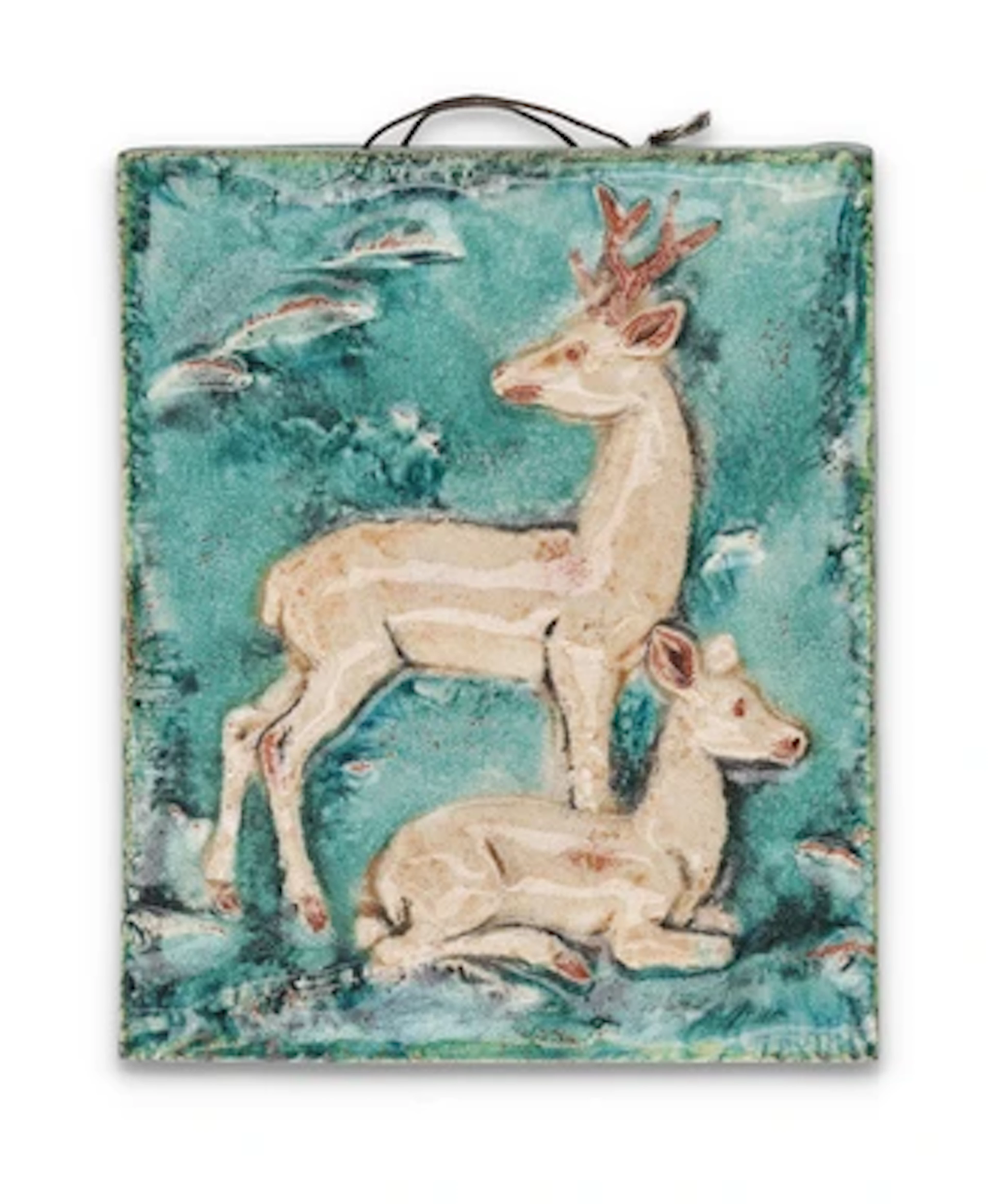
A pictorial plaque with two deer, Staatliche Majolika-Manufaktur, Karlsruhe
10/12/2026

$168.03
Est: $168.06
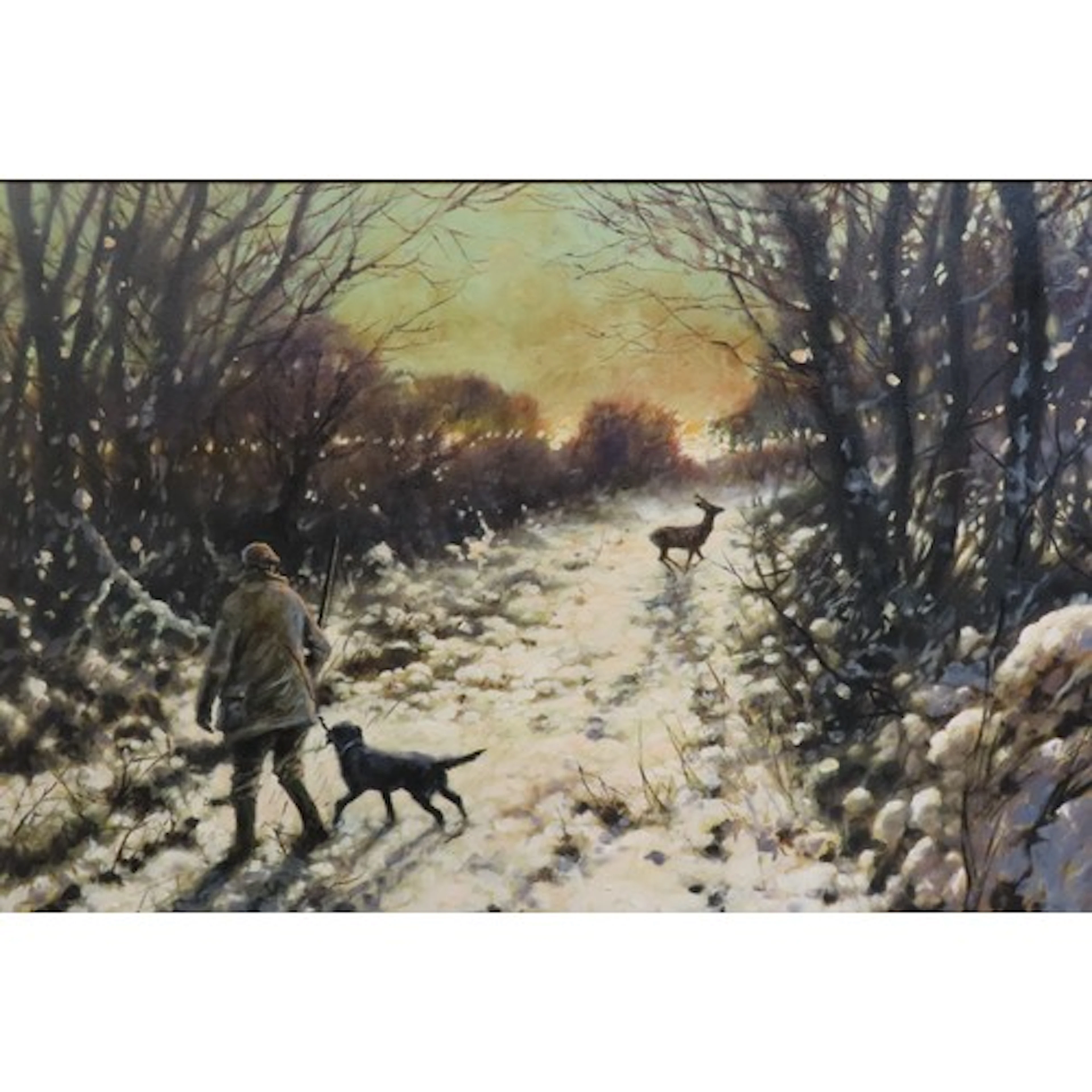
MICK CAWSTON (1959 - 2006), OIL PAINTING ON CANVAS depicting...
10/09/2026

$926.9
Est: $660.91
OCT 27 | 4:00 PM


OCT 23 | 8:00 AM


OCT 17 | 10:00 PM
Bring your auction to collectors worldwide!
Get listed nowBy subscribing, you are agreeing to the privacy policy. Unsubscribe anytime.
Barnebys HQ
Brahegatan 10
BOX 5038
114 37 Stockholm
