




All auctions / Miscellaneous / ‘Bean Ingram’ (Portrait of the actress Joan Ingram) Herbert Gurschner


• An important portrait from 1928, dating from Gurschner’s New Objectivity-influenced creative phase • An enigmatic composition featuring a mask and an inscription in the artist’s own hand reflecting on the social role of the individual • Shown in 2018/19 in the exhibition ‘Magic Realism’ at the Tate Modern, London The painting ‘Bean Ingram’, created in 1928, is one of Herbert Gurschner’s most characteristic portraits from his period of engagement with New Objectivity. Born in Innsbruck, the artist studied at the Munich Academy and, through his marriage to the English aristocrat Ella Dolores Erskine in 1924, gained access to London’s social and art-collecting circles. In the years that followed, he developed into a sought-after portraitist whose works went far beyond conventional portraiture. In ‘Bean Ingram’, Gurschner combines the precise, New Objectivity style with a mysterious, symbolically charged visual language. The young woman is depicted in full face against a stylised mountain landscape, visible through a dark, frame-like window opening. The strictly composed picture composition is reminiscent of Italian Renaissance portraits, whilst the cool colour scheme and the subject’s peculiarly ethereal appearance create an almost surreal atmosphere. Particular significance is attached to the conspicuously raised hand and the mask in the foreground. The artist’s handwritten inscription explains the mask as a symbol of social pretence and lends the portrait an additional psychological dimension. The portrait thus becomes a reflection on identity, outward appearance and hidden personality. Janet McLean, Curator of Modern Art at the National Gallery of Ireland in Dublin, identified the portrayed person following extensive research. We would like to thank her most sincerely for her help and for the information she has provided: The woman depicted is the successful London West End actress Joan Ingram (1903 – London – 1974). She was the daughter of Ella Dolores Erskine, who was also an actress and writer, and who married Herbert Gurschner in 1924, her third marriage. Joan’s mother, Ella Erskine, was first married to Reginald Ingram from 1896; together they had two daughters, Eileen and Joan. As an actress, however, Ella Erskine continued to use her maiden name. She later married the Russian Prince Chernatzky-Damankow in her second marriage, with whom she lived in various European cities, including Rome, Florence, Dresden and Innsbruck. Following the death of her second husband, she remained in Tyrol, where in 1922 she met the considerably younger painter Herbert Gurschner and married him two years later. Through his wife, Gurschner gained access to London’s cultural scene and exhibited for the first time in 1929 at the renowned London Fine Art Society. Gurschner and Erskine lived in both Innsbruck and London. Erskine died in 1936; from 1938 onwards, following the so-called ‘Anschluss’ of Austria to Nazi Germany, Gurschner settled permanently in London and took British citizenship. However, in 1940, his stepdaughter Joan Ingram travelled to Austria with her actress friend Nellie Steele of Barnsley; on their return journey, the two were arrested by German soldiers simply because their car had broken down, and were interned for three years in the Liebenau forced-labour camp near Ravensburg. She later drew on this experience in the play ‘Room 37’, which premiered in London in 1950. The portrait of Joan Ingram offered here was exhibited in 1931 at Gurschner’s solo exhibition at the Fine Art Society in London and, on that occasion, was also reproduced in the magazine ‘The Sphere’ (13 June 1931, p. 39). It is not possible to determine with certainty whether the title of the painting, ‘Bean Ingram’, is a misreading of the caption that has been passed down over the years, or whether it is a nickname of the subject. The first two letters of her first name are indeed not clearly legible in the painting. The mask, on the other hand, certainly refers in a general sense to the young woman’s acting talent, but – like the mountainous lakeside landscape in the background – it may also be a reference to the theatrical comedy ‘La maschera e il volto’ (The Mask and the Face), set on Lake Como, in which Joan Ingram performed in England in 1926, according to a newspaper article in ‘The Stage’ (25 November 1926). | 1901 Innsbruck – London 1975 | Moderne Kunst | Gemälde | Nummer: 26x2547 | Provenance: Bonhams, London 29.11.1995, Los 106; Im Kinsky, Wien 16.5.2006, Los 117; Privatsammlung, Wien; The George Economou Collection, Athen; Sammlung, Rheinland, seit 2020.
Estimate:$43,991.80
To the auctionView all items fromKarl und FaberorMiscellaneous
Estimate:
$43,991.80



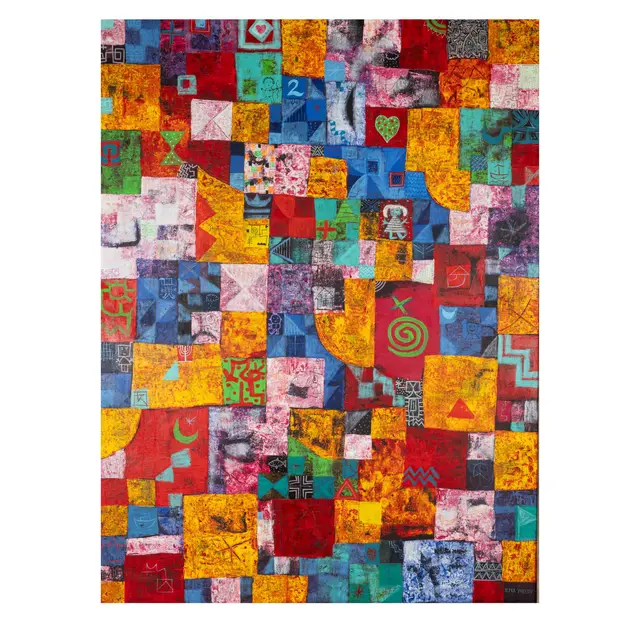
Iliya Zhelev (1961 Plovdiv) 'Birthday of Venus', circa 2000
11/13/2026

$2,645.64
Est: $2,692.48

NOV 26 | 12:30 PM
Bring your auction to collectors worldwide!
Get listed nowBy subscribing, you are agreeing to the privacy policy. Unsubscribe anytime.
Barnebys HQ
Brahegatan 10
BOX 5038
114 37 Stockholm
