
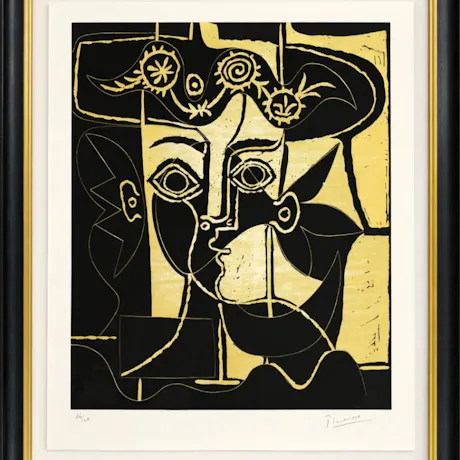

NOV 8 | 1:00 PM

All auctions / Arts & Graphics / Bartolomé Esteban Murillo (1617–1682), After - L'Extase de sainte Thérèse

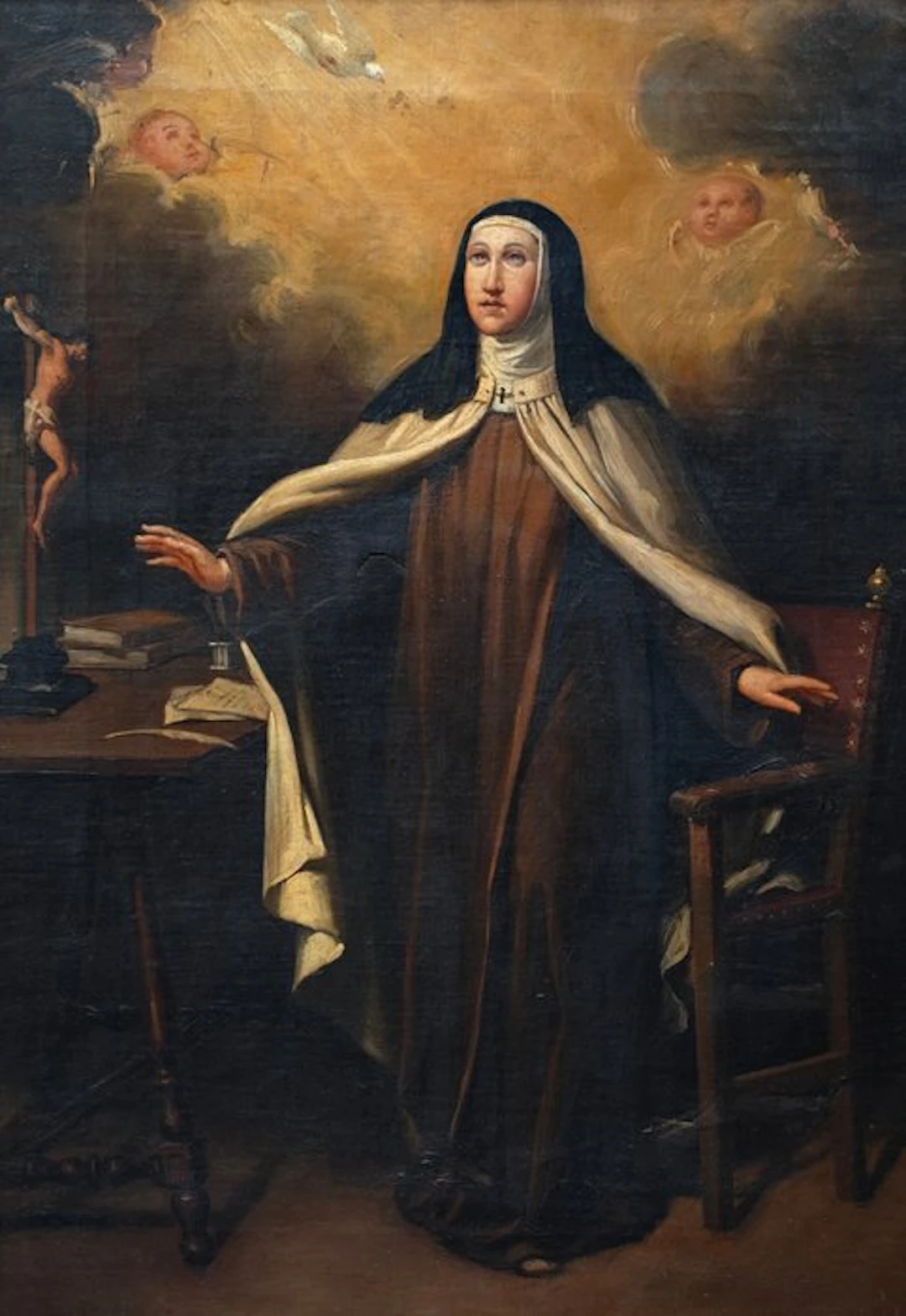
Santa Teresa de Jesús in mystical contemplation Oil on canvas – Spanish school of Baroque tradition Interesting oil-on-canvas painting, catalogued as a work by a follower of Bartolomé Esteban Murillo (1617–1682), depicting a Carmelite nun in a posture of mystical contemplation, iconographically identifiable with Saint Teresa of Jesus (1515–1582), one of the fundamental figures of Spanish spirituality and of the Baroque artistic tradition. The work stands out for its compositional solemnity, its delicate treatment of religious expression, and its strong contrast between the illuminated zones and the deep shadows of the surroundings, characteristics that relate it to the Seville painting tradition and to the devotional language developed by Murillo and his followers. The saint is represented full-length, wearing the habit of the Carmelite order, in a austere interior that opens toward a celestial vision populated by angelic figures. Her face, directed upward, expresses recollection, serenity, and spiritual elevation, while the arrangement of her arms creates a visual dialogue between the earthly world and the divine manifestation that appears above her. The painting combines a naturalistic character with an idealized interpretation of religious experience, following the principles of Baroque devotional painting. Bartolomé Esteban Murillo (1617–1682) and his artistic influence Bartolomé Esteban Murillo was born in Seville in 1617 and died in the same city in 1682. He was one of the great representatives of Spanish Baroque painting and one of the most influential figures of the Seville school. His artistic production was closely linked to the religious and cultural life of Seville, a city that during the 17th century was one of the main artistic centers of the Iberian Peninsula. Murillo developed painting characterized by the softness of the modeling, delicacy of expressions, richness of light effects, and a special sensitivity toward representing religious feelings. Although he also cultivated portraits and genre scenes, he achieved an extraordinary reputation thanks to his sacred-themed compositions. Among his best-known subjects are depictions of the Immaculate Conception, scenes of Christ’s childhood, images of saints, and compositions devoted to Christian spirituality. One of the most characteristic traits of his pictorial language was the ability to combine the naturalism of figures with an atmosphere of idealization and recollection. His religious characters frequently present serene and deeply human expressions, while the lighting helps reinforce the spiritual character of the scenes. Murillo’s influence extended well beyond his own generation. His compositions were studied, copied, and reinterpretated by numerous painters, both in Spain and in other European countries. His artistic language gave rise to an important tradition of followers, who kept alive his iconographic models and compositional resources. The present work is related to this tradition for its religious theme, the idealization of the female figure, the treatment of celestial light, and the search for a contained spiritual expression. Description of the work The composition represents Saint Teresa of Jesus full-length, placed at the center of an interior space of a conventual character. The nun wears the traditional habit of the Discalced Carmelites, consisting of a wide brown tunic, a scapular of the same color, a white cap, and a dark veil. Over her shoulders falls a light cloak that introduces a marked chromatic contrast with the deep tones of the habit. The face appears delicately illuminated and directed toward the upper area of the composition. Her expression is serene and contemplative, with raised eyes and an attitude that suggests a moment of intense spiritual experience. Her right hand extends toward a small crucifix on a table, while the left rests on the back of a wooden chair. This arrangement of the arms creates an interesting compositional balance and reinforces the monumental presence of the figure. On the left side there is a table on which several books and an open volume rest, elements that allude to Teresa’s intellectual and literary activity. The presence of these objects recalls her importance as a mystical writer and religious reformer. Beside them is a crucifix, a symbol of her deep devotion to Christ and of the centrality of prayer in her spiritual thought. To the right is a simple wooden chair integrated into the interior’s half-light. The austerity of these elements contributes to evoking the contemplative atmosphere of convent life. At the top, the architectural space transforms into a celestial vision with golden tones. Among the clouds appear the heads of small angels, while a white dove, a traditional symbol of the Holy Spirit, is manifested in the luminous area. The celestial light descends upon the saint, establishing a visual and symbolic connection between her figure and the divine realm. The contrast between the dark interior and the brightness of the upper vision constitutes one of the painting’s main expressive resources. Saint Teresa of Jesus: spirituality and iconography Saint Teresa of Jesus (1515–1582), also known as Teresa of Ávila, was a Carmelite nun, mystic writer, and reformer of the Carmelite Order. Born in Ávila, she developed an intense religious and intellectual activity that made her one of the most important figures in Christian spirituality. Together with Saint John of the Cross, she promoted the reform of the Carmelite order, advocating a religious life based on prayer, austerity, and inner recollection. Her literary output includes fundamental works of Spanish mysticism, such as The Book of My Life, Camino de Perfección, and The Interior Castle (Las Moradas del Castillo Interior). She was canonized in 1622 and proclaimed a Doctor of the Church in 1970. Her figure acquired extraordinary importance within Spanish religious iconography. Baroque painters frequently depicted Saint Teresa during moments of prayer, ecstasy, or divine inspiration. Among her most common iconographic attributes are the Carmelite habit, books, the quill, the crucifix, and the dove of the Holy Spirit. In this painting, the combination of the religious habit, the books, and the celestial manifestation allows relating the scene to traditional representations of the saint. The composition seems to evoke a moment of contemplation or spiritual inspiration, in which the nun directs her attention toward the divine presence. Thus, the image gathers two fundamental aspects of her historical personality: her dedication to contemplative life and her extraordinary importance as a writer and religious thinker. Style and influences of the Murillo school From a stylistic point of view, the painting relates to the Spanish Baroque tradition and to the devotional language spread by Bartolomé Esteban Murillo and his followers. One of the most characteristic elements is the idealized representation of the religious figure. The saint’s face presents an expression of serenity and recollection, free from excessive dramaticism. This emotional treatment approaches Murillist sensitivity, characterized by expressive softness and the pursuit of direct spiritual communication with the spectator. Lighting also plays a fundamental role. The upper area is enveloped in a golden atmosphere, while the figure stands out against a dark interior. The transition between these two realms is achieved through a gradation of lights and shadows that reinforces the supernatural character of the scene. The angelic figures and the dove of the Holy Spirit participate in a celestial iconography widely developed by Baroque painting. The composition also combines elements of naturalism, especially visible in the interior objects and furniture, with an idealized interpretation of the main figure. This combination of naturalism and spirituality is one of the fundamental traits of Spanish religious painting of the Baroque tradition. The work can thus be placed within the artistic sphere of Murillo’s followers, understanding this designation as a stylistic and iconographic relation, without a direct attribution to the master. Light and color treatment The painting presents a palette dominated by deep browns, blacks, warm ochres, creamy whites, and golden tones. Saint Teresa’s figure constitutes the main focal point, standing out above the dark background through the contrast between the brown habit and the lighter surfaces of the cloak and the white cap. The artist uses lighting to softly model the face and hands, adding volume and expressiveness. The drapery folds are rendered through broad areas of dark tones, enriched with color variations intended to suggest the fall of the fabrics. The light cloak introduces a diagonal line of great compositional importance, extending from the shoulders to the sides. In the upper part, the golden luminosity transforms the space and creates a supernatural atmosphere. The faces of the angels appear partially integrated among the clouds, through soft chromatic transitions. The white dove stands out against the light background, becoming one of the main symbols of the composition. The contrast between earthly shadow and heavenly light reinforces the painting’s spiritual content. Technique and pictorial execution The work is executed in oil on canvas, using a figurative technique that combines volume modeling with a traditional-purpose compositional organization. The main figure presents a relatively defined execution, especially in the face, hands, and the brighter elements of the clothing. The habit’s folds are depicted through broad areas of dark tones, enriched with chromatic variations to suggest the fabric’s fall. The light cloak is resolved through gradients of whites, creams, and ochres, contrasting with the depth of the background. The objects on the table have a concise description, sufficient to identify their function within the scene. The architecture and furniture are partially integrated into the half-light, allowing attention to focus on the religious figure. In the upper part, the execution takes on a more atmospheric character, with soft transitions between the clouds, the angels’ faces, and the golden light. This difference between the treatment of the earthly and the celestial realms contributes to reinforcing the painting’s narrative content. Composition and symbolism The composition presents a predominantly vertical structure, headed by Saint Teresa’s figure. The nun occupies the central axis of the painting, establishing a connection between the interior’s earthly elements and the celestial manifestation above her. The arm arrangement introduces two diagonal directions that balance the composition. On the left, the gesture of the hand directs the gaze toward the books and the crucifix. On the right, the extended arm creates a visual relation with the chair and helps to expand the space occupied by the figure. The represented objects carry important symbolic content. The books evoke Teresa’s literary and doctrinal activity, while the crucifix recalls her deep devotion to Christ. The furniture’s austerity alludes to the ideals of simplicity and recollection associated with the Carmelite reform. The Holy Spirit’s dove constitutes the main symbol of divine inspiration. The angels and the golden light reinforce the mystic interpretation of the scene. Thus, the composition brings together narrative, devotional, and symbolic elements in an image conceived to convey the saint’s spiritual experience. The Spanish religious painting and the Murillesque tradition Religious painting occupied a fundamental place in the history of Spanish art. During the Baroque, artists developed a visual language aimed at transmitting spiritual values through images of great expressive force. The representation of saints, religious figures, and mystical experiences acquired particular relevance. In this context, the Seville school played a prominent role, with artists such as Francisco de Zurbarán, Juan de Valdés Leal, and Bartolomé Esteban Murillo. Each of these painters developed a personal interpretation of spirituality, ranging from austere naturalism to compositions of greater idealization and luminosity. Murillo stood out especially for the delicacy of his figures and for the ability to represent religious experience through serene expressions and luminous atmospheres. His influence remained alive thanks to numerous painters who continued using his models and expressive resources. The present work participates in this tradition, combining a recognizable iconography with a pictorial interpretation close to Murillan sensibility. Its interest lies both in the devotional character of the scene and in its relation to one of the most important traditions of Spanish painting. Frame and presentation The painting is framed by a wide ornate dark-toned frame, enriched with vegetal motifs and gold details. The frame features a classical-inspired decoration, with reliefs distributed along its four sides. An inner golden molding delineates the pictorial surface and especially enhances the contrasts between celestial luminosity and the habit’s dark tones. The whole offers a solemn and elegant presentation, in keeping with the religious character and the artwork’s artistic tradition. The frame is offered as a gift to the buyer, with no commercial value, and is not an integral part of the work, so any possible damage to it will not be a ground for complaint. Prospective buyers are advised to carefully study all photographs, which form an integral part of the description, to adequately assess the painting’s and its framing’s condition. Specifications Author: follower of Bartolomé Esteban Murillo (1617–1682). School: Spanish, Baroque tradition. Technique: oil on canvas. Genre: religious painting. Subject: Saint Teresa of Jesus in mystical contemplation, with manifestation of the Holy Spirit and angelic figures. Style: figurative religious painting of Baroque tradition, with Murillist influences. Presentation: framed. Shipping The work will be carefully and professionally packed, using appropriate protective materials to ensure its safety during transport. Shipments abroad from the European Union may be subject to taxes, duties, import fees, clearance costs, and customs procedures. Any such costs will be the sole responsibility of the buyer and are not included in the hammer price or shipping costs. Likewise, shipments to islands, insular territories, or remote or hard-to-access areas may incur additional charges. Any surcharge applied by the transport company for this reason must be borne by the buyer. Buyers are advised to consult in advance the applicable customs conditions and possible transport surcharges for their destination.
Estimate:$1,120.23
To the auctionView all items fromCatawikiorArts & Graphics
Estimate:
$1,120.23
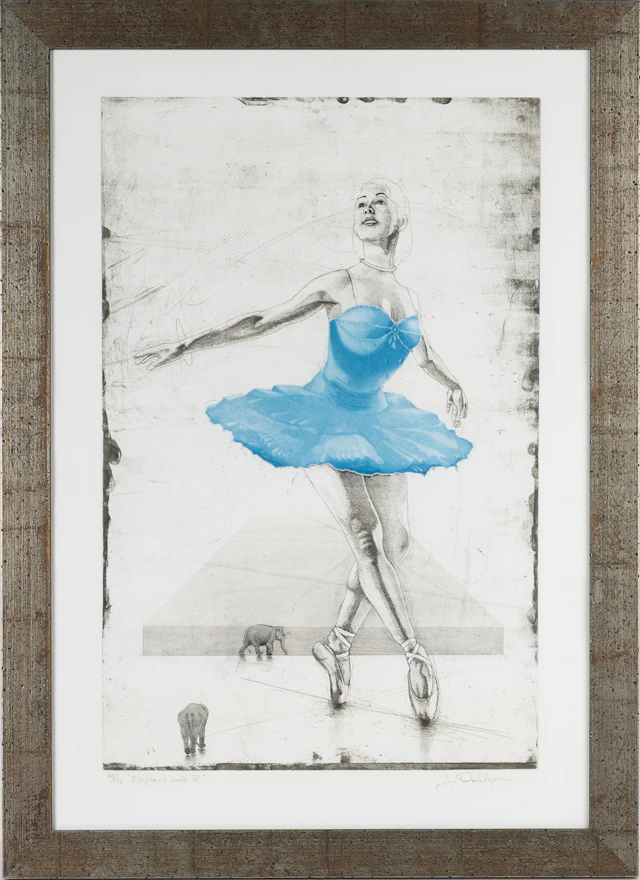
JAN DAHLGREN (FÖDD 1954). "Elephant walk III", etsning.
10/23/2026
$30.2
Est: $100.93
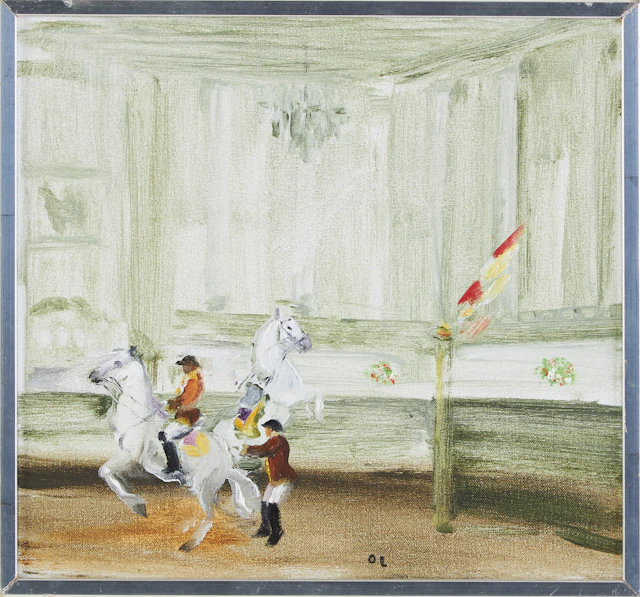
OLLE LINDGREN (FÖDD 1930). "Detroit" och interiör med hästar, (2 )
10/23/2026
$100.68
Est: $201.86

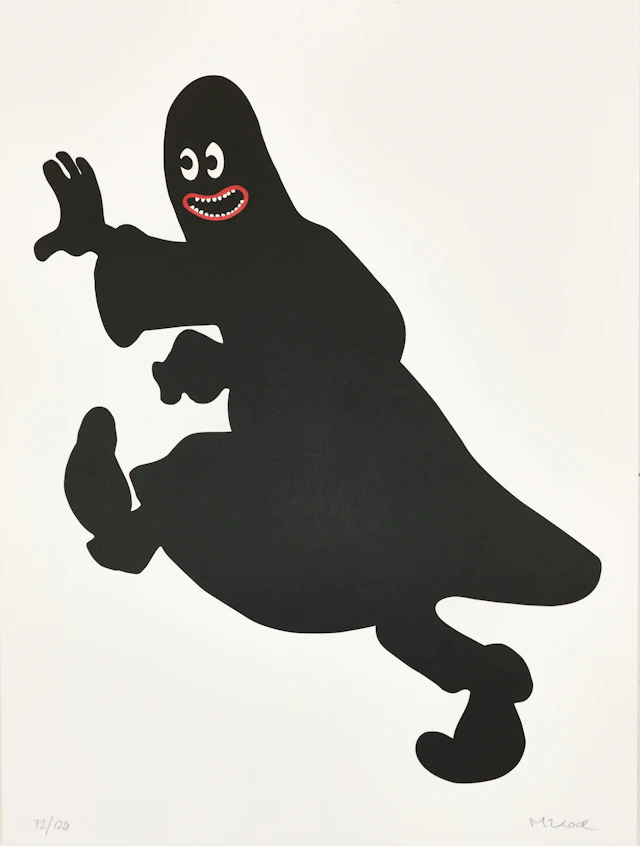
MAKODE LINDE (Sverige, född 1981). "Phantom Blot", signerad och numrerad
10/23/2026
$147.1
Est: $252.33
NOV 8 | 1:00 PM


OCT 31 | 4:00 PM


OCT 27 | 4:00 PM
Bring your auction to collectors worldwide!
Get listed nowBy subscribing, you are agreeing to the privacy policy. Unsubscribe anytime.
Barnebys HQ
Brahegatan 10
BOX 5038
114 37 Stockholm
