




All auctions / Ancient Art / Ancient Greek


Bello oinochoe from Ghantia, 4th–3rd centuries BCE. Attributed to a follower of the painter of “bottles and jugs” of the Louvre, Material: Terracotta. Geography: Ghantia, southern Italy, Europe. Historical Period: Final 4th century – Early 3rd century BCE. Object: oinochoe, also enócoe, Greek ceramic jug decorated in the Ghantian style. Material: Terracotta. Description: Gnathian-style oinochoe, a jar made of clay with a trilobate-opening mouth and black glaze, a long neck and a circular-section handle ending in a lion’s protome on the top and, at the bottom, a satyr or Dionysus himself. Of an ovoid body shaped like a sheath, it follows the typical ribbed pattern formed by deep regular incisions bordered at the top by an incised line and a round base. The neck is decorated with a pattern of vines or grape leaves with yellow-orange clusters finished with a bow near the handle. The two heads that crown the handle are in creamy white. Dimensions: height 226 mm, body Ø 126 mm, base Ø 65 mm, weight 531 g. Conservation status: good and complete, mouth, neck and handle are intact, the ovoid body shows some cracks and small chips at the base due to its age. Observations: Oinochoe of the Greek oinos (wine) and cheo (pouring) type; a one-handled jar used for serving wine. Wine was important at Greek banquets, hence these Gnathian-style oinochoai have decorations related to Dionysus and the festive world. Gnathia was an ancient city in the Apulia region, in southern Italy, located near the present municipality of Fasano, in the province of Brindisi. Known to archaeologists as Egnatia (Latin: Egnatia or Gnathia), it was an important port and waypoint on the Adriatic coast, linked to the Via Traiana. Forms and uses of jugs and vessels: Ancient potters produced vessels of various shapes and sizes according to their function. Ceramic vessels such as the amphora or hydria were used to store and transport water, while others were intended for the important task of preparing and drinking wine. The cratera was used to mix wine and water, the kyathos to serve, the oichonoe to pour, and the kylix and skyphos to drink wine. The decorations and scenes found on these vessels are often directly related to their use. Purchased at a gallery specializing in archaeology and numismatics, Spain, in 2001. Previously, private collection, Spain, 1995. With the object is sent a copy of the gallery’s certificate of authenticity and other details of the object. References and literature: Oinochoe (Apulian decorated vessel in the Gnathian style), 4th–3rd centuries BCE, Museo Provinciale di Torcello // Terracotta oinochoe (jug), Greek, South Italian, Apulian, Gnathian, early 3rd century BCE, Object Number: 91.1.456, The MET Art New York. // Davis Museum at Wellesley College, Wellesley, MA, Object Number: 1976.38, collection of Professor John Oddy, Rogue Bluffs, Maine, USA, 1976. ; K.T. Luckner, “Greek Vases: Forms and Uses,” The Toledo Museum of Art Museum News, vol. 15, no. 3, 1972, p. 67, fig. 6. // C.G. Boulter and K.T. Luckner, Corpus Vasorum Antiquorum, The Toledo Museum of Art, fasc. 2, Toledo, 1984, pp. 27-28, lamp. 111. /// Beazley Archive database no. 1001545. / Trump, D. H., 1983. Malta. An Archaeological Guide. / Zammit, T. The Temples of Ħaġar Qim and Mnajdra, 1929. For Sale ONLY in Europe (EU). See details and dimensions in the attached description and images. Due to factors such as lighting at the time of photography, the color may vary slightly from the original. With the object(s) is sent copies of the authenticity certificates and catalog copies if the object(s) appear in it. The data and other information present are provided by the Gallery from which the object(s) was acquired. According to this information: The pieces that form the catalog, single item, collection, or lot, are considered genuine, ethically and professionally marketed, with Spanish and foreign specialists from the various art fair admission committees of National and International Antiquities Fairs. Due to the new laws on export of archaeological cultural goods WE DO NOT sell outside the EU. Shipping is done with insurance/declared value and certificate. With the object(s) are sent copies of acquisition and authenticity information. The Seller can prove that the lot was lawfully obtained, provenance declaration seen by Catawiki. Shipped with certificate. The seller will arrange the necessary permissions, such as an export license if required. The seller will inform the buyer about the status of this if it takes more than a few days. The seller was informed by Catawiki about documentation requirements and guarantees the following: – The object was obtained legally. – The seller has the right to sell and/or export the object, as applicable. – The seller will provide the necessary provenance information and will manage the required documentation and permissions/licenses, as applicable and in accordance with local law.
Estimate:$3,182.09
To the auctionView all items fromCatawikiorAncient Art
Estimate:
$3,182.09
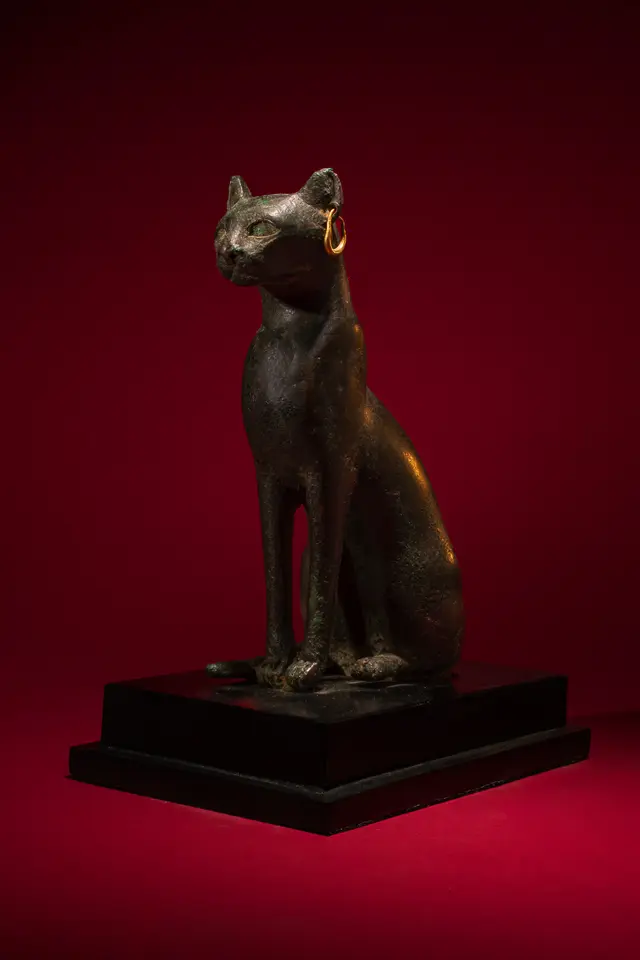
RARE EGYPTIAN BRONZE CAT STATUETTE WITH GOLD EARRINGS - LARGE SIZE
06/21/2026

$29,141.20
Est: $26,836.62
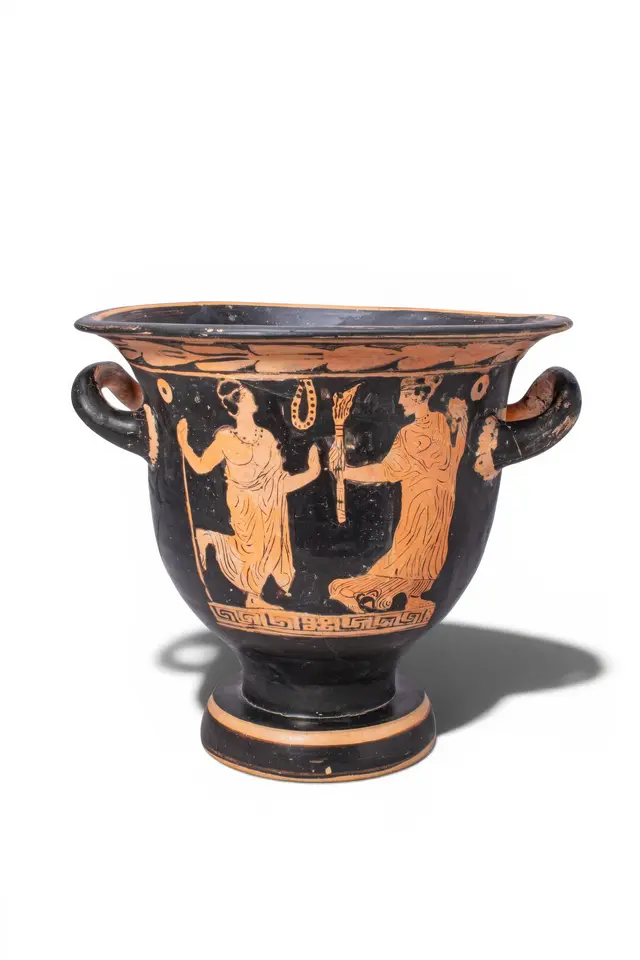
APULIAN RED-FIGURE BELL KRATER WITH KOMASTOS AND MAENAD - TL TESTED
06/21/2026
$3,443.96
Est: $2,640.96


NOV 28 | 4:00 PM


NOV 27 | 3:00 PM
Bring your auction to collectors worldwide!
Get listed nowBy subscribing, you are agreeing to the privacy policy. Unsubscribe anytime.
Barnebys HQ
Brahegatan 10
BOX 5038
114 37 Stockholm
