
All auctions / Miscellaneous / Adélaïde Labille-Guiard (1749–1803)

Adélaïde Labille-Guiard (1749–1803)

Circle of or follower of Adélaïde Labille-Guiard (1749–1803) Portrait of Madame Victoire de France (1733–1799) French School. Late 18th – early 19th century. An elegant and interesting oil on canvas from the French School, stylistically dated to the period between the late 18th and early 19th centuries, and associated with the artistic output of Adélaïde Labille-Guiard (1749–1803), one of the most important portrait painters of the Ancien Régime in France. The painting depicts Marie-Thérèse-Victoire de France (1733–1799), known as Madame Victoire, daughter of King Louis XV of France and Queen Marie Leszczyńska, and a member of the Bourbon dynasty. The work displays notable stylistic and iconographic affinities with portraits of Madame Victoire painted by Adélaïde Labille-Guiard during the 1780s. On the basis of its compositional features, painterly language and proximity to the artist’s models, the possibility may be considered that the painting was executed by a painter from her immediate circle, a member of her studio, or a follower of her portrait work. The composition is an appealing example of the French aristocratic portrait tradition in transition between the Late Rococo and Neoclassicism, characterized by an elegant portrayal, delicate flesh tones and particular attention to the sitter’s psychological expression. Adélaïde Labille-Guiard (1749–1803) Adélaïde Labille-Guiard was born in Paris in 1749 and died in the same city in 1803. She was one of the leading French painters of the 18th century and a key figure in the history of European portraiture. She pursued a distinguished artistic career at a time when women’s access to academic institutions and major official commissions was considerably restricted. Her artistic training was rooted in the French portrait tradition. She initially practiced miniature and pastel painting before achieving notable mastery of oil painting. In 1783 she was admitted to the prestigious Académie royale de peinture et de sculpture, one of the highest distinctions an artist could receive in Ancien Régime France. Her work is characterized by precise drawing, delicate flesh tones, elegant compositions and an extraordinary sensitivity in depicting fabrics, lace and ornamental details of clothing. Her clients included members of the aristocracy and the French royal family, especially the daughters of Louis XV, known as the Mesdames de France. During the 1780s she painted important portraits of Madame Adélaïde and Madame Victoire, distinguished by her ability to combine the dignity of official portraiture with remarkable naturalness in her models’ expressions. Labille-Guiard was also a prominent advocate of women’s artistic education and taught extensively, contributing to the professional recognition of women painters. Her work represents one of the most refined moments in French portraiture of the late 18th century, at the transition between Rococo sensibility and the new aesthetic ideals of Neoclassicism. Madame Victoire de France (1733–1799) Marie-Thérèse-Victoire de France, known as Madame Victoire, was born on 11 May 1733 at the Palace of Versailles and died on 7 June 1799 in Trieste. She was one of the daughters of King Louis XV of France and Marie Leszczyńska, and by birth belonged to the French branch of the Bourbon dynasty. As the king’s daughter, she held the title Fille de France, an honorific reserved for the king’s sons and daughters. For much of her life she resided at the court of Versailles, where she took part in the ceremonies and cultural life of the French monarchy. Madame Victoire had a close relationship with her sister, Madame Adélaïde, with whom she shared much of her life. Both princesses held prominent positions within the royal family during the reigns of Louis XV and Louis XVI. Unlike many other princesses of her time, Madame Victoire never married. During the final years of the Ancien Régime, she was portrayed by some of the most important artists at the French court, including Adélaïde Labille-Guiard. With the outbreak of the French Revolution and the monarchy’s steadily worsening circumstances, Madame Victoire and her sister left France in 1791. After settling in various Italian territories, Madame Victoire died in Trieste in 1799 while in exile. Her story is an important testament to the history of the French monarchy in the decades preceding the Revolution. Description of the work The painting depicts Madame Victoire de France, shown half-length against a dark, neutral background that draws attention to her face and the richness of her attire. The princess is shown frontally, her face turned slightly to one side and wearing a serene, reserved and notably dignified expression. Her gaze, discreetly directed to one side, conveys a sense of calm and introspection, qualities that contribute to the intimate character of the composition. The sitter wears an elaborate, raised and pinned-up powdered hairstyle, characteristic of French aristocratic fashion in the final decades of the 18th century. Her hair, in grayish and silvery tones, is adorned with a series of blue ribbons, carefully arranged across the top of her head. These ornaments provide a delicate color contrast and enhance the courtly elegance of the portrait. The face has soft features, slightly rosy cheeks, eyes with a tranquil expression and finely outlined lips. The treatment of the flesh tones is notable for its tonal transitions and soft modeling, particularly evident on the cheeks, forehead and neck. The princess wears an elegant dress in reddish and pinkish tones, enhanced by a wide white lace neckline and delicate textile ornaments. A large blue bow stands out on her chest. Its ends fall vertically over the dress and form one of the composition’s main decorative features. The combination of the ribbons’ intense blue with the warm tones of the dress creates an appealing chromatic balance. The lace at the neckline is rendered with light, delicate brushstrokes intended to suggest the fabric’s transparency and lightness. The dark background, devoid of narrative elements, emphasizes the figure’s presence and helps give the portrait an intimate and solemn atmosphere. Relationship to Adélaïde Labille-Guiard’s circle and studio The painting is closely related in style and iconography to Adélaïde Labille-Guiard’s work, especially the female portraits she produced during the final decades of the 18th century. Labille-Guiard was one of the leading portrait painters of the French royal family and created important depictions of the daughters of Louis XV. Among her best-known works are portraits of Madame Adélaïde and Madame Victoire, painted during the 1780s. The present painting shares several characteristic features with this portrait tradition: the figure set against a dark background, the attention to details of clothing, the delicacy of the facial modeling and the dignity of the expression. The rendering of the powdered hairstyle and textile ornaments is particularly interesting, as these were essential elements of French court fashion of the period. The composition is sober and elegant, with emphasis placed on the sitter and her expression. Adélaïde Labille-Guiard was an active teacher and had pupils who trained directly under her, allowing her artistic language to continue within her immediate circle. The present painting’s stylistic and iconographic proximity to portraits by Labille-Guiard makes it possible to consider, as a hypothesis, that it was executed within her artistic circle or even in her studio, without ruling out the involvement of a follower working from her models. This connection is particularly interesting because the painting depicts Madame Victoire, a figure directly associated with the artist’s portrait work. Style and artistic influences Stylistically, the painting belongs to the French court portrait tradition of the late 18th century, showing affinities with the work of Adélaïde Labille-Guiard and the artistic language developed by the leading portrait painters of the period. The composition follows a classical aristocratic portrait format, with the figure presented against a dark background and particular attention paid to the facial expression and details of the clothing. The depiction of the fabrics, hairstyle and ornaments is essential to conveying the sitter’s social status. The work retains features of Rococo sensibility, especially in the ornamental treatment of the ribbons, lace and textile elements. At the same time, the sober background and relative restraint of expression anticipate the principles of Neoclassical portraiture, which gained increasing importance during the final decades of the 18th century. The treatment of the figure reflects an intention toward naturalism, particularly apparent in the flesh tones and the rendering of the gaze. These characteristics link the painting to the French artistic milieu during the transition from the Ancien Régime to the beginning of the 19th century. Technique and painterly treatment The work is executed in oil on canvas. The composition is particularly carefully executed in the areas of the face, where soft transitions between light and shadow predominate. The flesh tones are built up with a range of pink, light ochre and gray shades, intended to reproduce the softness of the skin and the nuances of the expression. The powdered hair is rendered through a sequence of grayish and whitish tones, with small highlights that distinguish the different volumes of the hairstyle. The blue ribbons introduce a particularly vivid note of color and are depicted with tonal variations that suggest the folds of the fabric. In the dress, reddish and brownish tones are combined with the whites and creams of the lace, creating an appealing richness of nuance. The dark background helps emphasize the modeling of the face and the luminosity of the textile elements. The result is a notably elegant portrait that combines the representative character of court painting with an intimate interpretation of the female figure. Condition The painting shows signs of age and wear consistent with its history, including small losses of paint, surface alterations and signs of material aging. On the reverse, the canvas can be seen mounted on a wooden stretcher with a horizontal crossbar. Traces of an old presence of mold are visible at the bottom of the reverse. This has been treated and is currently inactive. Residual stains remain visible on the fabric but do not affect the frontal presentation of the work. Please examine all photographs carefully, as they form an integral part of the description, in order to assess the condition of the painting and its frame appropriately. Frame and presentation The work is presented in a gilded frame with classical ornamentation, decorated with foliate motifs and repeating reliefs. The frame provides an elegant presentation and is appropriate to the historical and aristocratic character of the portrait. The frame is offered to the buyer as a gift, has no commercial value and does not form an integral part of the work. Any damage to it therefore will not be grounds for a claim. Specifications Attribution: Circle of or follower of Adélaïde Labille-Guiard (1749–1803), possibly executed in her studio. School: French. Proposed date: Late 18th – early 19th century. Medium: Oil on canvas. Genre: Aristocratic portrait. Sitter: Madame Victoire de France (1733–1799). Style: French court portraiture, transitional between the Late Rococo and Neoclassicism. Presentation: Framed. Shipping The work will be carefully and professionally packed, using suitable protective materials to ensure its safety during transport. Shipments to destinations outside the European Union may be subject to taxes, customs duties, import fees, clearance charges and/or customs procedures. Any such costs shall be the sole responsibility of the buyer and are not included in the final sale price or shipping costs. Shipments to islands, island territories or areas considered remote or difficult to access by transport companies may also incur additional charges. Any surcharge applied by the transport company for this reason must be borne by the buyer.
Estimate:$2,425.17
To the auctionView all items fromCatawikiorMiscellaneous
Estimate:
$2,425.17
Similar items


Auction results for similar items
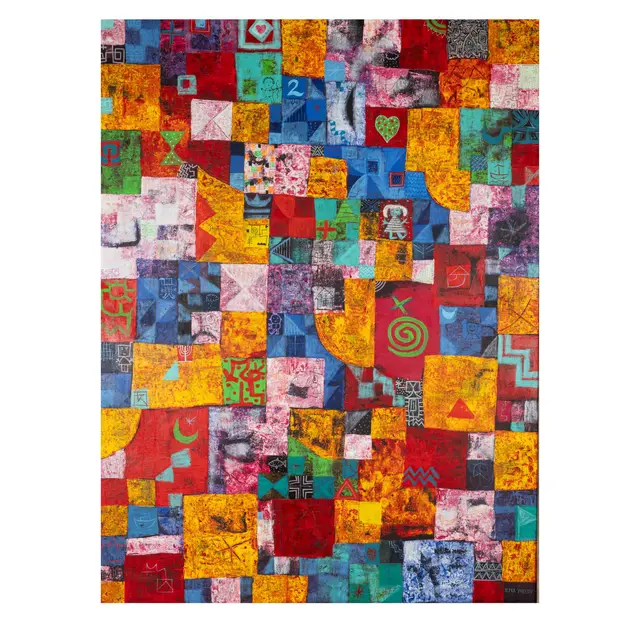
Iliya Zhelev (1961 Plovdiv) 'Birthday of Venus', circa 2000
11/13/2026

$2,645.64
Est: $2,692.48


Bring your auction to collectors worldwide!
Get listed now