



NOV 8 | 1:00 PM

All auctions / Ethnographic / A bronze sculpture - Edan - Ogoni - Nigeria (No reserve price)

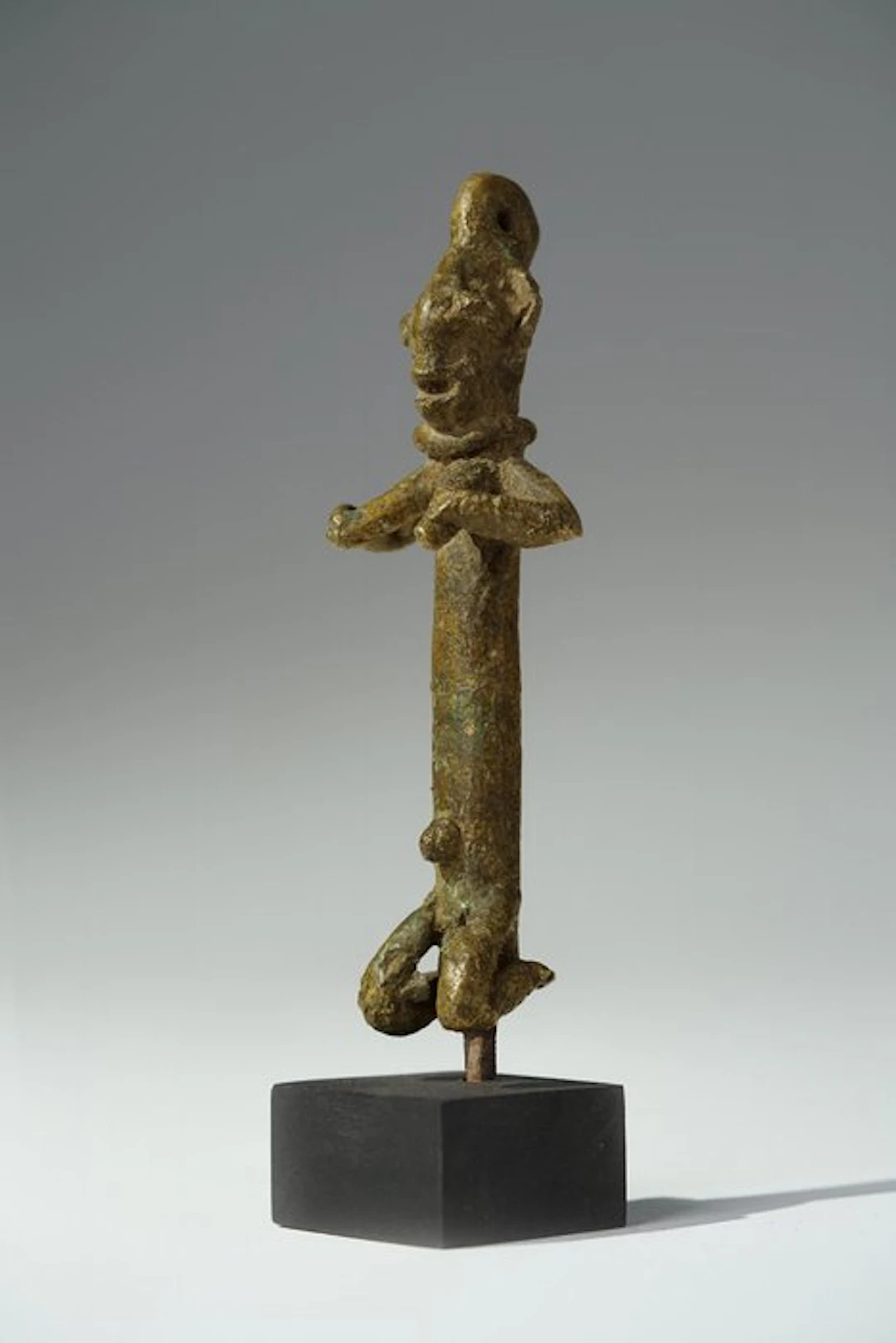
Female anthropomorphic figure, Edan Ògbóni/Òsùgbó, Yoruba Origin: Abakaliki region, Igoni village, Nigeria Furthermore, the best-documented Ogoni art forms consist primarily of wooden masks and sculptures, ancestral effigies, puppets, and objects used in masquerades. The morphology of the photographed object—a frontal male figure made of a copper alloy, with a loop at the top, a very elongated body, and sexualized anatomy—corresponds more closely to the Edan ritual figures of the Yoruba society known as Ògbóni or Òsùgbó. The identification proposed here remains, however, hypothetical as long as the object lacks a verifiable ancient provenance or a material analysis. Incl stand. Description The object appears as a small, strongly vertical anthropomorphic figure, now mounted on a modern metal rod and a black cubic base. The head, which is large in proportion to the body, is expressively modeled: the forehead and the top of the skull rise into an irregular mass ending in a large, perforated loop. The face features protruding or deeply set eyes, a prominent nose, an open mouth with thick lips, and a projecting chin. Around the neck is a ring-shaped ridge that could suggest a necklace, an ornament, or a stylistic convention. The short arms extend laterally from the shoulders before curving back toward the front. The forearms appear bent, and the hands—very rudimentary—seem to be clasped or held at chest level. The torso is transformed into a long, nearly cylindrical column, with no detailed indication of the ribcage, waist, or musculature. A small protrusion appears in the lower abdomen. The anatomical base is more complex: several curved and protruding forms seem to combine reduced legs with an accentuation of the male genitalia. This sexual emphasis is an important element supporting the hypothesis that this male figure was once part of a pair. The surface is golden brown, dark in places, with green spots characteristic of copper corrosion products. Earthy deposits, irregularities, cavities, and more polished wear on certain reliefs give the object an ancient and frequently handled appearance. However, these characteristics alone do not constitute evidence for dating. Historical-Artistic Analysis The aesthetic relies less on anatomical imitation than on symbolic presence. The frontal orientation, the extreme elongation of the torso, the reduced limbs, and the monumentalization of the head produce a hieratic figure, conceived as a sign of authority rather than as an individual portrait. Denis Williams precisely describes the art of the Edan Ògbóni as conceptual, linear, conservative, and archetypal, oriented toward spiritual presence rather than naturalism. The sculpture under study exhibits several of these characteristics: an axial silhouette, shallow depth, explicit sexuality, an impersonal face, and a codified arm gesture. The pierced loop at the top of the head is a defining feature. In complete Edan sets, a male figure and a female figure are normally joined by a chain attached to their heads. Several museum specimens retain this binary structure or are identified as male and female fragments of pairs that are now separated. The loop on this piece may therefore have once held a chain that is now missing. The figure appears to have been cast, likely using the lost-wax process, which has been practiced by West African metallurgists since ancient times. However, the term "bronze" remains a conventional designation here: only X-ray fluorescence analysis would allow for determining the proportions of copper, zinc, tin, and lead and for distinguishing bronze from brass or another copper alloy. An X-ray could also reveal an internal core, casting repairs, or the former presence of an iron rod. The visible patina does not allow for scientific dating of the piece, as corrosion may be natural, accelerated, or altered by treatments. Ritual Function The Ògbóni/Òsùgbó society traditionally brought together elders recognized for their maturity, integrity, and authority. It performed political, judicial, and religious functions and maintained a central relationship with Ilé, the Earth, conceived as a maternal power, the source of life, and the abode of the dead. The Edan served as an emblem of this institution and embodied its authority. The two figures, male and female, did not necessarily represent a married couple. Rather, they expressed opposing yet complementary principles—hardness and softness, strength and calm, masculine and feminine—united under the authority of the Earth. Brass or bronze evoked permanence and longevity, while the iron of the rods symbolized firmness and power. The emphasis on the sexual organs affirmed not so much individuality as the generative complementarity of the two principles. Carried, transported, or presented by members, the Edan figures could serve as signs of initiation, messengers of decisions, instruments of oaths, protection, or judgment. An Edan placed at a threshold symbolically barred passage; when stuck or placed in the ground, it invoked the authority of society and of the Earth itself. In certain forms of ritual communication, the male figure might announce an accusation or a serious decision, while the female figure signaled a favor, an appointment, or a favorable outcome. In this case, the absence of the complementary figure, the chain, and any context of collection prevents us from determining a precise use. The object could be an isolated element of an Edan pair, a fragment of an insignia, a ceremonial pendant, or a regional variant. Its function should therefore not be described as certain, but as likely linked to the ritual, judicial, and protective authority of the Ògbóni/Òsùgbó society. Selected Bibliography Adepegba, Cornelius Oyeleke. Yoruba Metal Sculpture. Ibadan: Ibadan University Press, 1991. Anderson, Martha G., and Philip M. Peek, eds. *Ways of the Rivers: Arts and Environment of the Niger Delta*. Los Angeles: UCLA Fowler Museum of Cultural History, 2002. Kpone-Tonwe, Sonpie, and Jill Salmons. "The Arts of the Ogoni." In *Ways of the Rivers: Arts and Environment of the Niger Delta*, 2002. Lawal, Babatunde. "À Yà Gbó, À Yà Tó: New Perspectives on Edan Ògbóni." *African Arts*, vol. 28, no. 1, 1995, pp. 36–49 and 98–100. Williams, Denis. "The Iconology of the Yoruba 'Edan Ogboni.'" *Africa: Journal of the International African Institute*, vol. 34, no. 2, 1964, pp. 139–166. The publications mentioned serve for comparative art historical classification. They do not establish the specific cultural attribution, dating, or original use of the sculpture in question. Copyright and Scientific Documentation Some of the information and photographs have been generated with the assistance of artificial intelligence and are based on published sources in ethnography, archaeology, and art history. Original texts and photographs may be protected by copyright. All rights held by the respective copyright holders are reserved. Inv. No. MAZ33152 Informant: Amadou Dogo Sold without TL test. Catawiki's experts perform a virtual review based on the information, photographs, provenance and supporting documentation provided during the submission process. Acceptance of a traditional or ancient African art object for auction does not constitute independent authentication or certification by Catawiki, nor does it mean that Catawiki's expert has physically or scientifically authenticated, patina-analyzed, or dated the object. Under our Terms and Traditional African Art Submission Guidelines, the seller remains responsible for the accuracy, legality, provenance and authenticity of the object and the information provided.
Estimate:$308.06
To the auctionView all items fromCatawikiorEthnographic
Estimate:
$308.06
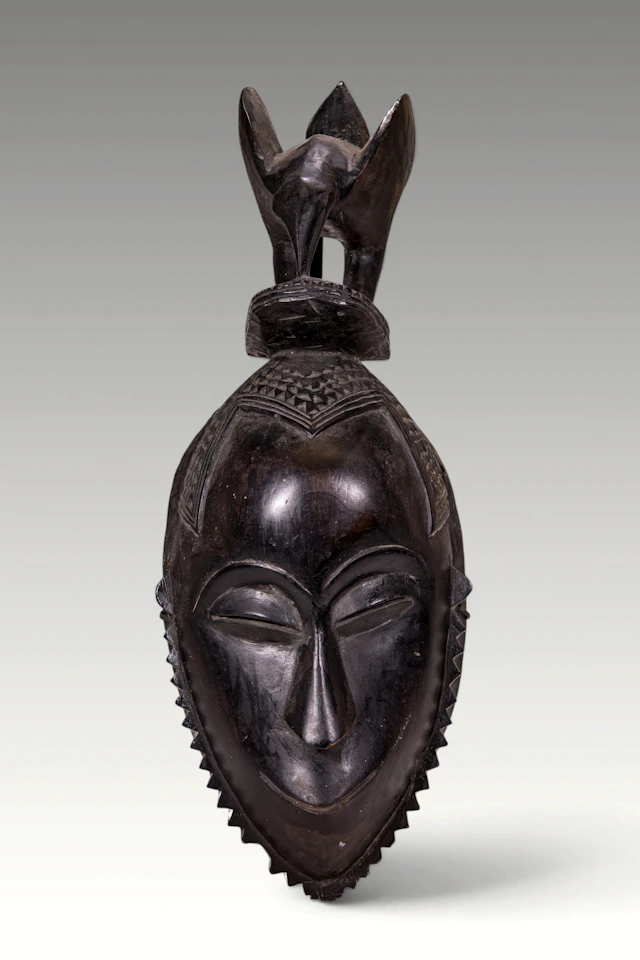
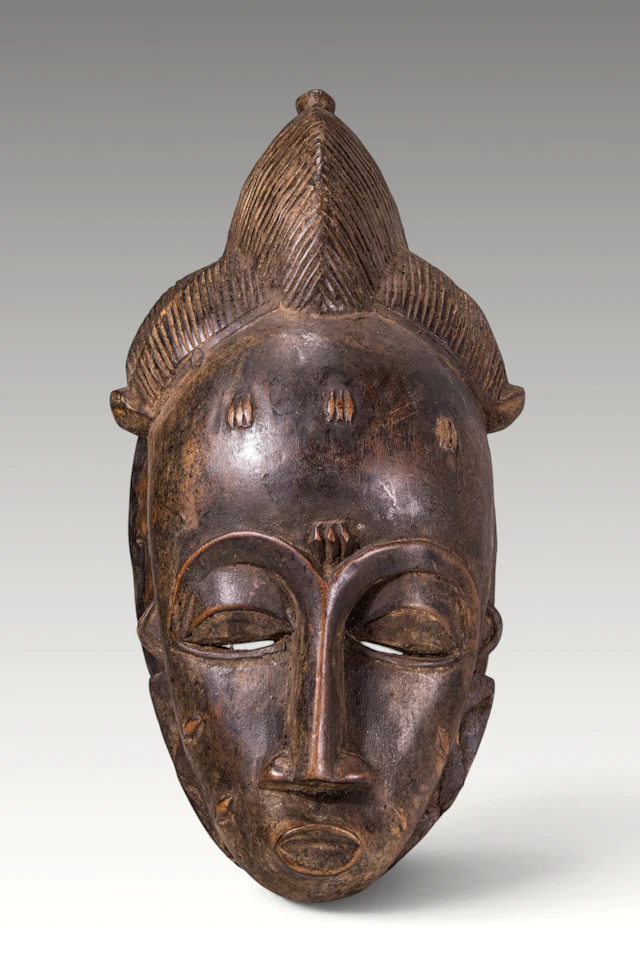
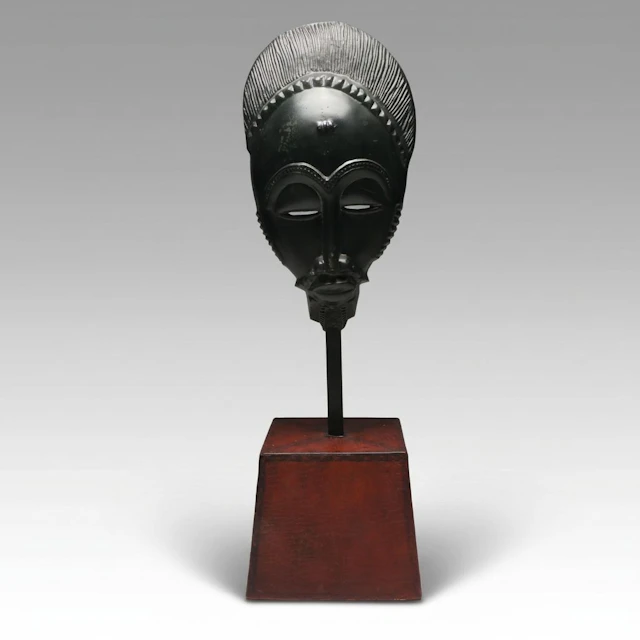
Maitland-Smith African Style Portrait Mask on Stand, Late 20th to 21st Century
10/21/2026
$14
Est: $14
NOV 8 | 1:00 PM


OCT 31 | 4:00 PM


OCT 27 | 4:00 PM
Bring your auction to collectors worldwide!
Get listed nowBy subscribing, you are agreeing to the privacy policy. Unsubscribe anytime.
Barnebys HQ
Brahegatan 10
BOX 5038
114 37 Stockholm
