

NOV 8 | 1:00 PM

All auctions / Ethnographic / 838 g Pyrite – Pieces of Eight

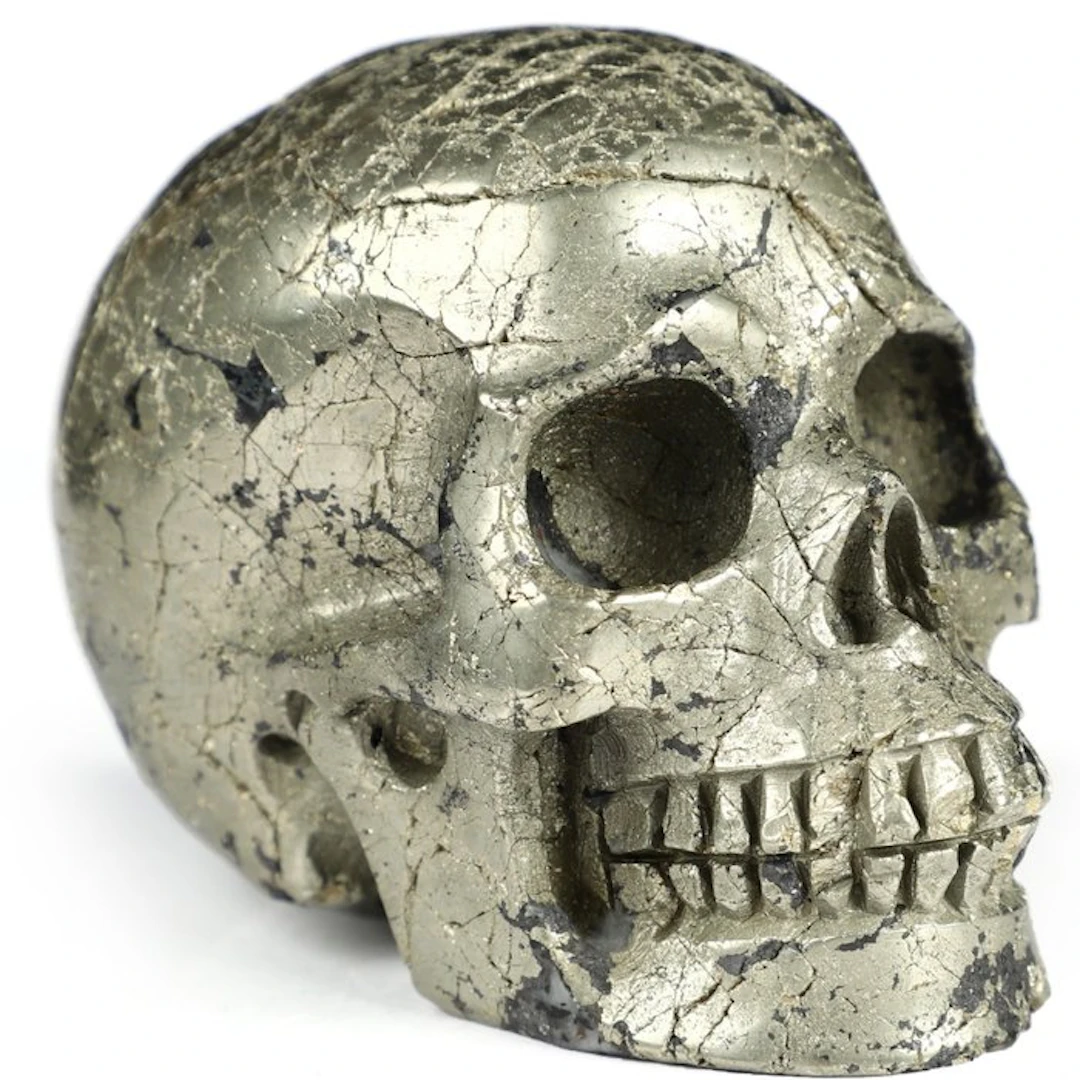
In the summer of 1881 bad weather kept the Stevenson family in the Scottish town of Braemar. To entertain his twelve-year-old stepson, Robert Louis Stevenson devised a secret treasure map, and almost the entire plot of The Treasure Island grew out of it. Later the map was lost on the way to the publisher. Stevenson had to painstakingly recover it from the finished book, with the compass in hand. On this map lies Captain Flint's Island. In the search for his treasure the pirates stumble upon a skeleton. Its feet point in one direction, the hands are over its head as if it were a diver and point in the opposite direction: a bone-made signpost, one of Flint's jokes. Soon a thin, high voice sings Flint's only song between the trees and calls his last words, and the men freeze before the spirit of the dead captain. At the end lies only an empty pit, for the treasure had long since been dug up. The silver bullion and the weapons, Jim Hawkins says at the end, lie, as far as he knows, still there where Flint buried them. No oxen and no wagon teams would bring him back to that cursed island. In his worst nightmares he hears the surf pounding on its shores, or he wakes up in bed, and in his ears the sharp voice of Captain Flint still rings: “Piaster! Piaster!” This skull resembles such a map after many years at sea. It gleams like old gold and yet is covered with a fine network of lines, like parchment that has been folded too often, soaked by storms and dried again. Here the color seems to have faded, there the document is torn. Some secrets lie open, others are sealed forever. Dark spots sit on it like the Black Spot, with which pirates called one another before their judgment. Small it is, and yet it lies in the hand with astonishing force: a piece that carries history and invites the collector to ponder its secrets. This force it owes to its density, for pyrite is about five times as dense as water. Its name comes from the Greek pyr, fire: when struck with hard flint, sparks fly off that glow and burn. Around 1500 the flint wheel was introduced. In that, a spring-loaded steel wheel rubbed against a piece of pyrite and struck the sparks that ignited the powder. With that, for the first time a firearm could be concealed under clothing. Material: Pyrite (Iron disulfide, FeS₂) with dark accompanying minerals Origin: Peru Dimensions: 8.6 x 5.8 x 6.5 cm Weight: 838 g Special features: Compact, strikingly heavy skull made of solid pyrite with a metallic gold sheen; fine, reticulate natural fracture pattern across the entire surface, especially dense on the skull cap; clearly visible natural crack across the upper forehead; dark, mottled inclusions, especially around eyes, cheeks and jaw; Care: store dry and do not clean when wet, as pyrite can oxidize in moist air
Estimate:$1.12
To the auctionView all items fromCatawikiorEthnographic
Estimate:
$1.12
NOV 8 | 1:00 PM


OCT 31 | 4:00 PM

OCT 27 | 4:00 PM
Bring your auction to collectors worldwide!
Get listed nowBy subscribing, you are agreeing to the privacy policy. Unsubscribe anytime.
Barnebys HQ
Brahegatan 10
BOX 5038
114 37 Stockholm
