


OCT 23 | 8:00 AM

All auctions / Asian Art / 19th C. German Bloodstone Intaglio Seal - Coat of Arms

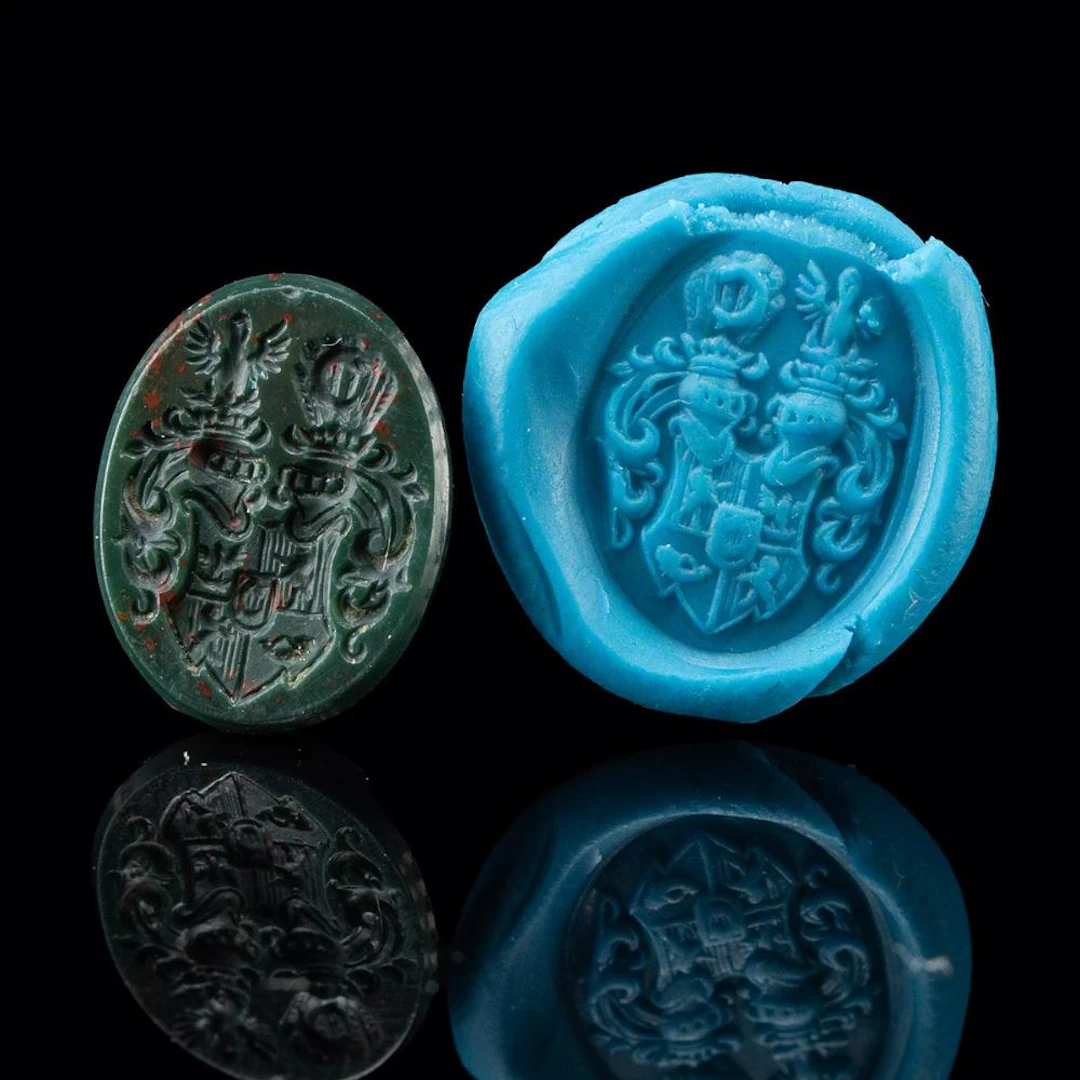
Central Europe, Germany or Austria. A small oval intaglio seal of dark green bloodstone with crimson flecks. A full achievement of arms is cut into its polished table, reversed and ready to come out the right way round in warm wax. The quartered shield bears lions guardant in two quarters, a crescent in a third, and a lidded vessel in the fourth. A small heart shield appears to sit over all at the center. Above the shield, two crowned tournament helms turn toward each other in the German manner. One carries an eagle crest with raised wings and the other a crescent. Acanthine mantling scrolls out to either side. Paired helms usually mean two crests, and so likely two lines joined by marriage, inheritance, or a rise in rank. Fine ruled lines within the fields probably record the heraldic colors. The stone has a long history of its own. Pliny the Elder described heliotropium as a leek-green gem veined with blood. He also reported, with evident scorn, the Magi's claim that it could make its bearer invisible. That would be an awkward talent for an object whose only job was to announce exactly who had sealed the letter. Medieval Christians reread the crimson flecks as drops of Christ's blood fallen on green jasper at Calvary. By the 19th century, bloodstone was a favored stone for gentlemen's seals, prized for its hardness, its polish, and its sober color. The hatching that probably fills the fields follows a convention popularized by the Jesuit Silvester Petra Sancta in 1638. In this system, vertical lines stand for red, horizontal lines for blue, and other patterns for the remaining colors, so a one-color seal could still record them. The lion guardant, shown with its head turned to face the viewer, and the crescent are both old and widely used charges. The lidded vessel is much rarer, and it may be the most useful clue for anyone trying to trace the arms through the great armorials. For now, the bearer's name remains unknown. Item # 205535
Estimate:$300
To the auctionView all items fromArtemis Fine ArtsorAsian Art
Estimate:
$300
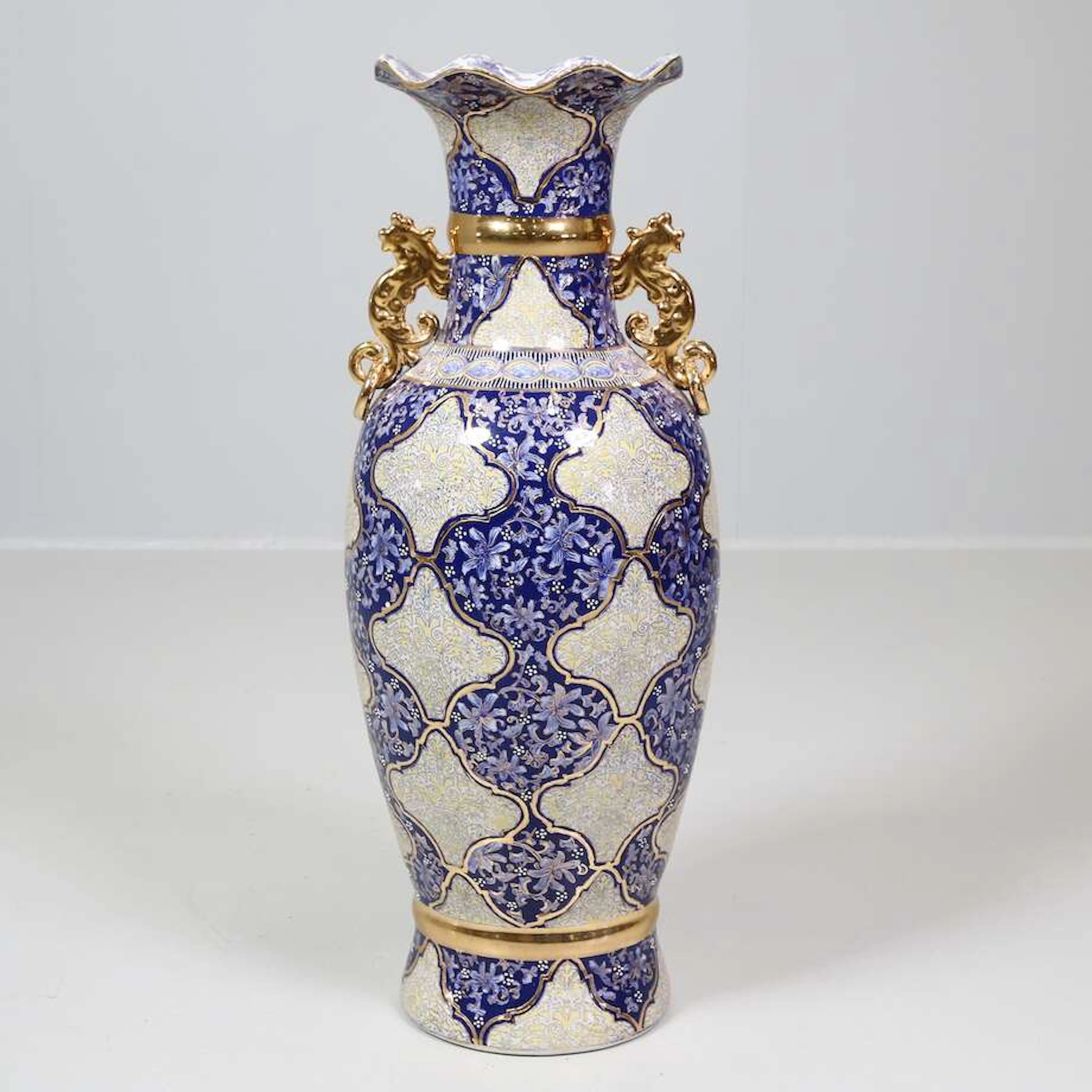
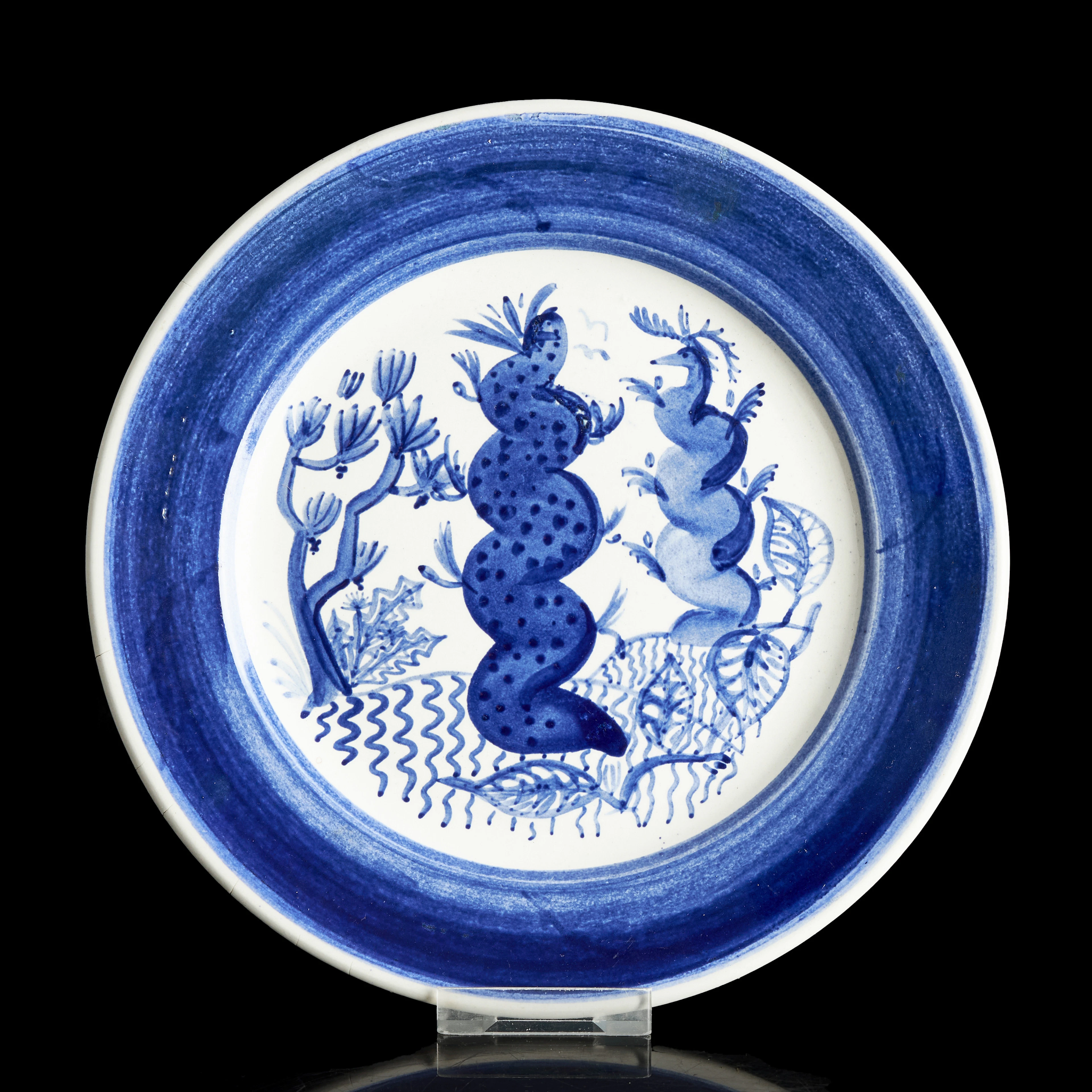
RENATA WREDE-BOËTHIUS (FINLAND 1923-1998 FINLAND). Fat, Gustavsberg
10/11/2026
$34.86
Est: $99.66
OCT 23 | 8:00 AM


OCT 17 | 10:00 PM


Bring your auction to collectors worldwide!
Get listed nowBy subscribing, you are agreeing to the privacy policy. Unsubscribe anytime.
Barnebys HQ
Brahegatan 10
BOX 5038
114 37 Stockholm
