




All auctions / Vehicles / 1967 Ferrari 275 GTB/4*S NART Spider

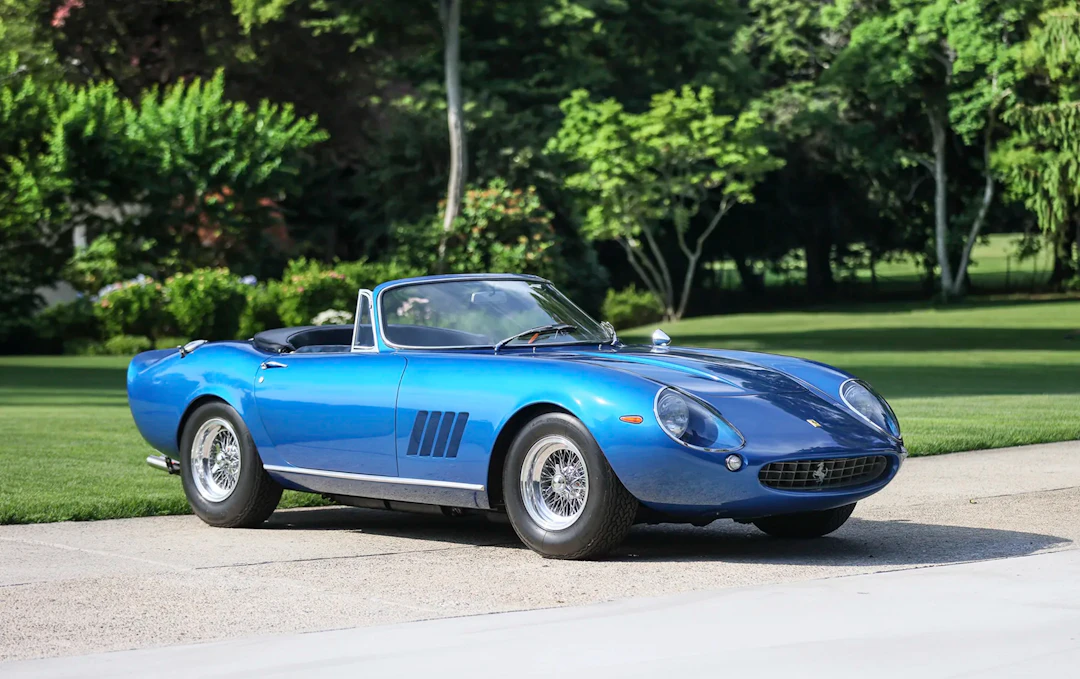
“To me there are cars, and then there is transportation. I don’t have a lot of interest in cars that won’t go fast and stop well and corner a little. I’d rather sink my fanny into a bucket seat than park it on a bench. I won’t sue if you spread the word that I like to drive flat out whenever the road and the law let me.” – Steve McQueen, Sports Illustrated, August 1966 “So we have a car that still carries the GT designation but qualifies in every way as a sports car. It’s only natural that the car should acquire the designation 275 GTS/4 NART, though up to the present this name has been applied more casually than officially. Whatever the name, this has to be the most satisfying sports car in the world.” – Road & Track, “Road Test: Ferrari 275 GTS/4 NART,” September 1967 “A Star Among Fast Friends” Few actors have ever been as closely identified with cars and motorcycles as Steve McQueen, and none more convincingly embodied the role of the genuine enthusiast. The association was reinforced by some of postwar cinema’s most enduring images: Captain Virgil Hilts vaulting fences on a motorcycle in The Great Escape; Lieutenant Frank Bullitt piloting a Highland Green Ford Mustang GT through San Francisco; and Michael Delaney guiding a Gulf-liveried Porsche 917K at speed in Le Mans. These performances resonated not simply because they offered thrilling depictions of machines at speed, but because they drew upon an authentic aspect of McQueen’s character. Long before international fame gave him access to the world’s most desirable cars, McQueen was already racing and immersed in the world of performance machinery. While studying acting in New York, McQueen supplemented his income through weekend motorcycle racing. After moving to California, he campaigned a Porsche 356 Speedster and Lotus Eleven in SCCA events, while his road cars included a Jaguar XKSS, the lightly civilized derivative of the Le Mans-winning D-Type. He represented the US in the 1964 International Six Days Trial and raced extensively off-road, often using the nom de course Harvey Mushman. At the 12 Hours of Sebring in 1970, he and Peter Revson finished 2nd Overall and 1st in the three-liter class aboard a Porsche 908/02. For all his genuine bona fides and evident ability, McQueen never confused his talents with those of a professional. “Understand that I am an actor, not a racing driver or an automotive engineer,” he wrote in the August 1966 issue of Sports Illustrated, “but I’ve raced some and I ain’t a bad driver.” He then offered a concise expression of the qualities shared by his favorite automobiles: “They go and they stop and they handle. They are drivers’ cars, and most of them have been developed from racing cars.” It was only natural that Ferrari’s exceptional road cars appealed to him, for they reflected McQueen’s own affinity for performance, style, and mid-century glamour. In 1963, just as The Great Escape established him as an international star, McQueen acquired his first Ferrari, a 250 GT Lusso finished in Marrone Metallizzato (Metallic Brown). Extensively driven and frequently photographed, the elegant brown Berlinetta became part of his emerging public image. By 1966, McQueen was well qualified to assess Ferrari’s next generation of road cars. For the Sports Illustrated feature “A Star Among Fast Friends,” he evaluated several contemporary sports cars at Riverside Raceway, including a new Ferrari 275 GTS. Comparing it with his Lusso, McQueen praised its more powerful 3.3-liter engine, broader power band, and five-speed transaxle. “I was pushing 140 mph,” he recalled. “Ferrari gearboxes shift like a knife through butter. You throw the stick, and it just kind of finds its own way.” McQueen’s subsequent acquisition of a 275 GTB/4S NART Spider was therefore no impulsive celebrity purchase. It was the informed choice of an automotive connoisseur and capable driver who understood precisely what Ferrari’s new four-cam 275 offered. __ “The Most Satisfying Sports Car in the World”__ The NART Spider owes its existence to Luigi Chinetti, the three-time Le Mans winner, longtime Ferrari confidant, and influential US distributor who did so much to establish the marque in America. Through his sales organization and successful North American Racing Team, Chinetti cultivated a discerning clientele attracted to Ferrari’s competition pedigree but eager to experience it in a road-going automobile. His influence had already helped bring about the 250 GT California Spider in the late 1950s; by the mid-1960s, he recognized an opportunity to create its natural successor. Ferrari’s 275 GTS was an elegant grand tourer, but its Pininfarina coachwork and relaxed character distinguished it from its more aggressive berlinetta counterpart, the 275 GTB. When the four-cam GTB/4 arrived in late 1966, Chinetti believed that select American clients would welcome an open version offering its advanced specification and sporting character rather than the more luxurious 330 GTS. At his urging, Ferrari authorized a limited series constructed by Scaglietti. The resulting 275 GTB/4S retained the berlinetta’s 3.3-liter, four-cam V-12, five-speed transaxle, independent suspension, and disc brakes, pairing its performance with elegant open coachwork and a discreet North American Racing Team badge on the tail panel. Like the California Spider before it, the NART Spider endowed the thoroughbred underpinnings of Ferrari’s berlinetta with the freedom and glamour of open motoring. The first example built, chassis 09437, established the model’s competition credentials by finishing 2nd in Class and 17th Overall at the 12 Hours of Sebring in 1967 with Denise McCluggage and Marianne “Pinky” Windridge. Fresh from 1,000 racing miles, it was refinished in dark red and featured on the September 1967 cover of Road & Track, which declared it “the most satisfying sports car in the world.” That same NART Spider soon achieved another form of immortality when it appeared in the 1968 film The Thomas Crown Affair, driven by Faye Dunaway’s character, Vicki Anderson. In one memorable scene, Thomas Crown – played by Steve McQueen – finds his attention drawn to the parked Ferrari, referred to dismissively as “one of those red Italian things.” The moment was fleeting, but the impression made upon McQueen clearly was not. Having already experienced and praised the 275 platform, he arranged through Chic Vandagriff’s Hollywood Sport Cars to acquire a NART Spider of his own – the car presented here, chassis 10453. Just 10 examples were built. The first two were constructed in aluminum; the remaining eight began as completed steel-bodied berlinettas converted by Scaglietti, underscoring their status as special commissions for Chinetti. All but one were delivered new to the US, and fewer than one-tenth as many were built as long- and short-wheelbase California Spiders combined. Individually known, closely held, and coveted by the world’s foremost collectors, the NART Spiders today stand at the very pinnacle of Ferrari’s open road car production. “Not My Kind of Blue” According to Ferrari historian Marcel Massini, 10453 was the sixth NART Spider built. Its Scaglietti coachwork, identified by body no. A0202, was originally finished in Blu Sera (Evening Blue, paint code 106-A-18) over black Connolly leather, making it the first of just two so specified. Copies of its factory build sheets confirm Borrani wire wheels, Michelin tires, and US instrumentation, and record engine internal no. 1836 and transaxle internal no. 535/I/R. Completed in September 1967, chassis 10453 was invoiced to Luigi Chinetti Motors with a surcharge recording its conversion from Berlinetta to Spider form. Shipped from Italy that fall, the Ferrari was sold to Steve McQueen through Hollywood Sport Cars and flown to Los Angeles International Airport. McQueen was out of town when the car arrived and instructed his friend R. Lee Brown to collect it. The proprietor of Precision Auto Body on Hollywood Boulevard, just a few blocks east of Hollywood Sport Cars, Brown had already repainted McQueen’s Lusso and customized his Mini Cooper, and would contribute to the preparation of the Ford Mustang GTs used in the making of Bullitt. His recollections, recorded by Matt Stone in McQueen’s Machines, provide the most detailed surviving account of McQueen’s ownership of 10453. “Steve was away at the time,” Brown recalled. “He called me up and said that his new Ferrari was at LAX and that I should go and pick it up. Talk about a driver; what a joy.” Brown brought the NART Spider to his shop, where McQueen subsequently inspected it. His response was immediate: “Gotta paint it. Not my kind of blue.” McQueen had spent approximately $15,000 on one of the most exotic new Ferraris available, yet his first instruction was to alter it. As Brown remembered, “But that was McQueen. He knew what he wanted. He’d listen to what other people suggested, consider all their advice, and then do it his way.” McQueen and Brown selected another shade of dark metallic blue. With the Ferrari being prepared for refinishing, McQueen instructed Brown to “make it neat” and undertake several additional changes. Brown removed the bumpers, then installed an external quick-fill fuel cap and small rally-style mirror. At McQueen’s request, he also fabricated a radio console and concealed power antenna within the fender, eliminating the visual clutter McQueen disliked. While this work was underway, acclaimed upholsterer and former drag racer Tony Nancy retrimmed the seats with a distinctive stitch pattern. The work created a NART Spider unlike any other. Yet McQueen remained exacting. When he returned to collect it, he and Brown disagreed over the custom color. Their discussion reached no resolution, and Brown offered one characteristically direct parting instruction: “Don’t fuck it up.” According to Brown, only days later McQueen was stopped in traffic on Pacific Coast Highway when a truck struck 10453 from behind, pushing the Ferrari into the car ahead. Although the precise extent of the damage is not documented, the car required repairs to both ends. Initially stored at a Pacific Palisades service station, it was subsequently entrusted to Hollywood Sport Cars for repairs and painted by Hershel “Junior” Conway, whose House of Color shop was already legendary in the Southern California custom-car scene. Conway repaired the NART Spider and again refinished it in dark metallic blue. The body also acquired its distinctive “flip-tail” and flared fenders, features generally attributed to Conway’s work. A 1971 photograph documents this appearance, showing 10453 with its McQueen-era modifications and California license plate ZSW 815, first issued in 1969. More than half a century later, the car remains substantially in this configuration. The surviving record does not establish how often McQueen drove his NART Spider or exactly when it left his possession, and no period photographs are known to show him with it. Yet its sale to McQueen when new is beyond question, and the car retains physical evidence both of the personal vision he established with Brown and of its eventful early life in Southern California. Among McQueen’s celebrated automobiles, 10453 is at once one of the most significant and least publicly known. A Life Beyond the Limelight By 1971, chassis 10453 had been acquired by J. David Kopf of Tujunga, California. A gifted engineer, driver, and perceptive collector, Kopf appreciated exceptional machinery well before the emergence of the modern collector-car market. A former US Navy electronics technician and master machinist, he founded David Kopf Instruments in 1958 and helped develop pioneering stereotaxic instruments used in neuroscience. Around 1970, Kopf acquired the extraordinary Ferrari 365 P Berlinetta Speciale “Tre Posti,” chassis 8815, originally built for Fiat chairman Gianni Agnelli. Having seen the three-seat, mid-engine Ferrari during a factory visit, he persistently pursued it and became only its second owner. Kopf later competed in vintage racing with a Porsche RS 60, was named Driver of the Year by the Sportscar Vintage Racing Association in 1991, and designed and constructed his own Le Mans Prototype, the Keiler. Chassis 10453 remained with Kopf for approximately 15 years and was seldom exhibited. In August 1971, he displayed it alongside his Tre Posti at the Le Cercle Concours d’Elegance at the Hollywood Bowl. Beyond listings in the Ferrari Owners Club directory and a small photograph in Jess Pourret’s landmark book on the 275, the McQueen NART Spider remained largely beyond public view. In 1985, Kopf sold 10453 to Long Island Ferrari dealer Grand Prix SSR, from which the current owner acquired it the following year. Already assembling one of the most respected Ferrari collections in the US, the third private custodian sought out the finest, most significant road and competition models. Even in this company, 10453 stood apart for its rarity and provenance. For four decades, the NART Spider has remained a centerpiece in this collection. Preserved rather than restored, it retains its matching-numbers engine and transaxle, original Scaglietti body, distinctive metallic blue finish, and McQueen-era custom details. It appeared at the 1996 Louis Vuitton Classic at Rockefeller Center and the 2003 exhibition La Bella Macchina: The Art of Ferrari at the Chrysler Museum of Art in Norfolk, Virginia, but has otherwise led a secluded existence. An Icon Emerges Chassis 10453 is important first and foremost because it is a NART Spider: one of just 10 examples of what many consider the ultimate open road-going Ferrari. Its matching-numbers four-cam V-12 and transaxle, Scaglietti coachwork, and rare original Blu Sera specification would alone place it among the most desirable postwar sports cars. Its ownership by Steve McQueen – the definitive Hollywood car enthusiast – and surviving McQueen-era configuration add a cultural dimension unique among the 10. The machines and objects associated with McQueen – from his Husqvarna 400 Cross and Heuer Monaco chronograph to his folding Persol 714 sunglasses – have become icons, their significance amplified by their connection to the man celebrated as the “King of Cool,” whose instinctive taste continues to define automotive style. Among the cars he owned, few could rival a NART Spider – a model made famous, in part, through its cameo in The Thomas Crown Affair. Chassis 10453 therefore represents the intersection of two legends: one of Ferrari’s greatest road cars and the actor whose identity remains inseparable from the automobile. Its history resists the familiar conventions of celebrity provenance. This was neither a film prop nor a car repeatedly photographed for publicity. McQueen selected it for himself and immediately altered it to suit his distinct taste; it then passed to two discerning collectors and largely disappeared from public view. One of the most famous Ferrari models, sold new to one of the world’s most famous men, 10453 has nonetheless remained among the least familiar and seldom seen of McQueen’s important cars. Today, 10453 presents two compelling identities. As built, it was the first of only two NART Spiders finished in Blu Sera. As preserved, it remains substantially as it appeared during McQueen’s ownership, still bearing the distinctive alterations associated with its earliest years in Hollywood. Its next custodian may preserve this tangible record of its McQueen-era history or return it to the exceptional factory specification in which it first arrived at LAX in fall 1967. The 10 NART Spiders are individually known, closely held, and typically retained for generations. Never before offered at auction, 10453 now emerges following four decades in one of America’s foremost Ferrari collections. Its return to Manhattan, 30 years after appearing at the Louis Vuitton Classic, marks the first opportunity for the international collecting community to compete for it publicly. Few automobiles unite such rarity, beauty, performance, provenance, and cultural relevance. Yet for all its inherent fame, 10453 has scarcely had a public life. Its next custodian will acquire not merely one of Ferrari’s most mythical road cars, but the opportunity to present Steve McQueen’s NART Spider to the wider world. car
Estimate:$20,000,000
To the auctionView all items fromGooding Christie'sorVehicles
Estimate:
$20,000,000
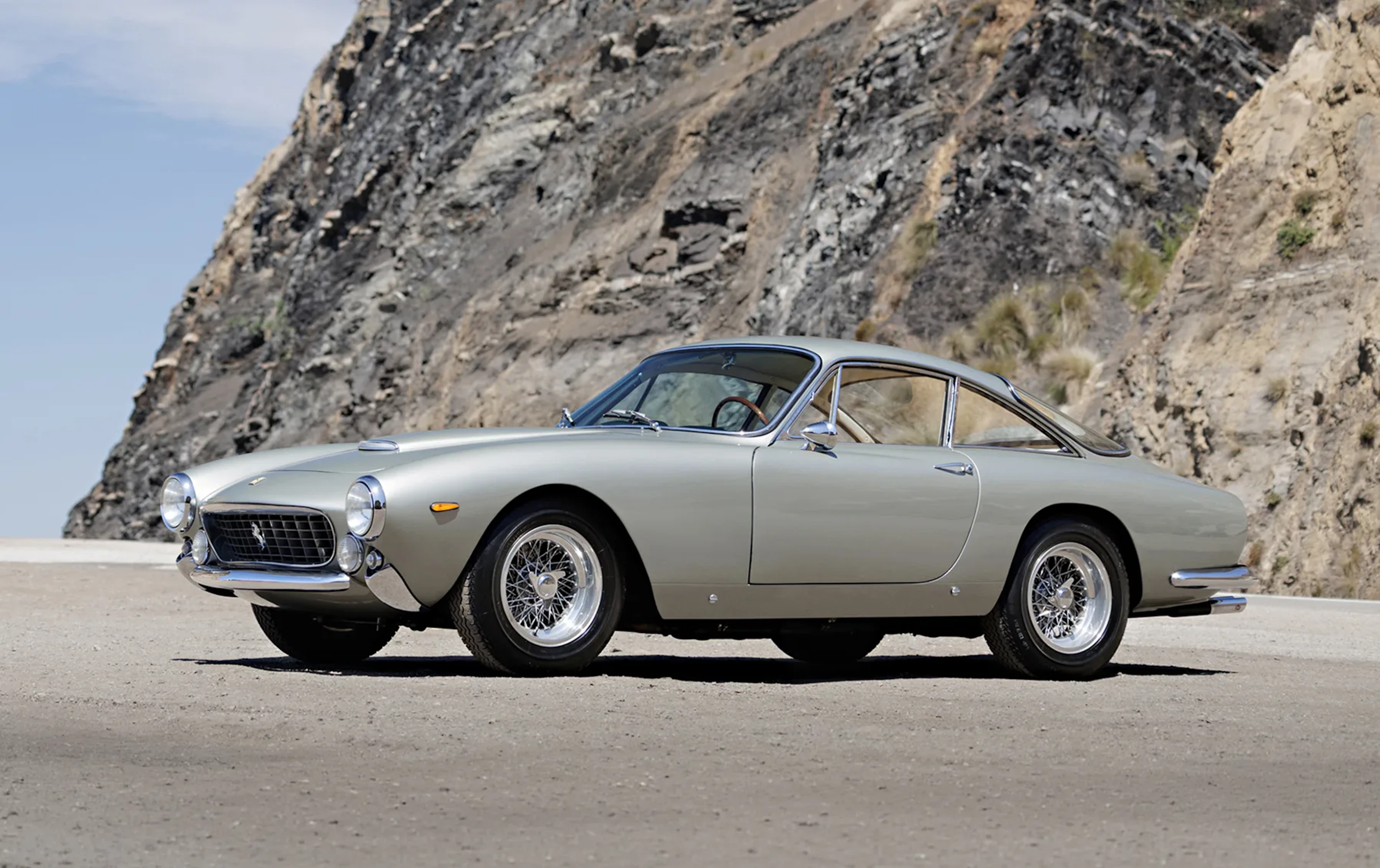
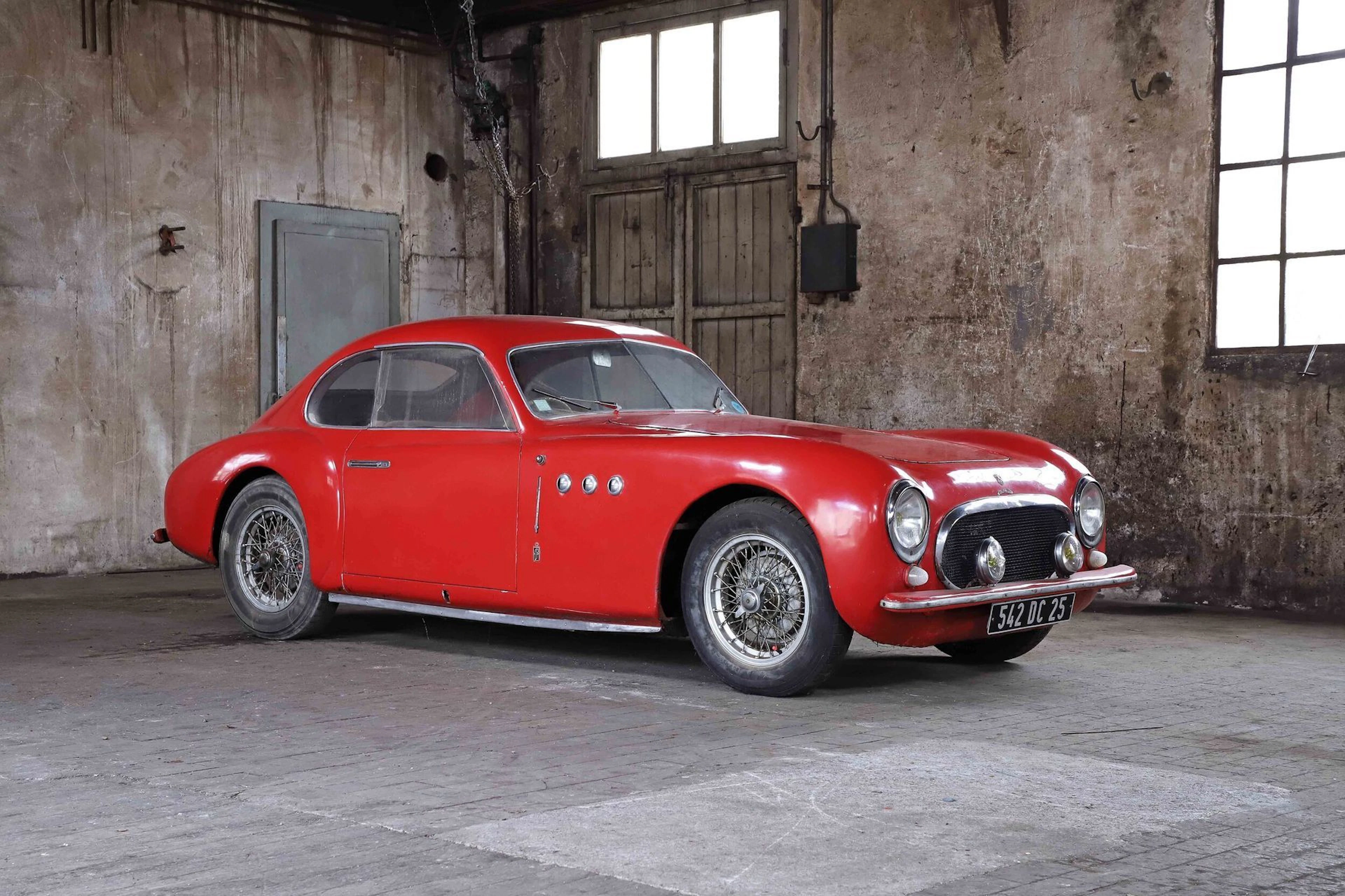
1948 - Cisitalia 202 SC Berlinetta by Pinin Farina - Lot 69
11/30/2025

$319,702.82
Est: $186,035.68




OCT 27 | 4:00 PM
Bring your auction to collectors worldwide!
Get listed nowBy subscribing, you are agreeing to the privacy policy. Unsubscribe anytime.
Barnebys HQ
Brahegatan 10
BOX 5038
114 37 Stockholm
